



Portugal Travel Guide
Start in Lisbon where trams climb hills and fado echoes through Alfama. Head north to Porto for port wine cellars and riverside sunsets, or day-trip to fairytale palaces in Sintra. The Algarve's cliffs and the Douro Valley's vineyards round out a country that packs coastline, cuisine, and history into an easy-to-explore package.
About Portugal
Portugal fits a lot into a small footprint — roughly the size of Indiana but with 800 kilometers of Atlantic coastline. Lisbon anchors the center, a city of seven hills where azulejo-tiled facades line narrow streets and century-old trams clatter past. The capital's neighborhoods each carry distinct personalities: Alfama's fado bars, Bairro Alto's nightlife, and Belém's waterfront monuments.
North along the Douro River, Porto trades Lisbon's pastel tones for granite and port wine heritage. Cross the Dom Luís I Bridge, descend into cellars in Vila Nova de Gaia, and taste tawny port where it's been aged for generations. Beyond the cities, the Douro Valley unfolds in terraced vineyards — best seen from a slow river cruise or a scenic train window.
South of Lisbon, the Alentejo plains roll toward the Algarve's dramatic cliffs and cove beaches. Offshore, the Azores and Madeira add volcanic peaks and subtropical greenery to Portugal's range. It's a country where you can surf in the morning, tour a palace at midday, and end with grilled sardines and vinho verde by the river.
The best places to visit in Portugal
From iconic landmarks to hidden gems, explore the Portugal destinations our local insiders recommend most.
Funchal
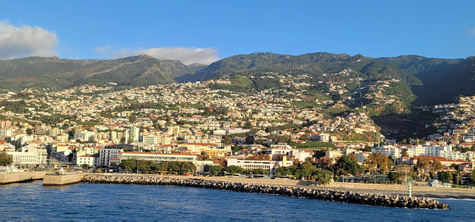
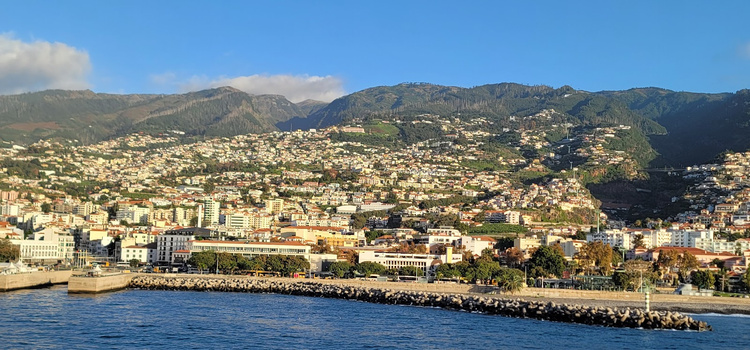
Funchal’s waterfront promenade, framed by the Atlantic and the historic harbor, has long served as the island’s main entry point for ships and travelers. The city, officially the City of Funchal, lies on the southern coast of Madeira and functions as the regional capital of Portugal’s autonomous Madeira region. With a population of 105,795, it ranks as the sixth‑largest city in Portugal. Its reputation as a leading Portuguese cruise‑liner port and a popular New Year’s Eve destination draws visitors from across Europe.
Cascais
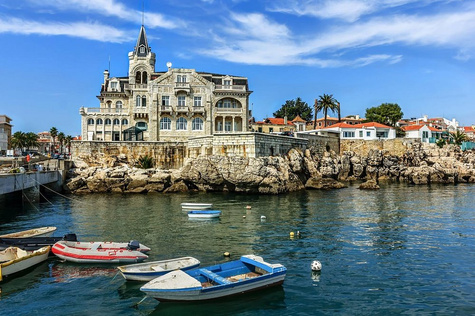
Since the 1870s Cascais has functioned as a royal seaside resort, attracting European monarchs and later the world of high‑stakes sailing. The town lies on Portugal’s Estoril Coast within the Lisbon District. Its marina hosts events such as the America’s Cup, while the neighboring district of Estoril welcomes conferences like the Horasis Global Meeting. With more than 214,000 residents, Cascais combines historic depth with a reputation for affluent living.
Belém
Belém’s skyline is dominated by the 16th‑century Belém Tower, a sentinel that marks the historic gateway to Portugal’s Age of Discovery. The district forms the southwestern edge of Lisbon, lying between the Tagus estuary and the Algés and Alcântara rivers, and belongs to the capital of Portugal. With a 2011 population of 16,528, it packs a concentration of monuments, gardens and museums into a compact riverside setting.
Porto
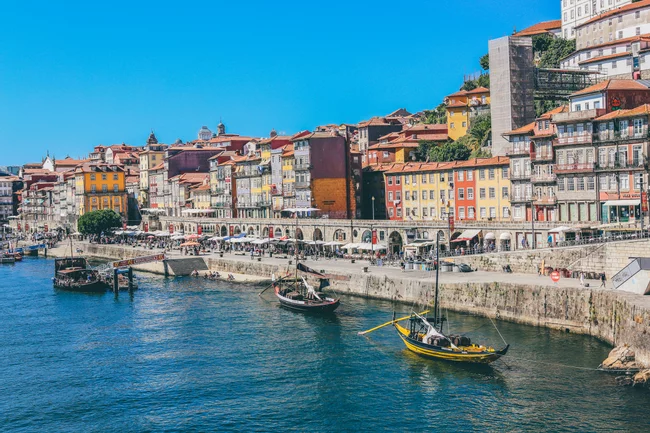
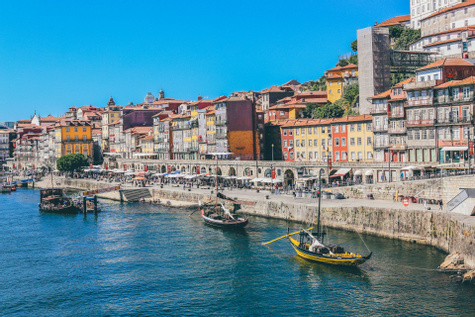
Porto’s riverside skyline is defined by the iconic iron arches of the Luiz I Bridge spanning the Douro, a view that instantly signals the city’s historic link to the wine trade. The city sits on the northern coast of Portugal, where the Douro River meets the Atlantic Ocean, and its compact historic core earned UNESCO World Heritage status in 1996. With a municipal population of about 250,000, it anchors a metropolitan area of roughly 1.8 million people, making it Portugal’s second‑largest urban centre.
Lisbon
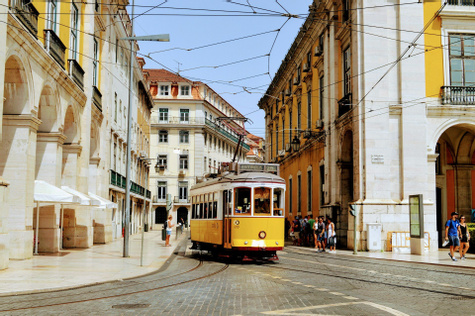
Lisbonsits at the western edge of mainland Europe, making it the continent’s westernmost capital and the only one directly on the Atlantic Ocean. The city occupies the northern shore of the Tagus River in Portugal and serves as the nation’s political and cultural centre. With an estimated 575,739 residents within its municipal limits, the wider metropolitan area approaches three million people, accounting for roughly a quarter of the country’s population.
Visiting Portugal
Fly into Lisbon (LIS) for Lisbon, Sintra and the Alentejo, Porto (OPO) for Porto and the Douro, or Faro for the Algarve; Madeira (Funchal) and the Azores (Ponta Delgada) have their own airports with short flights from the mainland. Flying into Porto and home from Lisbon, or the reverse, saves a backtrack. Between the two cities the Alfa Pendular train takes about 2.5 hours.
Renting a car opens up the Douro Valley, Alentejo, and Algarve on your own schedule, though parking in Lisbon and Porto can test your patience. For the islands, short flights from the mainland reach Madeira (Funchal) and the Azores in under two hours.
Lisbon makes a natural starting point: spend a few days exploring the capital and day-tripping to Sintra's palaces and Cascais's coastal charm, then head north to Porto. If time allows, linger in the Douro for wine tastings or push south to the Algarve's beaches and the fortified town of Lagos.
Eating and drinking in Portugal
You'll eat well and often: portions are generous, and sharing petiscos (Portuguese small plates) is half the fun. Seafood is the headline. Whole grilled fish is usually priced by weight, so ask before ordering; look for arroz de marisco (seafood rice), cataplana stews in the Algarve and grilled sardines in summer. Bread, olives and cheese set on the table (the couvert) are charged if you eat them. Vegetarian choices are good in Lisbon and Porto, thinner in villages.
Don't leave without trying bacalhau (salt cod) prepared dozens of ways and pastéis de nata warm from the oven in Belém. Drink vinho verde in the north, Alentejo reds in the south and port everywhere; order a bica (espresso) in Lisbon or a cimbalino in Porto.
Geographical Snapshot
Portugal occupies the western edge of the Iberian Peninsula, bordered by Spain to the north and east and the Atlantic Ocean to the west and south. The mainland stretches about 560 kilometers north to south, narrow enough that you're rarely more than a couple hours from the coast.
The landscape varies more than you'd expect: the green, hilly Minho region in the north; the Douro Valley's dramatic gorges; the flat cork oak plains of the Alentejo; and the Algarve's sandstone cliffs and golden beaches. Add the volcanic islands of Madeira and the Azores — both autonomous regions with their own microclimates and terrain — and Portugal covers a surprising range of environments.
When is the best time to visit Portugal?
May–June and September–October are the best months for most Portugal trips: warm enough for the coast, without the July–August crowds and rates in Lisbon, Sintra and the Algarve.
- Lisbon, Sintra and the Alentejo: spring and early autumn; summer is hot inland and busiest in the city. Most rain falls November to March.
- Porto and the Douro: cooler and wetter than the south; the September grape harvest is the Douro's peak.
- Algarve: beach season June–September; mild enough in winter for golf and coastal walks.
- Madeira and the Azores: mild year-round; Azores weather changes fast, so leave slack in the plan.
Book July–August and Easter early. Plan your Portugal trip around the season or ask our Portugal Insiders.
Historical Overview
Portugal punches above its weight in history. The Age of Discoveries launched from Belém's waterfront in the 15th and 16th centuries, sending explorers to map coastlines from Brazil to Japan. That era's wealth built the Jerónimos Monastery and Belém Tower — both UNESCO World Heritage sites.
Earlier layers remain visible too: Moorish castles perch above Lisbon and Sintra, Roman ruins dot the Alentejo, and Celtic hill forts scatter across the north. The 1755 earthquake leveled much of Lisbon, leading to the grid-planned Baixa district you walk today. More recent history — the Salazar dictatorship ending in the 1974 Carnation Revolution — still shapes Portuguese identity and conversation.
Society & Culture
About 10 million people live in Portugal, with a third concentrated in the Lisbon and Porto metro areas. Portuguese is the official language.
Fado — that melancholic, guitar-backed singing — is more than cliché; catch a show in Lisbon's Alfama or Coimbra and you'll feel the saudade (longing) that defines it. Football rivals fado for cultural devotion, and match days in Porto or Lisbon are events in themselves. Daily rhythms run relaxed: long lunches, late dinners, and coffee breaks are built into the schedule.
Economic Snapshot
Tourism has surged in Portugal over the past decade, now accounting for a significant slice of GDP. Lisbon and Porto have transformed into year-round destinations, while the Algarve remains a summer and golf magnet. Traditional industries — textiles, cork, wine, and fishing — still anchor regional economies.
Portugal Travel FAQs
Is Portugal safe to visit?
Yes. As of September 2026 the U.S. State Department rates Portugal Level 1, its lowest advisory ("exercise normal precautions"). The realistic risk is pickpocketing in crowds: on Lisbon's Tram 28, at busy sights and restaurants, on public transport, and from rental cars and unattended beach bags. Solo travelers, women included, need only the night-time common sense of any European city. The bigger hazard is the Atlantic: swim at lifeguarded beaches and follow the flags. Our Portugal Insiders plan a Portugal trip planned by locals with private transfers that keep your luggage out of the crowds.
How much does a day in Portugal cost?
Less than most of Western Europe. Eurostat's latest comparison (2024) puts Portugal's restaurant and hotel prices at about 76% of the EU average, below Spain (84%) and Italy (107%). On a mid-to-upscale trip the cost drivers are lodging in Lisbon, Porto and the Algarve in July–August, private guides and drivers, and Douro wine-estate stays; meals are the good-value part, and a long lunch with wine costs well under what you'd pay at home. Get a custom Portugal quote for your dates.
What documents do I need to enter Portugal?
A U.S. passport valid at least three months beyond your stay; no visa for tourism of up to 90 days in any 180, counted across the whole Schengen area, so days in Spain, France or Italy count too. As of September 2026 you also register in the EU's Entry/Exit System (EES) on arrival: passport scan, photo and fingerprints. ETIAS, the EU's pre-travel authorization, is not yet required and has no confirmed start date. A child traveling with adults other than their parents needs a notarized consent letter. Plan your Portugal trip.
Can you drink the water, and what about vaccines, mosquitoes and medical care in Portugal?
Yes, mainland tap water is safe to drink, though some prefer bottled for taste. No special vaccines are needed beyond routine ones (the CDC suggests considering hepatitis A and B), and there's no malaria; on the Algarve in summer the sun is the more common problem. Dial 112 for emergencies. Good care is available, especially in the cities, but private hospitals expect payment on admission and U.S. insurance is rarely accepted, so bring travel medical cover. Plan your Portugal trip with a local expert, or ask our Portugal Insiders.
What plugs, phones and internet should I expect in Portugal?
Portugal runs on 230 volts with European two-pin sockets, so U.S. travelers need a plug adapter; most phone and laptop chargers handle 230 V, but check hair tools, which may need a converter. Wi-Fi is standard at the hotels we book. Before you fly, turn on your carrier's international plan or add a Portuguese eSIM so maps and messages work from the airport. Our Portugal Insiders will tell you what to pack when they plan your Portugal trip.
What currency is used in Portugal, and are cards accepted?
Portugal uses the euro. Cards, including contactless, are accepted at hotels, restaurants and most shops in the cities and resorts; keep some euros for small tascas, markets, village cafés and tips. Withdraw cash from bank ATMs, and if a machine or card terminal offers to charge you in dollars, decline and pay in euros, since the conversion is almost always worse. Plan your Portugal trip and your Portugal Insider will tell you where cash still matters on your route.
Is English spoken in Portugal?
Yes, widely. Portugal ranks 6th in the 2025 EF English Proficiency Index, in the "very high" band, and hotel, restaurant and guide staff in Lisbon, Porto, the Algarve and Madeira generally speak it well; older people in rural areas speak less. Portuguese isn't Spanish, and locals notice, so learn bom dia (good morning), obrigado or obrigada (thank you, said by a man or a woman) and a conta, por favor (the bill, please). Our Portugal Insiders can add Portuguese-speaking guides for village days when they plan your Portugal trip.
Is Portugal accessible for travelers with limited mobility?
Partly: airports, much of the transport and newer hotels are accessible, but historic centers are hard going, with Lisbon's hills, cobbles and stairways the main obstacle. All Portuguese airports provide wheelchairs, 31 of the Lisbon Metro's 52 stations are fully accessible, and the national railway, CP, runs a free assistance service for travelers with reduced mobility. The fix is planning: step-free hotels, a private driver and guides who route around stairs. Our Portugal Insiders can build that into your Portugal trip.
Should I rent a car in Portugal?
Not for Lisbon or Porto; for the Douro, the Alentejo and the Algarve, a car or, better, a private driver helps. Your U.S. license is valid for up to six months. Many motorways charge tolls electronically with no booths, so a foreign car needs an activated payment method; ask the rental desk for a Via Verde transponder. Distances are short, with Lisbon to Porto about three hours by motorway, but Douro tastings are the best argument for a driver. A Portugal itinerary with transport arranged handles it.
Is Portugal good for a family vacation?
Very. Distances are short, the food is easy for children, and Portuguese families dine out late with their kids, so children are welcome in restaurants in the evening. Good fits: Lisbon's trams and Oceanarium, Sintra's castles, the calmer beaches of the Algarve's south coast, and Madeira's levada walks for older children. Two things to plan: book family rooms or villas early for July–August, and if a child travels with adults other than their parents, bring a notarized consent letter. Plan a family trip to Portugal.