



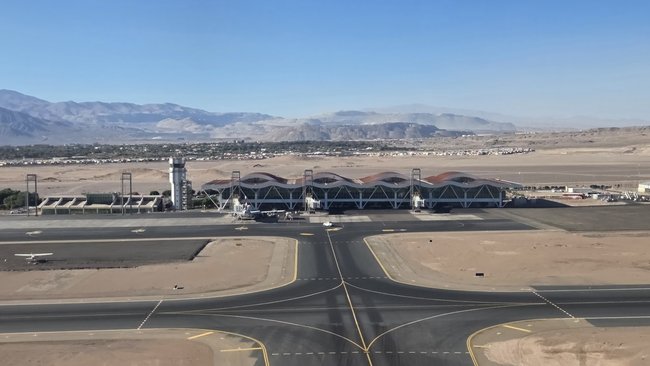
El Loa Calama Airport
At analtitude of roughly 2,200 metres, El Loa Airport marks the primary aerial entry point to the Atacama Desert, the world’s driest non‑polar landscape. The facility serves the city of Calama in Chile’s Antofagasta Region, linking the high‑altitude mining town with Santiago and a growing stream of tourists bound for the desert’s salt flats and volcanic formations. Though modest in size, the runway’s length of 3,000 metres accommodates both domestic jets and occasional international charter flights, reflecting Calama’s role as a logistical hub for the surrounding copper mines.
The airport sits on a flat expanse of desert scrub, framed by the distant silhouette of the Andes and the meandering Loa River, Chile’s longest watercourse. From the terminal’s observation deck, travelers can watch the thin plume of dust rise from the nearby Chuquicamata mine, a reminder of the region’s mining heritage that dates back to the early 20th century. A short shuttle ride brings visitors to the historic centre of Calama, where the 17th‑century Iglesia de San Francisco stands beside a plaza lined with adobe houses painted in sun‑bleached tones.
Beyond the airport, the Atacama’s UNESCO‑designated Geopark stretches toward the Salar de Atacama, where flamingos feed on brine‑rich lagoons and the landscape shifts from salt crust to volcanic cones. Day trips from Calama include guided walks through Valle de la Luna, where eroded sandstone arches cast long shadows at sunset, and night tours that reveal a sky unmarred by light pollution, ideal for stargazing. The airport’s unique position—high altitude, desert backdrop, and proximity to both industrial and natural landmarks—makes it the most distinctive airfield in Chile’s northern frontier.