About Iceland
Iceland sits where the North American and Eurasian tectonic plates pull apart — and you'll feel that raw energy everywhere. Geysers shoot boiling water skyward, lava fields stretch for miles, and glaciers grind slowly toward the sea. It's a country roughly the size of Kentucky but with only about 380,000 people, most of them clustered in Reykjavík.
The landscapes shift fast: black sand beaches at Vik, thundering waterfalls like Seljalandsfoss and Skógafoss along the South Coast, and the ethereal blue ice of Jökulsárlón Glacier Lagoon near Höfn. Up north, Akureyri anchors the Diamond Circle route — a quieter alternative to the famous Golden Circle.
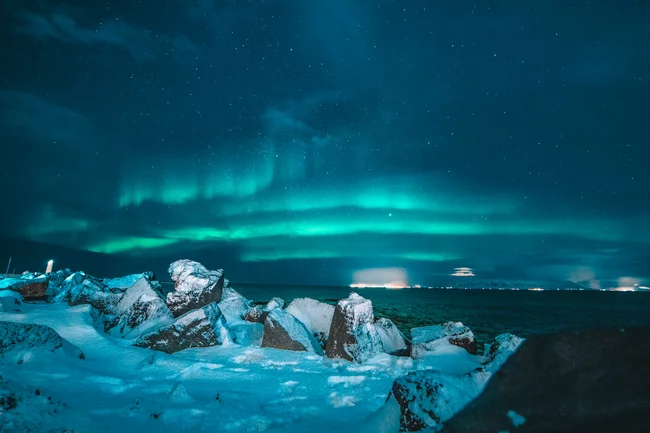
What makes Iceland magnetic is the contrast. You can hike a glacier in the morning and soak in a geothermal pool by afternoon. Northern Lights dance across winter skies while summer brings the midnight sun. It's a place where nature doesn't just exist — it performs.
Hand-crafted itineraries Iceland vacations
Explore hand-picked Iceland itineraries designed by local insiders who know every hidden corner. Each trip is completely flexible, customized to your pace, travel style, and budget.
On the road anniversary
If you love adventure, beautiful landscapes, waterfalls, delicious food, this is the place for you
Iceland
The best places to visit in Iceland
From iconic landmarks to hidden gems, explore the Iceland destinations our local insiders recommend most.
Höfn
Höfn frames the horizon with views of Vatnajökull, Europe’s largest ice cap by volume, creating a striking backdrop for the fishing town. Situated on a peninsula in the southeast of Iceland, the settlement lies at the head of Hornafjörður fjord and serves as the second‑largest community in the region. Founded in 1897, the town grew around a natural harbour that gives the place its name.
Vik
The black sand of Reynisfjara, flecked with glittering basalt shards, defines the coastline of Vik, a fishing village on Iceland’s south shore. Vik lies at the foot of the Mýrdalsjökull glacier, about 180 km east of Reykjavík, and its roughly 1,200 residents sustain a modest service economy centered on tourism and fisheries. The village’s name, meaning “bay,” reflects its sheltered position between towering cliffs and the open Atlantic.
Akureyri
Akureyri sits at the inland end of the fjord Eyjafjörður, framed by steep mountains that shelter its ice‑free harbour. The town lies in northern Iceland and carries the nickname “Capital of North Iceland,” serving as the country’s largest settlement outside the Capital Region. With a municipal charter granted in 1786, it has grown from a 9th‑century Viking settlement into a key port and fishing centre.
Reykjavík
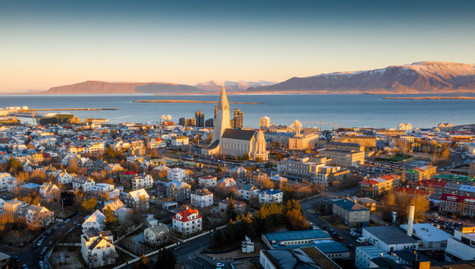
Reykjavík sits at 64°08′ N, making it the world’s northernmost capital of a sovereign state. It lies on the southern shore of Faxaflói bay in southwest Iceland and serves as the country’s political, economic and cultural centre. With about 139 000 residents in 2025, the city anchors a metropolitan area that contains roughly two‑thirds of Iceland’s population.
Selfoss
The town’s identity centers on the Ölfusá river crossing, where Iceland’s first suspension bridge was erected in 1891, turning a remote farming area into a regional hub. Selfoss lies on the banks of that river in southern Iceland, 50 kilometres southeast of Reykjavík and straddling Route 1 between Hveragerði and Hella. With a population of about 10,420 in 2025, it serves as the administrative seat of Árborg and the largest residential centre in South Iceland.
Visiting Iceland
Nearly every international flight lands at Keflavík International Airport (KEF), about 50 kilometers southwest of Reykjavík. From there, buses, shuttles, or rental cars get you into the capital in under an hour. Domestic flights connect to Akureyri and a handful of other towns, though most travelers stick to the roads.
The Ring Road (Route 1) circles the entire island in about 1,300 kilometers — a full loop takes roughly a week if you want to stop and explore. The Golden Circle day trip from Reykjavík hits Thingvellir National Park, the Geysir geothermal area, and Gullfoss waterfall, all within a few hours of Selfoss. The South Coast stretch to Vik adds waterfalls, black sand, and glacier views.
Self-drive works in summer on the Ring Road; a private driver is the better choice in winter and for the highlands. Your U.S. license is valid for up to 90 days. Less than a third of Iceland's roads are paved, many bridges are single-lane, and interior routes often stay closed until July, so allow more time than distances suggest: Reykjavík to Vík is about two and a half hours without stops. Rent a 4x4 for any F-road, and check road.is and SafeTravel.is before you set out.
Eating and Drinking Safely
Food standards are high, and you can eat seafood, lamb, and dairy without worry.
Try the Icelandic hot dog (pylsur) smothered in raw onion, crispy onion, ketchup, and remoulade — locals queue at Bæjarins Beztu in Reykjavík for good reason. Fresh-caught fish shows up everywhere, from fish stew (plokkfiskur) to pan-fried Arctic char. Skyr — thick, tangy, and protein-packed — is the local answer to yogurt, and you'll see it at every breakfast buffet.
Geographical Snapshot
Iceland covers about 103,000 square kilometers — roughly the size of Virginia and West Virginia combined — yet it's one of the least densely populated countries on Earth. Glaciers blanket roughly 11% of the land, including Vatnajökull, Europe's largest ice cap by volume.
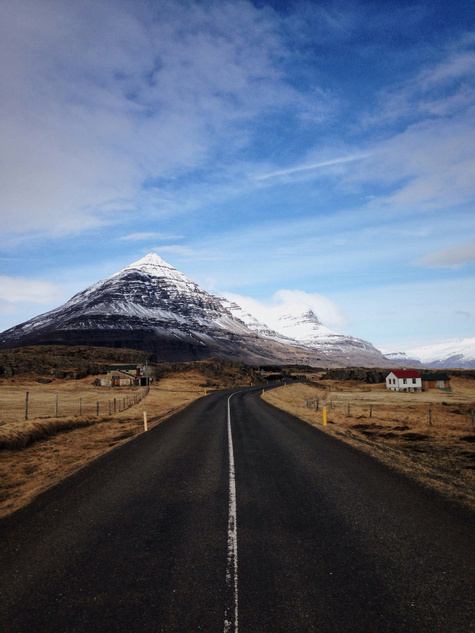
The island straddles the Mid-Atlantic Ridge, which explains the constant geothermal activity: hot springs, fumaroles, and the occasional volcanic eruption. Lava fields, basalt columns, and moss-covered plains dominate the interior highlands, while coastal fjords and black sand beaches define the edges.
When is the best time to visit Iceland?
June to August is the best time for a first trip: roads are open, days are long, and it's the only window for the highlands. Autumn through early spring is northern-lights season, when you trade daylight and road access for dark skies.
- Summer (June–August): the Ring Road, the Westfjords and, once they open (usually late June or early July), the highland F-roads. Peak rates; book lodges early.
- Shoulder (May, September): fewer people and lower rates; the F-roads close from mid-September.
- Winter (October–April): aurora on dark, clear nights, guided ice caves and short days. Many interior roads are impassable, so base in the south and west and travel with a driver who reads road.is every morning.
Plan your Iceland trip around the season or ask our Iceland Insiders.
Historical Overview
Norse settlers arrived around 870 AD, and by 930 they'd established the Althing at Thingvellir — often called the world's oldest parliament. That site, now a UNESCO World Heritage location and part of the Golden Circle, is where you can literally stand between two continents as the tectonic plates drift apart.
Iceland remained under Norwegian and later Danish rule for centuries before gaining full independence in 1944. Today, the country blends Viking heritage with modern Nordic design, and you'll see references to sagas, runes, and folklore woven into everyday life.
Society & Culture
With a population under 400,000, Iceland feels intimate — many locals are connected through family, work, or the famous Íslendingabók genealogy database. Icelandic, a language largely unchanged since medieval times, remains the official tongue.
Folklore runs deep here: surveys suggest a surprising number of Icelanders believe in — or at least won't deny — hidden people (huldufólk) living in rocks and hills. You'll notice an outdoor culture too, with geothermal pools serving as community gathering spots and hiking trails crisscrossing even urban areas in Reykjavík.
Economic Snapshot
Fishing built Iceland's economy for centuries, and seafood exports still matter. Tourism has surged since 2010, now rivaling fishing as a top industry — you'll feel that in the infrastructure: well-marked trails, efficient airport transfers, and accommodations ranging from farmstays to design hotels. Geothermal energy powers homes and heats sidewalks in winter.
Iceland Travel FAQs
Is Iceland safe to visit?
Yes. Violent crime is rare, and as of September 2026 the U.S. State Department rates Iceland Level 1, its lowest advisory. Nature is the real risk: weather turns fast and closes roads, the black-sand beaches of the south coast carry their own SafeTravel warnings for dangerous waves, and the Reykjanes Peninsula near Grindavík has had repeated eruptions, so check SafeTravel.is before going there. Walk glaciers and ice caves only with a certified guide, and keep valuables out of parked cars. Our Iceland Insiders plan an Iceland trip planned by locals around each day's conditions.
What documents do I need to enter Iceland?
A U.S. passport valid at least three months beyond your planned departure from the Schengen area, and no visa for stays of up to 90 days in any 180, counted across all Schengen countries. Iceland is in Schengen, so as of September 2026 you also register in the EU's Entry/Exit System (EES) when you enter the area: passport scan, photo and fingerprints. ETIAS pre-travel authorization is not yet required and has no confirmed start date. Keep your return ticket and proof of funds handy. Plan your Iceland trip.
Can you drink the water, and what about vaccines, mosquitoes and medical care in Iceland?
Yes, drink the tap water: it's among the purest in Europe and needs little or no treatment. No special vaccines are needed beyond routine ones (the CDC suggests considering hepatitis A and recommends hepatitis B). Care is high quality but limited outside the capital area, ambulances can take a long time in remote places, and non-residents pay in full before leaving, so carry medical and evacuation cover. Dial 112; if a call won't connect, SafeTravel lists 599-0112 as the backup number. Plan your Iceland trip with a local expert or ask our Iceland Insiders.
What currency is used in Iceland, and are cards accepted?
Iceland uses the Icelandic króna (ISK), but you'll rarely need cash: cards are accepted almost everywhere, down to small cafés and farm guesthouses. Bring a card with a PIN, because most gas stations are self-service and take only cards with a PIN. If you want a few krónur for small purchases, withdraw them at an airport or bank ATM rather than exchanging dollars at home. With a private driver you won't need the pumps at all; plan your Iceland trip.
How much does a day in Iceland cost?
More than almost anywhere else in Europe: Eurostat's latest comparison (2024) puts Iceland's restaurant and hotel prices at about 167% of the EU average, and overall consumer prices at about 173%. Build the budget around lodging, which is limited and priced high in summer outside Reykjavík, plus guided glacier, ice-cave and whale trips, a 4x4 or private driver, and dining. Booking the best-located rooms early matters more than hunting for deals. Get a custom Iceland quote.
Is English spoken in Iceland?
Yes, almost universally: you can travel the whole country in English, from Reykjavík restaurants to farm guesthouses and glacier guides. Icelandic is the national language, though, and it's what you'll see on road signs and place names, so a few words help: takk (thanks), góðan daginn (good day) and lokað (closed). Our Iceland Insiders brief you on the rest when they plan your Iceland trip.