


Italy Travel Guide
Italy delivers everything you've dreamed about European travel — and then some. You'll walk through millennia of history in Rome, float down Venice's Grand Canal in a gondola, stand face-to-face with Renaissance masterpieces in Florence, and watch the sunset paint Positano's pastel buildings in golden light.
About Italy
Italy isn't just a country — it's a living museum where every region tells its own story through architecture, art, and food. In Rome, you'll trace 2,800 years of history from the Colosseum's gladiatorial arenas to the Vatican's Sistine Chapel ceiling. Florence packs more Renaissance art per square mile than anywhere on earth, with Michelangelo's David, Botticelli's Birth of Venus, and Brunelleschi's dome all within walking distance. Venice — impossibly built on 118 islands — turns every wrong turn into a discovery: hidden campi (squares), neighborhood bacari (wine bars), and bridges that frame the kind of views painters have been trying to capture for 500 years.
Beyond the famous trio, Italy's regional diversity gives you dozens of distinct experiences. The Amalfi Coast curves along cliffs where villages like Positano cascade down to turquoise waters — this is where you'll eat seafood on terraces that seem to float above the Mediterranean. Cinque Terre's five fishing villages, connected by clifftop hiking trails, show you what Italian coastal life looked like before mass tourism. Head northeast to the Dolomites, where jagged limestone peaks create some of Europe's most dramatic mountain scenery — equally stunning whether you're hiking in summer or skiing in winter.
Southern Italy rewards travelers who venture beyond the standard itinerary. Puglia gives you whitewashed hill towns, trulli houses with conical stone roofs in Alberobello, and the cave city of Matera — one of the world's oldest continuously inhabited settlements. Sicily feels like its own country, with Greek temples, Norman cathedrals, baroque cities, and Mount Etna's volcanic slopes, all flavored with influences from every Mediterranean culture that passed through over 3,000 years.
Italy's experiences go deeper than sightseeing. You'll take pasta-making classes from nonnas (grandmothers) who learned from their nonnas, taste wines in Tuscan vineyards where the same families have been making Chianti for generations, and wander through morning markets where vendors still argue passionately about the proper way to prepare artichokes. This is a country that treats daily life — eating, talking, making things by hand — as art forms worth perfecting and savoring.
Hand-crafted itineraries Italy vacations
Explore hand-picked Italy itineraries designed by local insiders who know every hidden corner. Each trip is completely flexible, customized to your pace, travel style, and budget.
Pizza, Piazzas and Sea Breezes
Embark on a sun‑kissed Italian adventure where ancient piazzas, rolling vineyards, and the sparkling Mediterranean coast weave together a vibrant family getaway. You’ll wander Rome’s ancient forums, sip wine in Monti, cruise the dramatic Amalfi cliffs, and glide through Venice’s quiet lagoons, sampling gelato and market treats. Friendly locals and passionate hosts will share stories, cooking secrets, and hidden alleys, leaving your family with unforgettable memories of Italy’s warmth, flavor, and timeless charm.
Italy
Italy Family Grand Tour
The Harters took Italy as a family grand tour, ten days that ran from Rome's ancient stones to Venice's car-free canals with the kids setting the pace. They climbed St. Peter's dome, walked the Colosseum with a guide, rolled their own pizza and gelato in Rome, and drove a Fiat 500 boat past Sirmione's moated castle on Lake Garda. Venice closed it out, the kids painting carnival masks at Carta Alta before a family kayak through the canals at sunset.

Italy
Bella Italia in Spring
Glenn and Joanne explored Italy’s timeless blend of history, cuisine, and scenery on a two‑week adventure. They traveled from Rome’s historic heart to Tuscany’s rolling hills, explored Florence’s Renaissance treasures, drifted through Venice’s canals, and concluded in Milan’s modern design scene. Along the way, friendly locals, knowledgeable guides, and vibrant markets offered authentic flavors and stories, leaving them with a deeper appreciation for Italy’s living heritage.
Italy
The best places to visit in Italy
From iconic landmarks to hidden gems, explore the Italy destinations our local insiders recommend most.
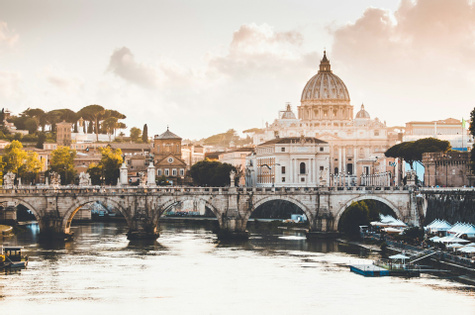
Rome
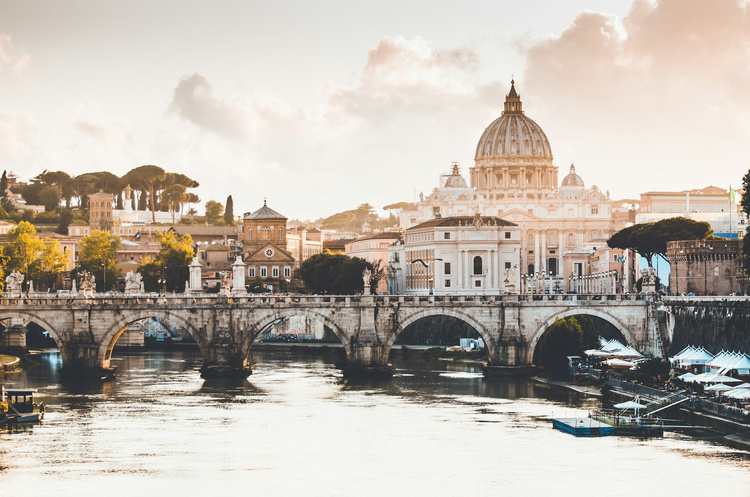
A city built on seven hills that also encloses the world’s smallest sovereign state defines Rome, Italy. It serves as the capital of the Italian Republic and of the Lazio region, lying in the central‑western part of the peninsula along the Tiber Valley. With a municipal population of about 2.7 million, it forms the core of a metropolitan area that exceeds four million residents.
Florence
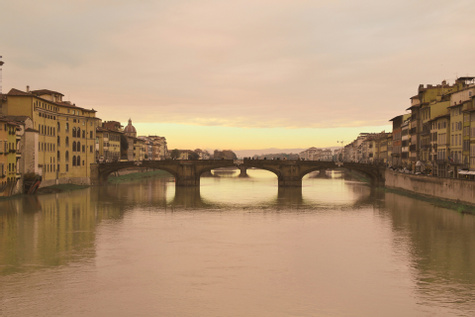
The silhouette of Brunelleschi’s dome dominates Florence’s skyline, a concrete reminder of the city’s pioneering role in the Renaissance. Florence is a city in the Tuscany region of central Italy, perched on the Arno River, and its historic centre carries UNESCO World Heritage status. With roughly 380,000 residents, the compact urban fabric lets a visitor walk from the Ponte Vecchio to the Medici palaces in minutes.
Matera
Carved into sheer limestone cliffs, the Sassi of Matera descend 380 metres in twelve levels down the Gravina canyon. Matera is the capital of the province of the same name in Basilicata, southern Italy. The site earned UNESCO World Heritage status in December 1993 and served as a European Capital of Culture in 2019.
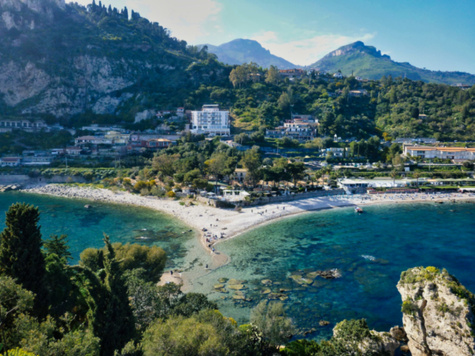
Taormina
Perched on a cliff above the Ionian Sea, Taormina frames its ancient Greek theatre with sweeping ocean views. The town lies on Sicily’s east coast in the Metropolitan City of Messina, Italy, and has welcomed visitors since the nineteenth century. Its steep hilltop rises about 250 metres above the water, while a rock crowned by a Norman castle tops the ridge another 150 metres higher.
Positano
The cascade of pastel‑colored houses clinging to sheer limestone cliffs defines Positano, a town on Italy’s Amalfi Coast that drops toward the Tyrrhenian Sea. Built on the slopes of the Lattari Mountains, the settlement presents a “vertical village” of narrow stairways linking terraced homes, olive trees and lemon groves. With 3,678 residents, it has evolved from a Roman‑era fishing hamlet into a worldwide holiday destination.
Venice
Venice is famed for its network of canals that turn the city into a living waterway, a setting that has earned it nicknames such as “City of Canals” and “The Floating City.” It lies in northeastern Italy’s Veneto region, spread across a lagoon between the mouths of the Po and Piave rivers. The historic core comprises six sestieri—Cannaregio, Castello, Dorsoduro, San Marco, San Polo and Santa Croce—each threaded by narrow alleys and open to the sea.
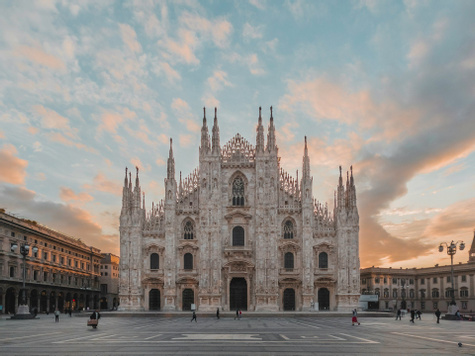
Milan
Milan’s historic Navigli canals, once the lifelines of trade, still define the city’s central pattern. The city lies in northern Italy’s Lombardy region, serving as the regional capital and the seat of the Metropolitan City of Milan. With more than 1.3 million residents in the city proper and a metropolitan population exceeding 6 million, it drives about one‑fifth of Italy’s gross domestic product.
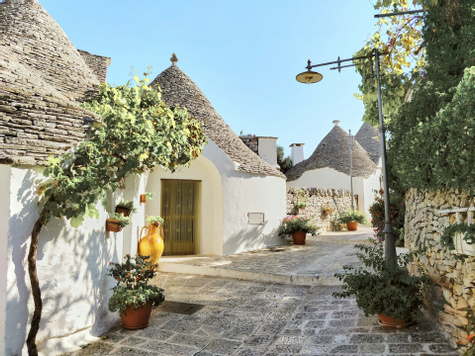
Alberobello
Alberobello is defined by its cluster of cone‑capped stone houses called trulli, which dominate the town’s skyline and give the settlement its unmistakable silhouette. The small town lies in the Metropolitan City of Bari, in the Apulia region of southern Italy, and its 10,237 residents (2022) live among these dry‑stone structures. Recognised as one of I Borghi più belli d’Italia, the place draws visitors who come to walk through a living museum of vernacular architecture.
Visiting Italy
Getting to Italy is straightforward, with Rome's Fiumicino and Milan's Malpensa serving as the main international gateways. You'll find direct flights from North America, Asia, and every European capital, plus budget carriers connecting dozens of regional airports across the country. If you're already in Europe, high-speed trains make Italy easily accessible — the Frecciarossa rockets you from Paris to Milan in seven hours, or Munich to Venice in six. Within Italy, the train network is your best friend: Trenitalia and Italo's high-speed services connect major cities in under two hours (Rome to Florence takes 90 minutes), while regional trains reach smaller towns at a fraction of car rental costs.
Italy's regions each have distinct personalities and logistics. Northern Italy — Milan, Venice, Verona, the Dolomites, and the Italian Lakes — is well-connected by trains and has the country's most developed infrastructure. Central Italy revolves around Rome, Florence, and Tuscany, where you can cover most highlights by train, though renting a car opens up Tuscan hill towns and Umbrian countryside. Southern Italy and the islands — the Amalfi Coast, Puglia, Sicily, Sardinia — requires more planning: trains reach major cities, but you'll need buses, ferries, or a car to access coastal villages and rural areas.
For first-timers, a Rome-Florence-Venice circuit by train gives you three distinct cities and iconic Italian experiences without the stress of driving. If you have more time, pick one region to explore deeply rather than trying to cover everything — Tuscany for countryside and wine, the Amalfi Coast for dramatic coastal scenery, Puglia for under-the-radar southern culture, or Sicily for the most diverse landscapes and history.
Eating and drinking in Italy
Italy sets the global standard for food safety and quality — this is a country that takes what goes on your plate as seriously as what hangs in its museums. You can eat and drink confidently everywhere from Michelin-starred restaurants to family-run trattorias to street food stands.
Italian cuisine is intensely regional, and what you should eat changes every 50 miles. In Rome, order cacio e pepe (pasta with pecorino cheese and black pepper), carbonara (with guanciale and egg, never cream), and saltimbocca. Florence does bistecca alla fiorentina (massive T-bone steaks) and ribollita (hearty bread and vegetable soup). Along the Amalfi Coast, everything comes from the sea: fresh anchovies, swordfish, seafood pasta with local lemons and tomatoes. Don't miss regional wines — Chianti and Brunello in Tuscany, Barolo and Barbaresco in Piedmont, Primitivo in Puglia — and end meals with espresso (never cappuccino after 11am) and amaro.
Geographical Snapshot
Italy stretches about 760 miles from the Alps to Sicily's southern tip — roughly the length of California, or London to southern Spain. Despite its modest size (116,350 square miles, slightly larger than Arizona), Italy packs extraordinary geographical diversity into a boot-shaped peninsula extending into the Mediterranean. The Alps form the northern border, where peaks in the Dolomites reach over 10,000 feet with distinctive pale limestone towers. The Apennine mountain chain runs down the peninsula's spine like a backbone, creating distinct climates and cultures on either side.
Italy protects about 10% of its territory through 25 national parks and hundreds of regional parks. The country claims the most UNESCO World Heritage Sites in the world (59 at last count), covering everything from Venice's lagoon city to the archaeological sites of Pompeii and Herculaneum, from Florence's historic center to the trulli houses of Alberobello, from Cinque Terre's coastal landscapes to the ancient cave dwellings of Matera.
When is the best time to visit Italy?
Late April–early June and September–mid-October are the best time for most Italy trips: comfortable for walking cities, easier restaurant bookings and thinner crowds than summer.
- Rome, Florence and Venice: spring and autumn; July–August is hot and busiest. Winter is quiet and mild, though Venice can flood at high tide (acqua alta).
- Amalfi Coast, Capri, Puglia and Sicily: May–June and September for sea and boat days; many coastal hotels close in winter.
- Dolomites and the Lakes: June–September for hiking; December–March for skiing.
Summer heatwaves are common in the south. Plan your Italy trip around the season or ask our Italy Insiders.
Historical Overview
Italy's history reads like a greatest hits of Western civilization — ancient Romans, Renaissance masters, and everything in between. Rome wasn't just built in a day; it spent 1,000 years as the capital of an empire that stretched from Britain to North Africa, leaving behind monuments like the Colosseum, the Pantheon, and the Roman Forum that you can still walk through today. After Rome fell in 476 CE, Italy fragmented into city-states, kingdoms, and papal territories — a political division that lasted until 1861 but created the regional diversity you'll experience today.
For travelers, Italian history isn't locked behind museum glass — it's the street you're walking on and the building you're having dinner in. You'll explore Greek temples in Sicily that predate Rome, wander through Pompeii where volcanic ash preserved a Roman city exactly as it was in 79 CE, and climb medieval towers in San Gimignano that Tuscan families built to show off their wealth. Every Italian city has layers: Roman foundations, medieval walls, Renaissance palaces, Baroque churches, all existing simultaneously. Matera's sassi — ancient cave dwellings carved into limestone — show continuous human habitation spanning 9,000 years.
Society & Culture
Italy's 60 million people identify strongly with their regions first, their country second — a legacy of centuries of fragmentation. A Venetian has different customs, dialect, and food traditions than a Sicilian or Piedmontese, and locals take pride in these distinctions. Italian (based on the Florentine dialect) is the official language, but regional dialects remain strong. You'll get by with English in major tourist areas, hotels, and restaurants in cities, but learning basic Italian phrases shows respect: a friendly "buongiorno" and "grazie" go a long way.
Italian culture revolves around relationships, food, and la bella figura — the art of making a good impression through appearance, manners, and style. Meals are social events, not just fuel: dinner rarely starts before 8pm. Coffee culture has rules: cappuccino is a breakfast drink only; espresso is what you order after lunch or dinner. The passeggiata (evening stroll) is a social institution: around 6-7pm, whole towns walk the main streets, seeing and being seen. This emphasis on connection, quality of life, and savoring experiences — not rushing through them — is what travelers find most compelling about Italian culture.
Economic Snapshot
Italy has the world's eighth-largest economy and third-largest in the European Union, driven by manufacturing, tourism, and agriculture. Tourism contributes about 13% of GDP — Italy welcomes over 65 million international visitors annually, making it one of the world's most-visited countries. You'll use the euro everywhere, and credit cards are widely accepted in cities and tourist areas, though small family-run shops, markets, and rural trattorias may prefer cash. ATMs (called Bancomat) are ubiquitous, and tipping isn't obligatory — service charges are typically included in restaurant bills, though rounding up for excellent service is appreciated.
Italy Travel FAQs
Is Italy safe to visit?
Yes. As of September 2026 the U.S. State Department rates Italy Level 2, "exercise increased caution", because of terrorism risk, and advises staying alert at tourist sites and transport hubs. Violent crime is rare; the everyday risk is organized pickpocketing at stations, on public transport and at major sights, plus break-ins at rental cars. Also watch for camera-enforced restricted-traffic zones in historic centers: fines are mailed to your home. An Italy trip planned by locals, with drivers who know the zones, avoids both; ask our Italy Insiders.
Can you drink the water, and what about vaccines, mosquitoes and medical care in Italy?
Yes, the tap water is safe to drink, including from Rome's public fountains, though the mineral taste varies by region. No vaccines are required beyond routine ones (the CDC suggests considering hepatitis A and B). Health facilities are adequate throughout Italy but thinner outside cities; private hospitals usually want payment or proof of insurance first, and public hospitals can't issue the itemized bill many U.S. insurers need, so bring travel medical cover. Dial 112. In summer, sightsee early and late to avoid the heat. Plan your Italy trip with a local expert.