


Italy Family Grand Tour
The Harters took Italy as a family grand tour, ten days that ran from Rome's ancient stones to Venice's car-free canals with the kids setting the pace. They climbed St. Peter's dome, walked the Colosseum with a guide, rolled their own pizza and gelato in Rome, and drove a Fiat 500 boat past Sirmione's moated castle on Lake Garda. Venice closed it out, the kids painting carnival masks at Carta Alta before a family kayak through the canals at sunset.
The Harters took Italy as a family grand tour, ten days that ran from Rome's ancient stones to Venice's car-free canals with the kids setting the pace. They climbed St. Peter's dome, walked the Colosseum with a guide, rolled their own pizza and gelato in Rome, and drove a Fiat 500 boat past Sirmione's moated castle on Lake Garda. Venice closed it out, the kids painting carnival masks at Carta Alta before a family kayak through the canals at sunset.
Places you'll stay
Rome
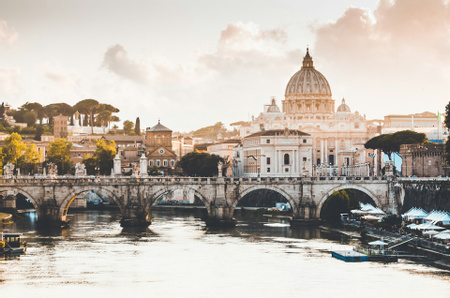
A city built on seven hills that also encloses the world’s smallest sovereign state defines Rome, Italy. It serves as the capital of the Italian Republic and of the Lazio region, lying in the central‑western part of the peninsula along the Tiber Valley. With a municipal population of about 2.7 million, it forms the core of a metropolitan area that exceeds four million residents.
Destination
Florence
The silhouette of Brunelleschi’s dome dominates Florence’s skyline, a concrete reminder of the city’s pioneering role in the Renaissance. Florence is a city in the Tuscany region of central Italy, perched on the Arno River, and its historic centre carries UNESCO World Heritage status. With roughly 380,000 residents, the compact urban fabric lets a visitor walk from the Ponte Vecchio to the Medici palaces in minutes.
Destination
Sirmione
A peninsula that splits the lower reaches of Lake Garda gives Sirmione its most striking silhouette, crowned by the massive Roman ruins called the Grottoes of Catullus. The town is a comune in the province of Brescia, Lombardy, northern Italy, sandwiched between Desenzano del Garda and Peschiera del Garda. From the first century BC it served as a favored retreat for wealthy families of Verona, a reputation echoed in the verses of the poet Catullus, who owned a villa there.

Destination
Venice
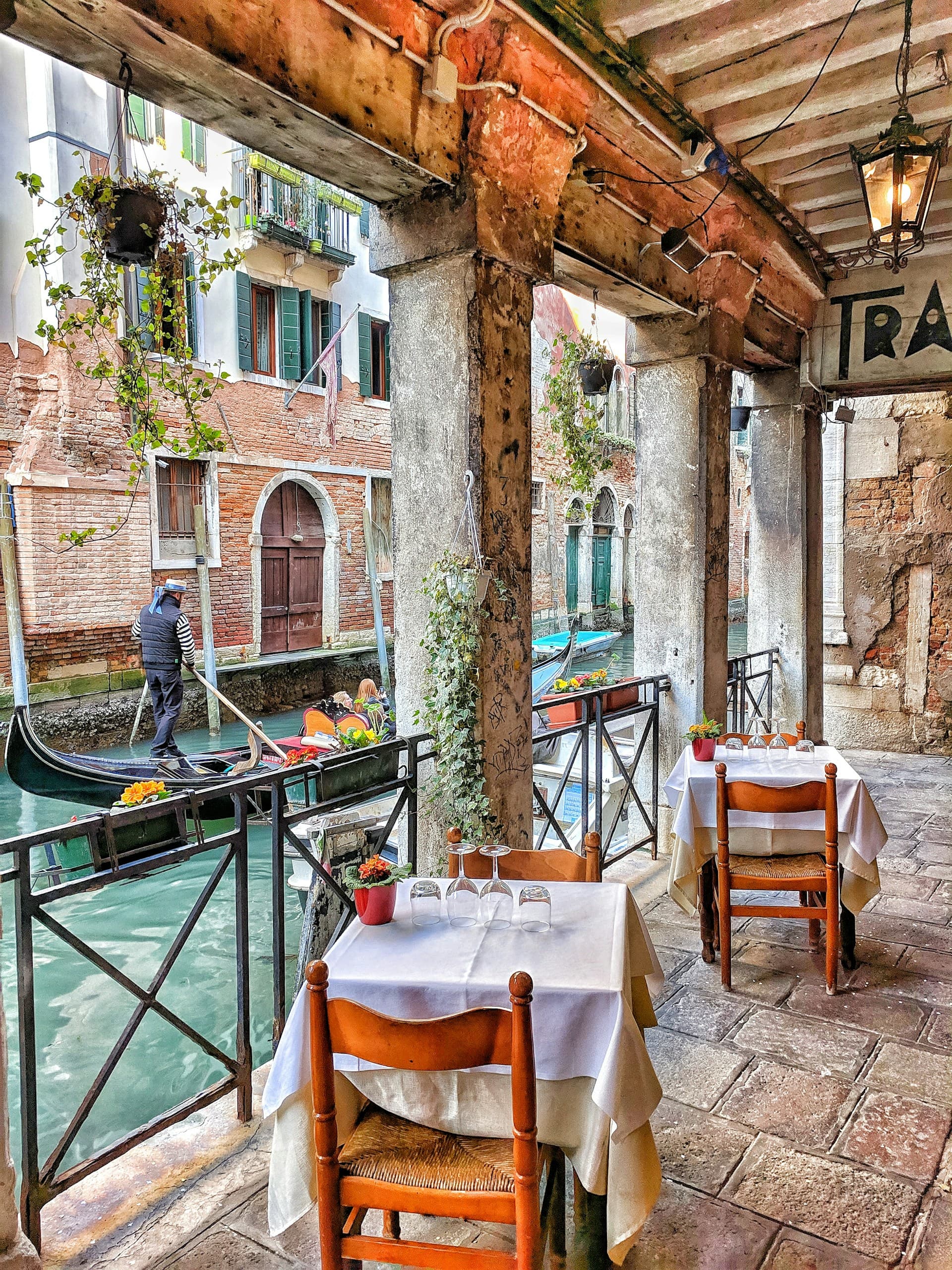
Venice is famed for its network of canals that turn the city into a living waterway, a setting that has earned it nicknames such as “City of Canals” and “The Floating City.” It lies in northeastern Italy’s Veneto region, spread across a lagoon between the mouths of the Po and Piave rivers. The historic core comprises six sestieri—Cannaregio, Castello, Dorsoduro, San Marco, San Polo and Santa Croce—each threaded by narrow alleys and open to the sea.
Destination
Moments to look forward to
Ercolani Cellars - "Underground City" and Museum
A labyrinth of 30 kilometres of tuff tunnels runs beneath the town of Ercolano, forming the Ercolani Cellars, known locally as the “Underground City” and Museum. The network, cut in the 16th century to store wine for the aristocratic families of the Bay of Naples, now welcomes visitors as a subterranean museum in Italy. It lies within the archaeological area of Herculaneum, which holds UNESCO World Heritage status.

Attraction
Castello Scaligero di Sirmione
A 13th‑century castle rises from a narrow strip of land encircled by water, offering a rare blend of medieval stonework and open‑water scenery. The fortress stands at the tip of Sirmione in Italy, its walls dating back to the 1200s and its silhouette reflected in the surrounding lake. Visitors recognize it instantly as a historic stronghold surrounded on all sides by water.

Attraction
Lago di Garda
The lake stretches across northern Italy as the country’s largest inland water body, its shoreline dotted with a string of towns that cling to the water’s edge. It lies in the Italian peninsula and draws visitors who seek both scenery and activity. The setting combines open water with built‑up communities, creating a landscape where leisure and settlement meet.
Attraction
Grotte di Catullo e Museo Archeologico di Sirmione
The most striking element is the extensive ruin of a Roman villa that crowns a peninsula overlooking the lake. The site, known as Grotte di Catullo, lies in Italy and is accompanied by an olive grove that frames the ancient stonework, while a small archaeological museum sits close by.

Attraction
Ponte di Rialto
An ornate covered stone footbridge from the 16th century spans Venice’s Grand Canal, its arches sheltering a line of shops and restaurants. Known as the Ponte di Rialto, the bridge anchors the historic heart of the city and provides the only permanent crossing of the canal at its narrowest point. Its stonework and vaulted roof create a distinct silhouette against the water, making it instantly recognizable to visitors to Italy.

Attraction
Grand Canal
A 3.8‑kilometre waterway that winds through Venice in a reverse‑S shape serves as the city’s principal channel. It links the lagoon near the Santa Lucia railway station with the basin at San Marco, forming the backbone of Venice, Italy.
Attraction
Piazza San Marco
The open expanse of Piazza San Marco stretches before the western façade of St Mark’s Basilica, its four bronze horses looming as symbols of Venice’s historic pride and power; a remark attributed to Napoleon once called the square “the drawing‑room of Europe.” This principal public square lies at the heart of Venice, Italy, and together with the adjoining Piazzetta forms the city’s social, religious and political centre.
Attraction
Doge's Palace
Rising on the edge of the lagoon and the Piazzetta, the Doge's Palace dominates Venice’s central square with a dual façade that once framed both the Doge’s residence and the Republic’s courts. Built in the Venetian Gothic style, the palace now serves as a museum and forms part of the Fondazione Musei Civici di Venezia network in Italy.
Attraction
Vatican Museums
The Vatican Museums culminate in the Sistine Chapel, whose ceiling and altar wall were painted by Michelangelo, and this masterpiece marks the final stop of a route through 24 galleries. They sit within Vatican City, the independent enclave surrounded by Rome, Italy. The complex presents roughly 70,000 works, of which about 20,000 are on view for the public.

Attraction
Sistine Chapel
Michelangelo’s ceiling, a sweeping fresco of biblical scenes, dominates the interior of the Sistine Chapel, the papal chapel within the Apostolic Palace in Vatican City, Italy. Built between 1473 and 1481 under Pope Sixtus IV, the chapel was originally called the Cappella Magna and took its name from its patron. It now hosts the papal conclave that elects a new pope.

Attraction
Saint Peter’s Basilica
The basilica’s sheer size, allowing up to 20,000 worshippers, marks it as one of the largest churches of the Late Renaissance. It stands in Vatican City, the sovereign enclave within Rome, Italy, and serves as the principal Catholic shrine. Designed by a succession of architects, the most famous among them being Michelangelo, the building reflects the collaborative spirit of its era.

Attraction
Colosseum
An elliptical arena that once accommodated up to 80,000 spectators dominates the centre of Rome, standing just east of the Roman Forum. Built under Emperor Vespasian in 72 AD and finished by his son Titus in 80 AD, the structure is the largest ancient amphitheatre ever built and the largest standing amphitheatre in the world. It is known today as the Colosseum, a landmark of Italy’s capital.
Attraction
Roman Forum
A sprawling network of ancient Roman temples, public squares and civic buildings dominates the excavated landscape that stretches across the centre of Rome. The site, known as the Roman Forum, lies in Italy and reveals layers of architecture that reach back roughly two thousand years. Its sheer size and concentration of ruins make it instantly recognizable among the city’s historic fabric.
Attraction
Palatine Hill
Perched above the surrounding landscape, Palatine Hill contains the ruins of ancient imperial palaces that once formed the heart of imperial power. The site is an archaeological area in Italy where the stone foundations of those palaces remain visible among the earthworks. Guided tours are offered to help visitors understand the layout and history of the complex.

Attraction
Trevi Fountain
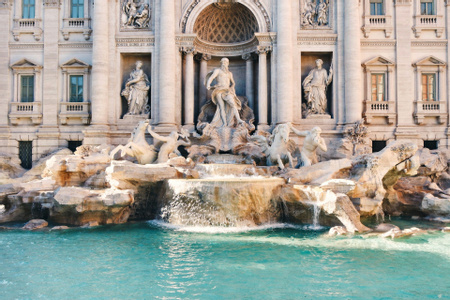
The fountain’s 26.3‑metre height and 49.15‑metre width make it the largest Baroque fountain in Rome, a landmark that dominates the Trevi district of the capital. Completed in 1762, the structure stands as an 18th‑century work of architecture and sculpture, drawing visitors to its dramatic scale and elaborate design. It belongs to Italy and marks a focal point of the city’s historic centre.
Attraction
Pantheon
Its dome, still the world’s largest unreinforced concrete dome, crowns a structure that has stood for nearly two millennia in the heart of Rome, Italy. Built as a Roman temple and consecrated as the Basilica of St. Mary and the Martyrs in the seventh century, the Pantheon combines ancient engineering with continuous religious use. The square before it, Piazza della Rotonda, frames the building’s striking silhouette.
Attraction
Piazza Navona
The elongated oval of Piazza Navona follows the outline of the 1st‑century Stadium of Domitian, turning a former Roman arena into Rome’s most celebrated open square. It occupies the historic centre of the city in Italy and serves as a living stage for Baroque art and urban life.
Attraction
Spanish Steps
The 135‑step monumental stairway climbs a 29‑metre slope from the bustling Piazza di Spagna to the elevated Piazza Trinità dei Monti, where the twin‑topped Trinità dei Monti church crowns the ascent. In Rome, Italy, the staircase links the French‑styled Spanish Embassy at its base with the French‑patroned church at its summit, creating a striking urban axis.
Attraction
Villa Borghese
A sprawling urban green space, Villa Borghese presents formally landscaped gardens, a central lake, and historic villas that now hold important museums. The park occupies a large area within Italy, providing a blend of natural scenery and cultural venues that distinguishes it from ordinary city squares.
Attraction
Lungo il Tevere Roma
The riverfront promenade that follows the Tiber for more than a dozen kilometres defines Lungo il Tevere, a continuous stretch of walk, bike lane and parkland threading the historic core of Rome, Italy. Built in the 19th century to tame the river’s floods, the boulevard links ancient bridges with modern cafés while the water reflects centuries of stone architecture. It lies within the UNESCO‑listed Historic Centre of Rome, a protected urban landscape that preserves layers of imperial, medieval and papal history.

Attraction
Theatre of Marcellus
Built in the closing years of the Roman Republic, the Theatre of Marcellus is one of the earliest large‑scale open‑air venues to survive in Rome. It occupies a site in the modern rione of Sant’Angelo, placing the ancient stone structure amid the city’s historic core. In the sixteenth century the theatre was transformed into a palazzo, layering Renaissance residential architecture onto its Roman foundations.

Attraction
Venetian Masks Workshop - Carta Alta
Every year the workshop in the Castello district creates more than 500 hand‑crafted masks for the Carnival, following a papier‑mâché recipe that has been handed down since the 1600s. The Venetian Masks Workshop – Carta Alta operates from a 15th‑century palazzo that opens onto a narrow canal in Venice, Italy, and welcomes visitors into a space where lacquered wood, powdered pigments and thin strips of gold leaf lie on sturdy workbenches.
Attraction
Venetian Lagoon
A shallow, enclosed arm of the Adriatic Sea cradles the city of Venice, giving the water body its fame. The Venetian Lagoon, also called the Lagoon of Venice, lies in northern Italy and forms the basin in which the historic city sits. Its name, a Venetian adaptation of the Latin word lacus meaning “lake”, later became the English term for any similar shallow salt‑water embayment.

Attraction
Incredible Stays


Hotel Recommendation #1
A 9/5 guest-rated stay in Rome.


Hotel Recommendation #2
A 8.9/5 guest-rated stay in Florence.


Hotel Recommendation #3
A 8.6/5 guest-rated stay in Sirmione.


Hotel Recommendation #4
A 9.4/5 guest-rated stay in Venice.
Curated to you
Insider-led Italy Design & Concierge
Your insider team designs the trip around what you care about, then supports you in-country with private logistics, vetted partners, and concierge help when plans change.