Insider-Led Spain Travel & Concierge
Expert local insiders design your Spain trip from scratch — hand-picked stays, private guides, and concierge support from first call to final day.
Browse our best hand-crafted itineraries
Get inspired and explore our curated collection of hand-crafted trips. From romantic honeymoons to family adventures, every itinerary is completely flexible and tailored to your needs.
Spain & Portugal: The Heart of Iberia
An unforgettable 14-day journey through Spain and Portugal! You’ll start in vibrant Barcelona, where Gaudí's breathtaking architecture and lively Mediterranean charm await. Next, you’ll travel to the Basque Country, discovering the coastal beauty and culinary delights of San Sebastián and Bilbao, including a hands-on pintxos cooking class and a guided food tour. From there, you’ll continue to León and Oviedo to admire unique Gothic and pre-Romanesque architecture. The adventure finishes in Portugal: first in Porto, exploring its historic riverside and world-renowned Douro Valley wine region, and finally in captivating Lisbon, with its scenic viewpoints, historic neighborhoods, and the soulful sounds of Fado. Along the way, you’ll enjoy a balance of guided experiences and free time to explore at your own pace.
Spain
Create your own Spain itinerary
Work with our local experts to design a journey that fits your pace, interests, and budget perfectly. From hidden waterfalls to private beach villas.
Your dates, your pace.
Hand-picked stays & experiences.
Private local guides throughout.

The best places to visit in Spain
From iconic landmarks to hidden gems, explore the Spain destinations our local insiders recommend most.
Granada
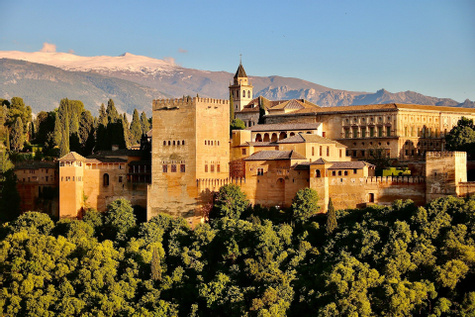
Perched where the Darro, Genil, Monachil and Beiro rivers converge beneath the Sierra Nevada, Granada presents a striking mix of mountain backdrop and river valleys. The city serves as the capital of its Andalusian province in southern Spain and lies only an hour’s drive from the Mediterranean coast known as the Costa Tropical. With more than 230 000 residents, it ranks among Spain’s larger urban centres.
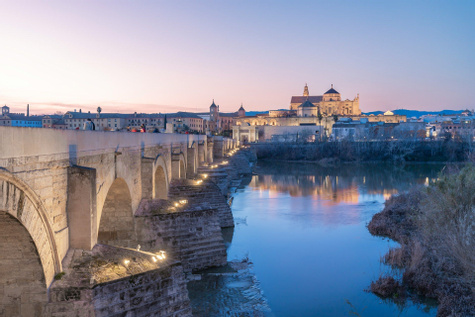
Córdoba
The former mosque that dominates Córdoba’s skyline, the Mezquita‑Cathedral, merges a forest of red‑and‑white arches with a Christian nave, creating a single monument that embodies centuries of change. Córdoba is a city in Andalusia, southern Spain, situated on the right bank of the Guadalquivir River. With a population of about 325 000 in 2024, it ranks among the country’s larger urban centres.
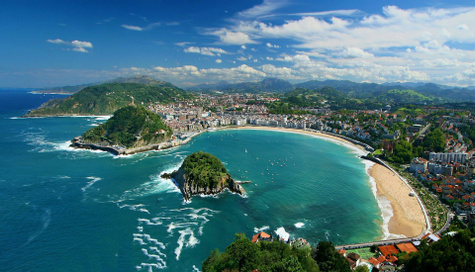
Donostia / San Sebastián
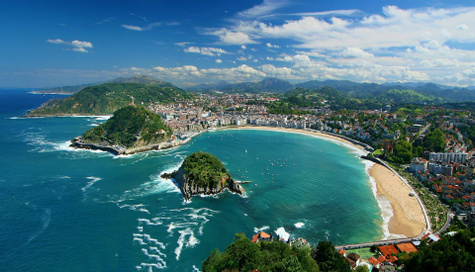
A half‑moon of golden sand curves along the city’s waterfront, forming La Concha, the beach that has defined San Sebastián’s image since the 19th century. The city sits on the Bay of Biscay in Spain’s Basque Country, where the Atlantic meets a compact urban landscape of about 190,000 residents. Its reputation for culinary precision and its seaside promenade give the town a character that feels both historic and contemporary.
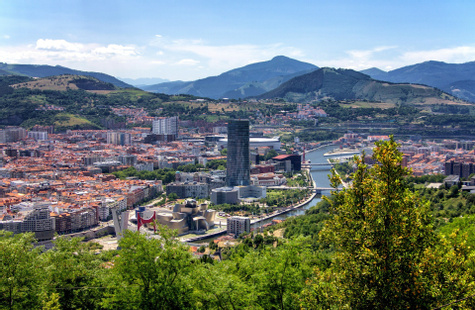
Bilbao
The titanium curves of the Guggenheim Museum dominate Bilbao’s riverfront, signalling the city’s shift from a 19th‑century industrial hub to a centre of contemporary culture. Bilbao is a city in northern Spain, situated about 16 kilometres (10 mi) south of the Bay of Biscay within the Basque Country. With more than 340 000 residents, it forms the most populous urban area in the region.
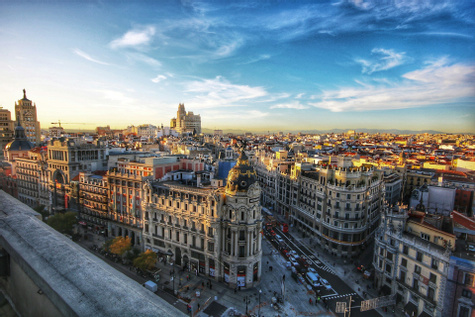
Madrid
Along the Paseo del Prado, Madrid gathers three UNESCO‑listed museums that together form the city’s Golden Triangle of Art. The capital of Spain sits in the centre of the Iberian Peninsula, straddling the Manzanares River at roughly 660 metres above sea level. With more than 3.4 million residents in the municipal limits and a metropolitan population of about 6.8 million, it serves as the nation’s political, economic and cultural hub.
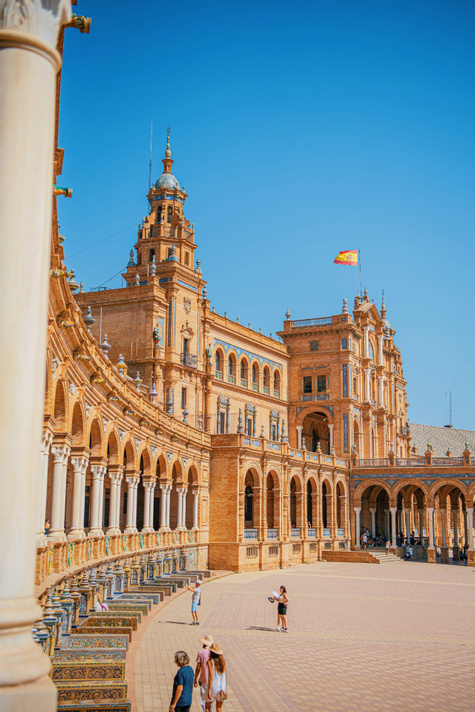
Seville
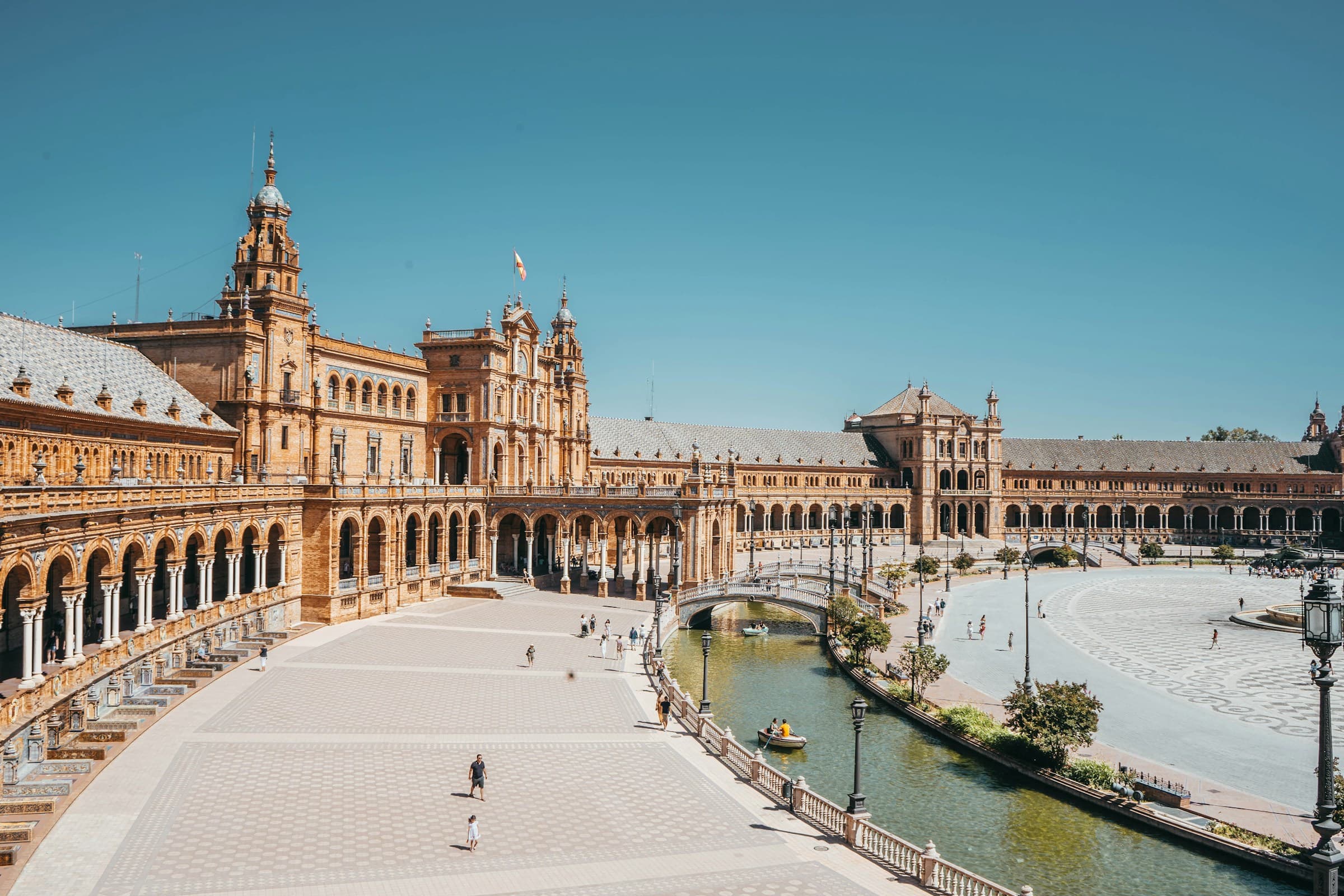
The Giralda, a former minaret turned cathedral bell tower, dominates Seville’s skyline and marks the city’s layered history. Seville is the capital of Andalusia in southern Spain, perched on the banks of the Guadalquivir River and surrounded by fertile plains that have nurtured olive groves for centuries. With a population of roughly 700,000, it blends Roman foundations, Moorish palaces and Baroque churches within a compact historic centre that UNESCO inscribed as a World Heritage Site in 1987.
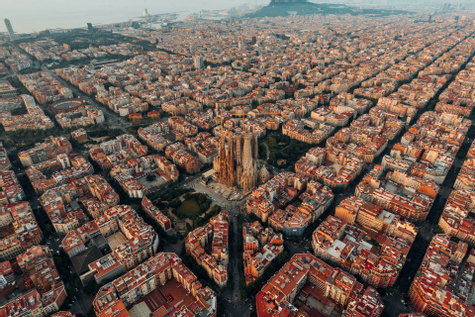
Barcelona
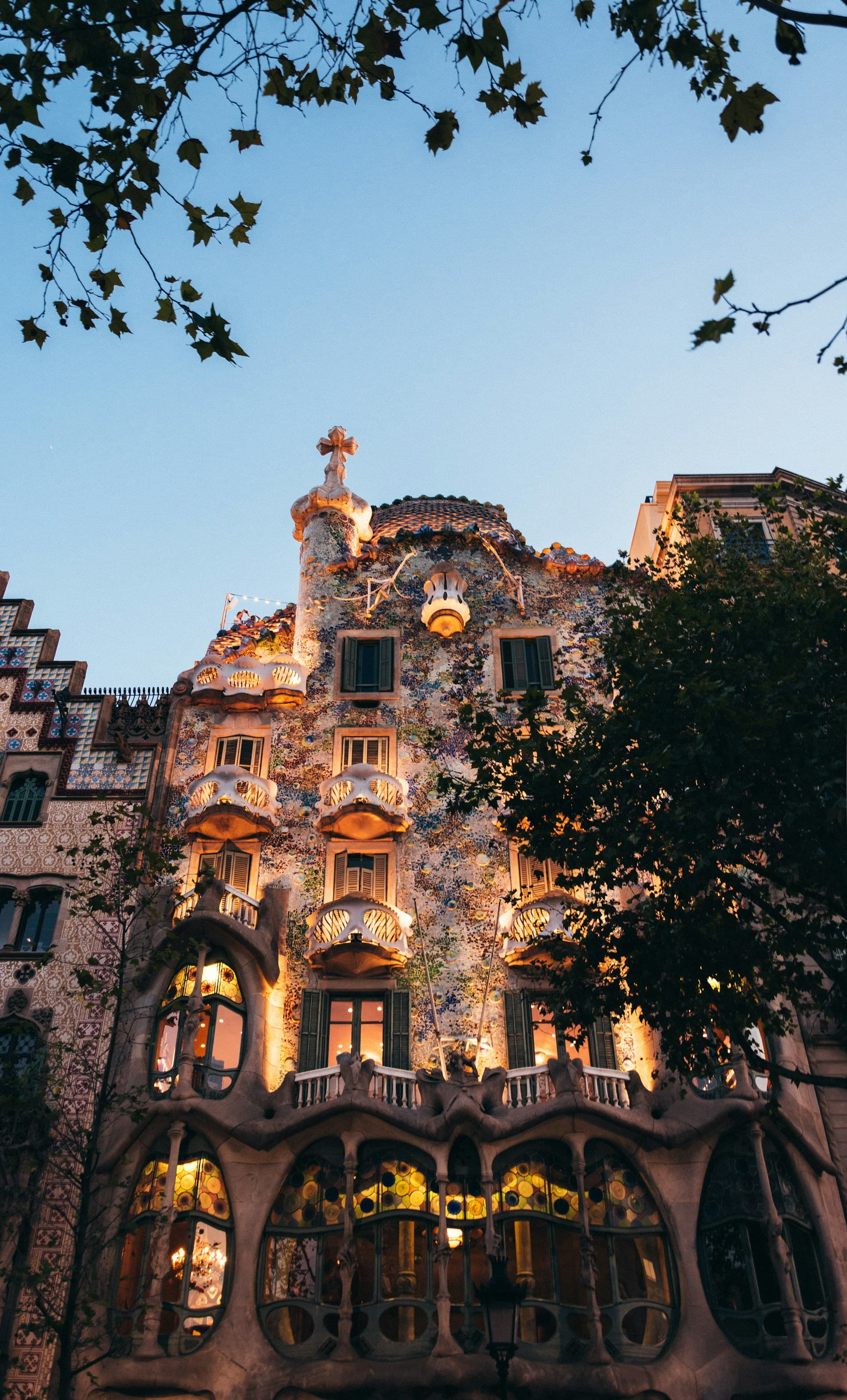
Barcelona's skyline is defined by the surreal forms of Antoni Gaudí and the modernist works of Lluís Domènech i Montaner, both UNESCO World Heritage Sites. The city sits on Spain's northeastern Mediterranean coast between the Llobregat and Besòs rivers, backed by the Serra de Collserola range. Within its limits about 1.7 million people live, forming part of a 5.7 million‑strong metropolitan area.
In their words
About Spain
You're stepping into a country where Roman aqueducts rise beside futuristic museums, Moorish palaces share the skyline with Gothic spires, and a 2 a.m. dinner is perfectly normal. Barcelona anchors the Mediterranean coast — walk Gaudí's Sagrada Familia, stroll La Rambla, then hit beach clubs and rooftop bars. Madrid holds the Prado, Reina Sofía, and tapas scenes that keep going until dawn.
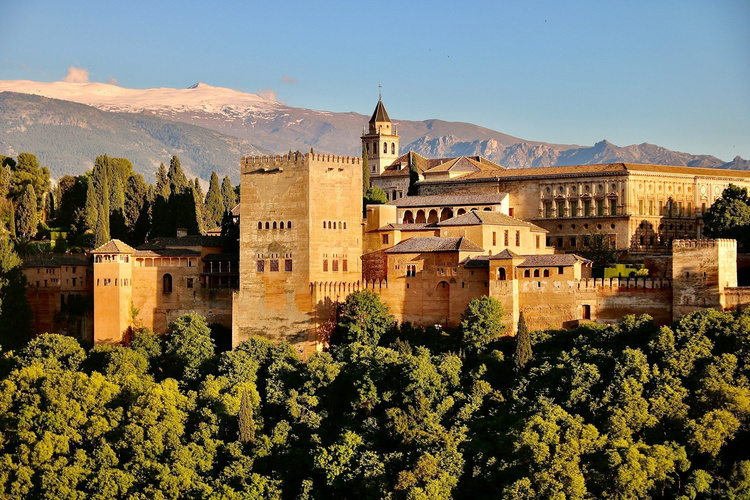
Head south to Andalusia and the cultural heart deepens. Seville pulses with flamenco, horse-drawn carriages, and tile-clad plazas; Granada delivers the Alhambra — Spain's most-visited monument — with its red fortress walls and palace gardens framed by the Sierra Nevada. Córdoba stuns with its Mezquita, a forest of candy-striped arches from the Caliphate era.
The north brings a different rhythm. In Basque Country, Bilbao pairs the Guggenheim's titanium curves with old-quarter pintxos bars, while Donostia-San Sebastián boasts three city beaches and more Michelin stars per capita than almost anywhere else on Earth. León on the Camino de Santiago rewards with its Gothic cathedral's stained-glass walls.
Throughout, you mix tapas crawls, wine tastings in Rioja and Ribera del Duero, historic city walks, market visits at La Boqueria or Mercado de San Miguel, flamenco shows, olive oil farm tours, and coastal drives past white villages and hidden coves.
Visiting Spain
You'll likely fly into Madrid-Barajas or Barcelona-El Prat — both well-connected hubs with onward flights, fast trains, and car rental desks. Spain's high-speed AVE network is a game-changer: Madrid to Barcelona in 2.5 hours, Madrid to Seville in under 2.5, Madrid to Málaga in 2.5. Book early for the best fares.
For a first trip, base in Madrid (2–3 nights) for art museums and late-night tapas, then train to Seville (2–3 nights) for flamenco, white-village day trips, and the Alcázar. Add Granada for the Alhambra, then end in Barcelona for Gaudí, beaches, and a flight home. Ten to fourteen days covers the highlights without rushing.
The Basque Country deserves its own arc. Fly into Bilbao for the Guggenheim and pintxos, day-trip to San Sebastián and its legendary food scene, rent a car for coastal drives past fishing villages and vineyards. You can also loop it onto a northern road trip that dips into Rioja wine country and the pilgrimage city of León.
Andalusia's white villages — Ronda, Arcos de la Frontera, Zahara de la Sierra — beg for a car. From Málaga or Seville, you thread through olive groves and sierra roads, stop for sherry in Jerez, and end at Atlantic beaches on the Costa de la Luz.
Eating and Drinking Safely
Tap water is safe throughout Spain. Eat like a local: graze on tapas (patatas bravas, jamón ibérico, gambas al ajillo), share a paella by the sea, chase pintxos in San Sebastián's old quarter, and finish meals with flan or churros con chocolate. In Andalusia, try salmorejo and gazpacho; in the north, cider poured from on high in Asturias and txakoli white wine in Basque Country.
Spain's wine regions — Rioja, Ribera del Duero, Priorat, Rías Baixas — offer tastings ranging from family bodegas to grand estates. Sherry from Jerez comes dry (fino, manzanilla) or sweet (Pedro Ximénez), and pairs brilliantly with local cheeses. Market halls like Barcelona's La Boqueria and Madrid's Mercado de San Miguel let you sample everything from cured meats to fresh-squeezed juice.
Geographical Snapshot
Spain covers about 195,000 square miles — roughly twice the size of Oregon — making it the second-largest country in Western Europe. The interior Meseta plateau sits at 2,000–2,500 feet; the Pyrenees seal the French border; the Sierra Nevada near Granada tops out at 11,400 feet; and coastlines stretch across the Mediterranean, Atlantic, and Bay of Biscay.
Protected areas include Doñana National Park (wetlands and Iberian lynx habitat), Picos de Europa (alpine peaks), Teide on Tenerife (Spain's highest point), and Ordesa y Monte Perdido in the Pyrenees. Spain boasts nearly 50 UNESCO World Heritage Sites — from the Alhambra to Santiago de Compostela's old town to Antoni Gaudí's Barcelona creations.
Climate and Seasonal Weather Patterns
Spain's climate splits by region. The Mediterranean coast and Balearics run hot and dry in summer (highs around 86–95°F / 30–35°C) with mild winters. The interior — Madrid, Castile — swings more extreme: scorching July days and cold December nights. The north (Basque Country, Galicia, Asturias) stays greener and rainier, with cooler summers and mild winters.
Peak travel hits July–August when Spaniards head to the coast and prices spike. Shoulder seasons — April–June and September–October — bring warm weather, smaller crowds, and better rates. Spring is ideal for Andalusia before the heat; fall suits Barcelona, wine country, and hiking in the Pyrenees or Picos de Europa.
Historical Overview
You're walking through layers of conquest and coexistence. Romans left aqueducts in Segovia and theaters in Mérida; the Moors shaped Andalusia for nearly 800 years, building the Alhambra, Córdoba's Mezquita, and Seville's Alcázar. The Reconquista ended in 1492 — the same year Columbus sailed — ushering in the Spanish Empire's golden age.
Visit Córdoba's Mezquita-Cathedral to see Christian and Islamic architecture merged under one roof, stroll Granada's Albaicín quarter for Moorish street patterns, and stand in Toledo where three religions once coexisted. The Camino de Santiago draws pilgrims and hikers alike along its medieval route to the cathedral at Santiago de Compostela.
Society & Culture
About 48 million people call Spain home. Castilian Spanish is the national language, but you'll hear Catalan in Barcelona, Basque (Euskara) in Bilbao and San Sebastián, and Galician in the northwest — each tied to strong regional identities. English is widely spoken in tourist areas, less so in rural villages.
Spain runs late: lunch at 2–3 p.m., dinner at 9–10 p.m., nightlife that starts around midnight. The siesta tradition has faded in cities but still surfaces in smaller towns — expect some shops to close mid-afternoon. Dress smart-casual for meals; flip-flops and beachwear stay on the beach.
Fiestas punctuate the calendar: Semana Santa processions in Seville, La Tomatina tomato fight in Buñol, San Fermín's running of the bulls in Pamplona, Las Fallas fire sculptures in Valencia. Time your trip around one for a deep dive into local culture.
Economic Snapshot
Tourism is a pillar of Spain's economy — the country typically ranks among the world's top three destinations, welcoming over 80 million visitors in peak years. You'll pay in euros; cards are widely accepted in cities and tourist zones, but keep cash for smaller tapas bars, village shops, and markets.
Commonly Asked Questions
Have more questions about planning your Spain trip? Explore our frequently asked questions for detailed answers on travel planning, trip prep, and everything you need to know before you go.