Spain & Portugal: The Heart of Iberia
An unforgettable 14-day journey through Spain and Portugal! You’ll start in vibrant Barcelona, where Gaudí's breathtaking architecture and lively Mediterranean charm await. Next, you’ll travel to the Basque Country, discovering the coastal beauty and culinary delights of San Sebastián and Bilbao, including a hands-on pintxos cooking class and a guided food tour. From there, you’ll continue to León and Oviedo to admire unique Gothic and pre-Romanesque architecture. The adventure finishes in Portugal: first in Porto, exploring its historic riverside and world-renowned Douro Valley wine region, and finally in captivating Lisbon, with its scenic viewpoints, historic neighborhoods, and the soulful sounds of Fado. Along the way, you’ll enjoy a balance of guided experiences and free time to explore at your own pace.
Places you'll stay
Estoril
The coastline of Estoril stretches along a series of crescent‑shaped beaches framed by cliffs that have hosted royalty and spies since the early twentieth century. The town sits on the Portuguese Riviera, just west of Lisbon in the district of Cascais, and forms part of the Sintra‑Cascais Natural Park, a protected landscape that blends Atlantic surf with pine‑covered hills. With a resident population of roughly 6,000, Estoril retains a scale that lets visitors wander its promenade without feeling crowded.
Destination
Getaria
Getaria’s claim to fame rests on its native son Juan Sebastián Elcano, the captain who completed the first circumnavigation of the globe. The town sits on the Urola coast of Gipuzkoa in Spain’s Basque Country, sandwiched between Zarautz and Zumaia. Its compact historic quarter clings between the mainland and Mount San Antón, a hill whose silhouette resembles a mouse.
Destination
Gernika-Bermeo
The oak that stands in Gernika’s main square has been the emblem of Basque liberty since the 14th century, a living witness to the town’s role as the historic seat of the Basque parliament. Gernika‑Bermeo lies on the western edge of the Urdaibai estuary in the province of Biscay, part of the autonomous Basque Country in northern Spain. The twin municipalities share a coastline that opens onto the Bay of Biscay and a hinterland of rolling farmland. With roughly 16 000 residents, the area balances a modest population with a weight of cultural memory.
Destination
Belém
Belém’s skyline is dominated by the 16th‑century Belém Tower, a sentinel that marks the historic gateway to Portugal’s Age of Discovery. The district forms the southwestern edge of Lisbon, lying between the Tagus estuary and the Algés and Alcântara rivers, and belongs to the capital of Portugal. With a 2011 population of 16,528, it packs a concentration of monuments, gardens and museums into a compact riverside setting.
Destination
Porto
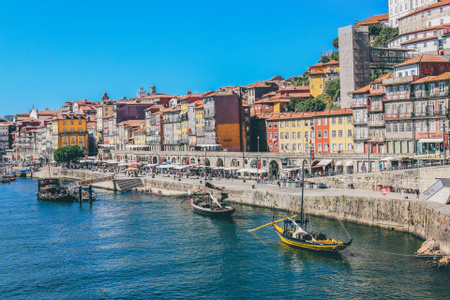
Porto’s riverside skyline is defined by the iconic iron arches of the Luiz I Bridge spanning the Douro, a view that instantly signals the city’s historic link to the wine trade. The city sits on the northern coast of Portugal, where the Douro River meets the Atlantic Ocean, and its compact historic core earned UNESCO World Heritage status in 1996. With a municipal population of about 250,000, it anchors a metropolitan area of roughly 1.8 million people, making it Portugal’s second‑largest urban centre.
Destination
Hondarribia
A 16th‑century fortified wall that embraces the harbor gives Hondarribia its most recognizable silhouette. The town sits on the Bay of Biscay at the mouth of the Bidasoa River, directly opposite the French frontier in Spain’s Basque Country. With roughly 19,000 residents, it balances a centuries‑old fishing tradition with a lively calendar of cultural events.
Destination
Barcelona
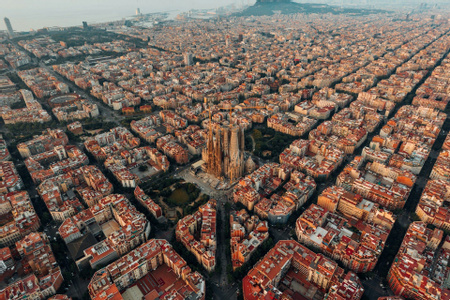
Barcelona's skyline is defined by the surreal forms of Antoni Gaudí and the modernist works of Lluís Domènech i Montaner, both UNESCO World Heritage Sites. The city sits on Spain's northeastern Mediterranean coast between the Llobregat and Besòs rivers, backed by the Serra de Collserola range. Within its limits about 1.7 million people live, forming part of a 5.7 million‑strong metropolitan area.
Destination
Donostia / San Sebastián
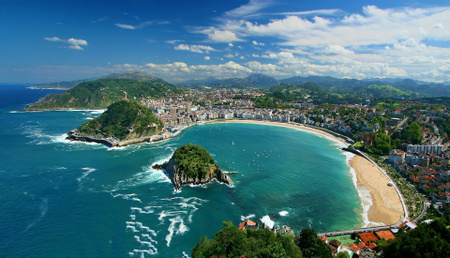
A half‑moon of golden sand curves along the city’s waterfront, forming La Concha, the beach that has defined San Sebastián’s image since the 19th century. The city sits on the Bay of Biscay in Spain’s Basque Country, where the Atlantic meets a compact urban landscape of about 190,000 residents. Its reputation for culinary precision and its seaside promenade give the town a character that feels both historic and contemporary.
Destination
Bilbao
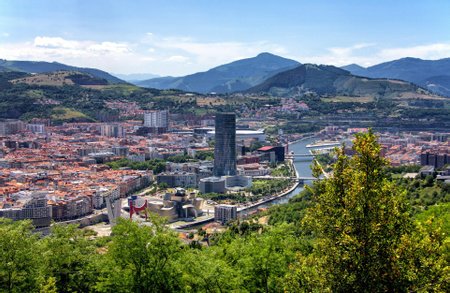
The titanium curves of the Guggenheim Museum dominate Bilbao’s riverfront, signalling the city’s shift from a 19th‑century industrial hub to a centre of contemporary culture. Bilbao is a city in northern Spain, situated about 16 kilometres (10 mi) south of the Bay of Biscay within the Basque Country. With more than 340 000 residents, it forms the most populous urban area in the region.
Destination
León
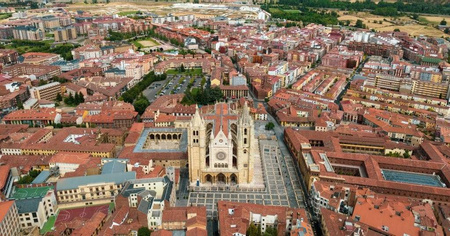
León’s cathedral, a French‑style classic Gothic edifice, rises above the historic centre and signals the city’s medieval prominence. The city lies in north‑west Spain, south of the Cantabrian Mountains, between the Bernesga and Torío rivers, and serves as the capital of the province of León in Castile and León. With a municipal population of about 123 000, it anchors a metropolitan area of roughly 200 000 inhabitants.
Destination
Lisbon
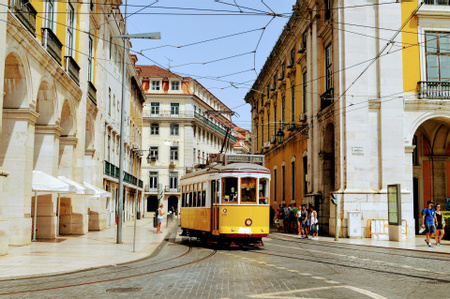
Lisbonsits at the western edge of mainland Europe, making it the continent’s westernmost capital and the only one directly on the Atlantic Ocean. The city occupies the northern shore of the Tagus River in Portugal and serves as the nation’s political and cultural centre. With an estimated 575,739 residents within its municipal limits, the wider metropolitan area approaches three million people, accounting for roughly a quarter of the country’s population.
Destination
Moments to look forward to
Gothic Quarter
Roman walls still outline a maze of narrow streets that once formed the heart of medieval Barcelona. The Gothic Quarter, or Barri Gòtic, occupies the oldest part of the city on the Mediterranean coast of Spain, where Roman, Visigothic and medieval layers coexist. Its compact grid of plazas, cloisters and stone façades draws visitors into centuries of urban evolution.
Attraction
Montjuïc
A broad, shallow hill that once marked Barcelona’s birthplace and later housed a 17th‑century fortress crowns the city’s southwestern skyline at 184.8 m, overlooking the harbour and the Llobregat River. Montjuïc lies within Barcelona, Spain, and its summit hosts a mix of historic and cultural sites.
Attraction
Park Güell
Perched on the southern slope of Turó del Carmel, Park Güell crowns a hill in Barcelona with sweeping city views. The complex of parks and gardens, designed by Antoni Gaudí, lies in the La Salut neighbourhood of the Gràcia district in Catalonia, Spain.
Attraction
Basílica de la Sagrada Família
The most striking fact about the Basílica de la Sagrada Família is that its stone walls have risen without completion since the 1880s, making it a living monument to an unfinished vision. Designed by Antoni Gaudí, the church dominates the skyline of its Spanish setting and draws attention for the way construction continues alongside modern city life. Its presence combines religious purpose with a public museum that interprets the ongoing work.
Attraction
Passeig de Gràcia
The avenue’s 42‑metre width, set in the heart of Barcelona’s Eixample district, makes it the city’s most expensive street and a showcase of early‑20th‑century modernist architecture. Once a modest lane called Camí de Jesús that linked Barcelona with the independent town of Gràcia, it now stretches from Plaça Catalunya to Carrer Gran de Gràcia, forming a central spine of commerce and culture in Spain.
Attraction
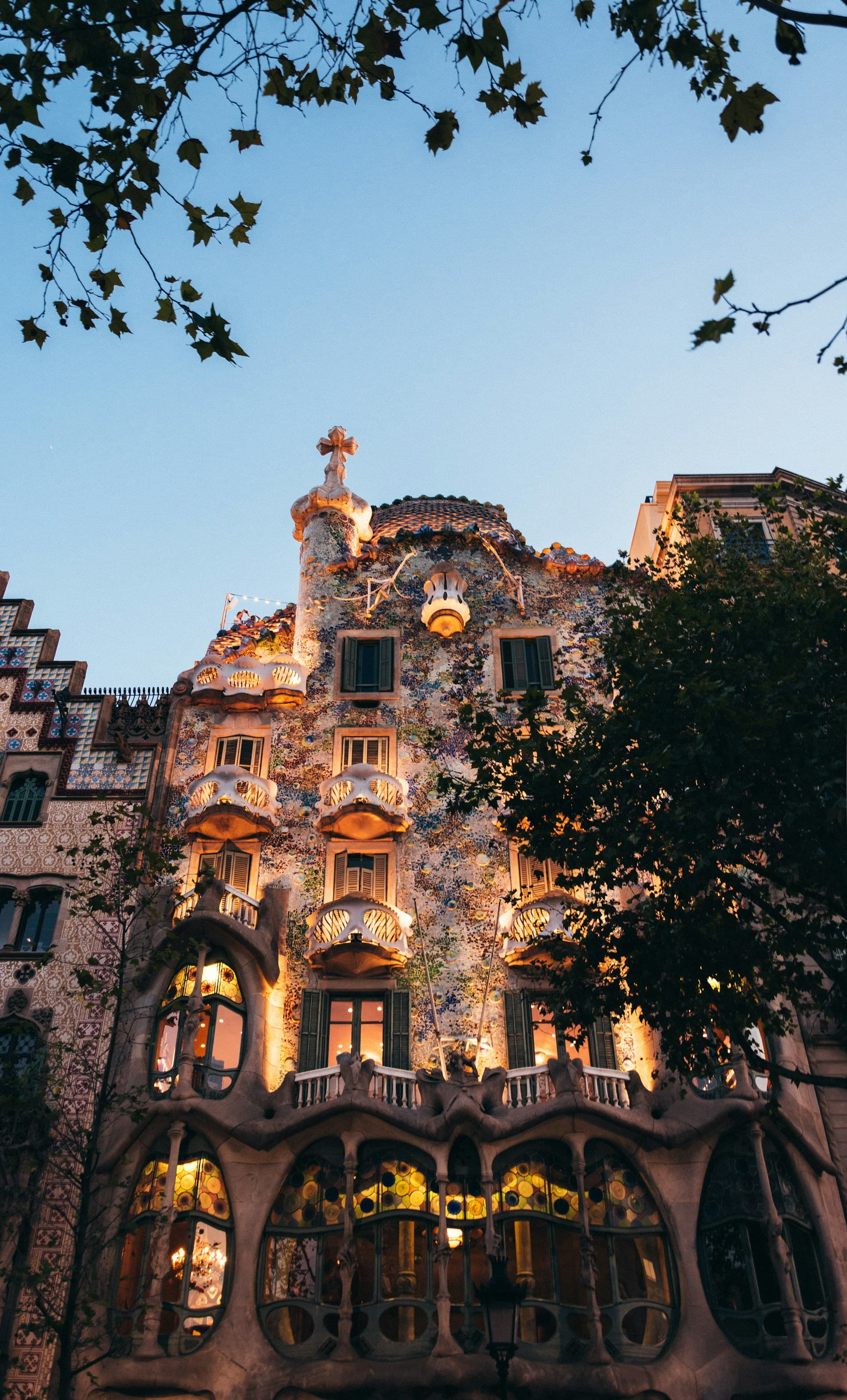
Casa Batlló
The façade’s skeletal rhythm, earned it the nickname Casa dels ossos, instantly signals Antoni Gaudí’s intervention on Barcelona’s Passeig de Gràcia. The building stands in the Eixample district, forming part of the Illa de la Discòrdia, a row of Modernista houses that clash in style. Redesigned in 1904, the project involved Gaudí’s assistants Domènec Sugrañes i Gras, Josep Canaleta and Joan Rubió, and has been refurbished several times since.
Attraction
Kontxa Pasealekua
A 45‑metre steel arch spans the Oria River at Kontxa, creating the town’s most photographed pedestrian crossing. The structure, known locally as Kontxa Pasealekua, links the historic industrial quarter with the riverside promenade in the Basque province of Gipuzkoa, Spain. Built in 2005, the bridge forms part of a municipal effort to reconnect neighborhoods divided by the river’s course.
Attraction
Zarautz Beach
Golden sand stretches along the shoreline, and the presence of several surf breaks draws riders to the water. The beach lies on Spain’s northern coast, offering a wide recreational space for sun‑bathers, walkers and surfers alike. A promenade lined with restaurants frames the sand, giving visitors a place to pause between a swim and a meal.
Attraction
Getariako Itsasargia
The Getariako Itsasargia safeguards a 2.5‑kilometre ribbon of basaltic cliffs where the Atlantic swells crash against the fishing town of Getaria, forming one of the few formally designated marine reserves on Spain’s northern coast. It lies in the province of Gipuzkoa, Basque Country, and functions as a protected seascape under Spanish and European law.
Attraction
Flysch
Layers of ancient deep‑sea sediment tilt outward like a giant, weathered bookshelf along a 300‑metre cliff above the Cantabrian Sea at the Flyflysch site near Llanes, northern Spain. The attraction is a geological outcrop that forms part of the Cantabrian Coast Geopark and lies within the buffer zone of Picos de Europa National Park.
Attraction
Picassoren “Gernika” horma-irudia
The original black‑and‑white canvas of Picasso’s “Guernica” was reproduced in a limited‑edition lithograph that hangs in the Peace Museum of Guernica, a town in the Basque province of Biscay, Spain. The print measures 1.2 m by 2.6 m, preserving the stark contrast and fragmented forms that defined the 1937 mural. Its presence in the museum links the town’s wartime trauma directly to the artwork that has become an international anti‑war emblem.
Attraction
Playa de Mundaka
A wave that can maintain a left‑hand barrel for up to five hundred metres draws surfers from across the globe to Playa de Mundaka, a narrow stretch of sand at the mouth of the Oka River in the Basque province of Biscay, Spain. The beach lies beneath the historic fishing village of Mundaka, where stone houses line a modest promenade that frames the surf‑filled horizon.
Attraction
Puerto Viejo Bermeo
A stone quay erected in 1865 anchors the old fishing harbor of Puerto Viejo, the historic heart of Bermeo on Spain’s Bay of Biscay. The compact port sits at the mouth of the Oka River, where wooden bateles still line the slipways beside modern fishing vessels. It forms part of the municipality of Bermeo in the Basque Country, and the quay and surrounding warehouses are protected as a Bien de Interés Cultural monument.
Attraction
Urdaibai Biosferaren Erreserba
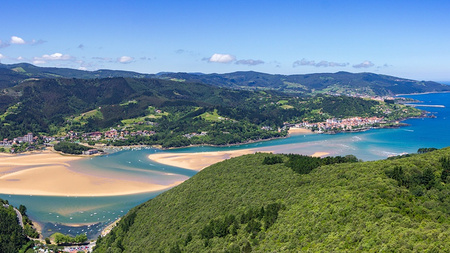
A 22,000‑hectare preserve that embraces a lively estuary defines Urdaibai Biosferaren Erreserba in northern Spain. The protected area spreads across coastal cliffs, sandy beaches and wetlands, creating a mosaic of habitats. It is managed as a biosphere reserve, highlighting its ecological importance.
Attraction
León Cathedral
Its walls dissolve into a sea of medieval stained glass, giving León Cathedral one of the largest collections of such glass in the world. The cathedral serves as the episcopal seat of the diocese of León, standing on the historic Camino de Santiago in north‑western Spain.
Attraction
Casa Botines
The most striking feature of Casa Botines is its Gaudí‑designed modernista façade, punctuated by four slender towers that dominate a corner of León’s historic centre in Spain. Built between 1891 and 1892, the building now hosts a museum that presents Gaudí’s work, Spanish art of the 19th‑ and 20th‑centuries, and the story of the structure itself. It stands as a rare example of the Catalan architect’s work outside Catalonia, visible to anyone strolling past the city’s main thoroughfare.
Attraction
Fonseca Port Wine Cellars
The vaulted stone arches of Fonseca’s 19th‑century cellar, still illuminated by the copper lanterns that once guided Douro barges, mark the oldest continuously operating port house in Vila Nova de Gaia, Portugal. Founded in 1822 by a group of British merchants, the estate blends a family‑run ethos with the grandeur of the city’s historic wine district. Its location on the banks of the Douro places it within the UNESCO World Heritage Landscape of the Douro Valley, a designation that underscores the cultural importance of the port‑making tradition.
Attraction
Castelo de São Jorge
Perched on a hill overlooking Lisbon, the 11th‑century Castelo de São Jorge dominates the skyline. The fortress began as a Moorish stronghold and later served as a royal residence, its stone walls still framing the remains of a palace. It houses an archaeological museum that interprets the site’s layered past, and it stands within Portugal’s capital.
Attraction
Jerónimos Monastery
A stone edifice that marks the launch point of Vasco da Gama's first voyage dominates the Belém waterfront. The Jerónimos Monastery, a former house of the Order of Saint Jerome, sits beside the Tagus River in Lisbon, Portugal. Built in the early 1500s with funds drawn from a tax on the profits of the Portuguese India Armadas, it exemplifies the late Gothic Manueline style.
Attraction
National Pantheon
The former17th‑century baroque church dominates Lisbon’s skyline, its stone façade now framing a national mausoleum that houses the tombs of Portugal’s most celebrated figures. The building’s transformation from sacred space to pantheon reflects a shift in how the nation honors its cultural icons. It stands in the capital of Portugal and invites contemplation of history and art.
Attraction
Lisbon Cathedral
The cathedral’s stone façade looks like a fortified wall, its two towers and crenellated parapet recalling the city’s medieval defenses. Built in 1147 on the site of Lisbon’s main mosque, it is the oldest surviving church in the capital. It serves as the seat of the Patriarchate of Lisbon and has been a National Monument since 1910.
Attraction
Belém Tower
Rising from a small island in the Tagus River, Belém Tower marks the point where Portuguese explorers once set sail for distant lands. It is a 16th‑century fortification that crowns the Belém district of Lisbon, Portugal, and it has been a UNESCO World Heritage Site since 1983, together with the nearby Jerónimos Monastery.
Attraction
Monument to the Discoveries
The monument’s most striking aspect is its origin as a temporary statue erected in 1940 and later rendered permanent in 1960, a gesture that commemorates five centuries since the death of Henry the Navigator. It stands as a sculptural tribute in Portugal, marking a pivotal moment in the nation’s maritime heritage.
Attraction
Pastéis de Belém
Pastéis de Belém opens as a large, airy bakery café where the high ceiling and plentiful natural light give the interior a sense of spaciousness that matches the lightness of its pastries. Located in Portugal, the shop identifies itself as a place where Portuguese baked goods are the focus. Its menu lists tarts and breads among the offerings that define the experience.
Attraction
National Palace of Sintra
The palace’s origins reach back to the 11th century, when Moorish builders created a residence that still dominates Sintra’s historic centre. Today the National Palace of Sintra stands as a stone and tile complex that showcases the layered legacy of Portugal’s early medieval period. It is located in the town of Sintra, Portugal, and draws attention for its surviving Moorish fabric combined with later decorative programmes.
Attraction
National Palace of Pena
Perched on a high rock that once held a monastery, the National Palace of Pena commands the horizon. The 19th‑century Romanticist palace in Portugal rises above a sweeping parkland, offering a vivid illustration of the era’s architectural imagination. Its dramatic siting and historic layers make it a focal point for visitors seeking a blend of history and landscape.
Attraction
Quinta da Regaleira
A maze of stone symbols and romantic architecture, assembled by a millionaire collector between 1904 and 1910, defines Quinta da Regaleira near the historic centre of Sintra, Portugal. The estate is part of the UNESCO‑listed Cultural Landscape of Sintra and ranks among the town’s principal attractions.
Attraction
Cape Roca
A sea‑facing viewpoint crowns Cape Roca, where a lighthouse houses a tourism office. The site belongs to a national park on Portugal’s Atlantic shoreline. Visitors stand on the edge of the cape, eyes drawn to the open horizon, while the lighthouse’s lantern continues its historic role guiding ships.
Attraction
Boca do Inferno - Devil’s Mouth
The cliffs at Boca do Inferno form a dramatic oceanfront scene where a natural archway opens into a sea‑carved cave, the result of relentless waves pounding the rock. This formation lies on Portugal’s coastline and draws attention for the way the sea continually reshapes the stone. The site is known locally as Devil’s Mouth because the cavern’s roar echoes like a sigh from the depths.
Attraction
Cidadela de Cascais
The Cidadela de Cascais commands sweeping bay views from its position in Cascais. It now functions as a restored royal residence, showcasing interiors that retain the elegance of its former court. The site lies on Portugal’s western coast.
Attraction
Tagus Estuary Nature Reserve
TheTagus Estuary Nature Reserve forms a river mouth where waterfowl and migrating birds find a crucial refuge, and its protection status marks it as a formally safeguarded landscape in Portugal. This estuarine zone lies where the Tagus River meets the Atlantic, offering a natural corridor for avian travelers.
Attraction
Old Town
Thirty Islamic towers still rise from the medieval walls, the most famous being the Torre del Bujaco, giving the Old Town of Cáceres a skyline that immediately signals its layered past. The walled quarter forms part of Cáceres, Spain, and earned UNESCO World Heritage status in 1986 for its blend of Roman, Moorish, Northern Gothic and Italian Renaissance architecture.
Attraction
Zumaia
Zumaia’s two beaches reveal a stretch of rock layers that runs continuously for about eight kilometres, making the site one of the world’s longest exposures of flysch strata and the place where the Cretaceous‑Paleogene boundary can be seen at Itzurun. The town sits on the Basque coast of northern Spain, where the Urola and Narrondo rivers meet, and it is known for both its geological record and its modest cultural landmarks.
Attraction
Douro Valley Wine Tours
Terraced vineyards that cling to the Douro River’s steep slopes, some tended since the Roman era, give the Douro Valley wine tours their unmistakable silhouette. The tours guide visitors through a landscape that stretches between Peso da Régua and Pinhão in northern Portugal, where the river creates microclimates that shape the region’s port and table wines. The valley earned UNESCO World Heritage status in 2001 for its centuries-old viticultural practices and cultural landscape.
Attraction
Parador de Hondarribia
The hotel occupies a stone fortress whose walls date to the early 10th century, offering guests a rare chance to sleep inside a medieval stronghold while overlooking the Bay of Biscay. Set in the town of Hondarribia, Spain, the Parador blends historic masonry with modern hospitality, and its coastal position frames every window with sea views.
Attraction
Beach of La Concha
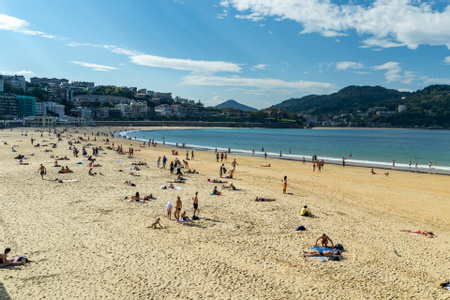
Its perfectly regular crescent shape, which inspired the name Concha, defines the beach that stretches along San Sebastián’s Bay of La Concha. The sandy shoreline lies within the city limits of San Sebastián in the Basque Country of northern Spain. Cited repeatedly as one of the most beautiful and most famous urban beaches in Europe, it attracts visitors drawn to the 19th‑century elegance of the fashionable seaside resorts that line the bay.
Attraction
Incredible Stays
Hotel Recommendation #1
Lorem ipsum dolor sit amet consectetur, adipisicing elit. Culpa minus laborum possimus natus veritatis deserunt blanditiis eaque, labore cum. Hic?
Hotel Recommendation #2
Lorem ipsum dolor sit amet consectetur, adipisicing elit. Culpa minus laborum possimus natus veritatis deserunt blanditiis eaque, labore cum. Hic?
Hotel Recommendation #3
Lorem ipsum dolor sit amet consectetur, adipisicing elit. Culpa minus laborum possimus natus veritatis deserunt blanditiis eaque, labore cum. Hic?
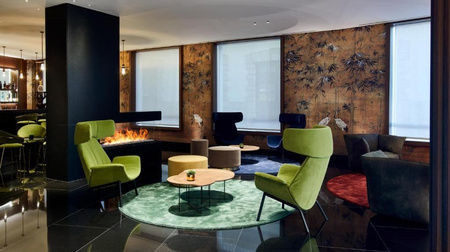
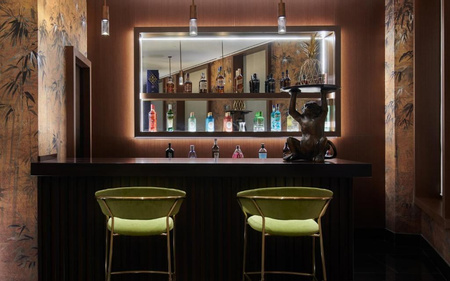
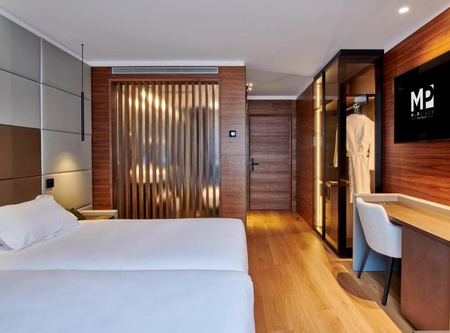
Hotel Recommendation #4
Lorem ipsum dolor sit amet consectetur, adipisicing elit. Culpa minus laborum possimus natus veritatis deserunt blanditiis eaque, labore cum. Hic?
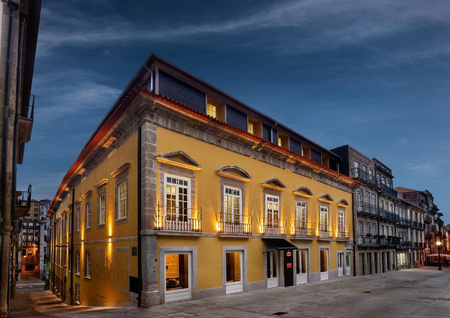
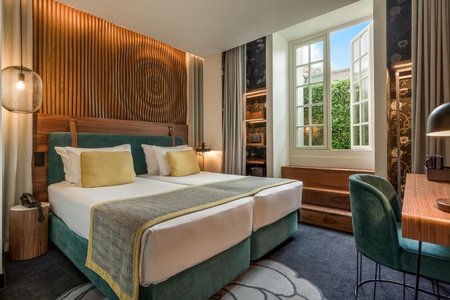
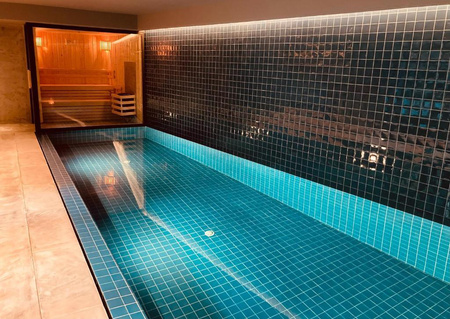
Hotel Recommendation #5
Lorem ipsum dolor sit amet consectetur, adipisicing elit. Culpa minus laborum possimus natus veritatis deserunt blanditiis eaque, labore cum. Hic?
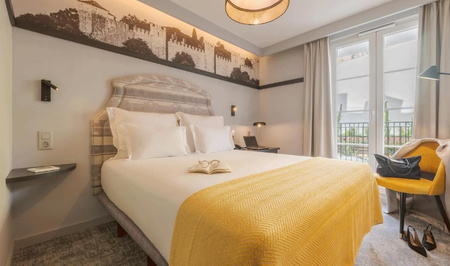
Hotel Recommendation #6
Lorem ipsum dolor sit amet consectetur, adipisicing elit. Culpa minus laborum possimus natus veritatis deserunt blanditiis eaque, labore cum. Hic?
Inclusions
• 13 nights of accommodation in carefully selected hotels
• Daily breakfast
• Private guided tours and small-group activities as described
• Pintxos Cooking Class in San Sebastián
• Private Txikiteo & Pintxos Tour in Bilbao
• Full-day Douro Valley “Wine & Tradition” tour with winery visits
• Private guided tour in Belém, Lisbon
• Pastel de Nata baking class
• Full-day small-group excursion to Sintra, Cascais & Estoril
• Domestic flight Barcelona – San Sebastián
• Train ticket Porto – Lisbon
• Private transfer León – Porto
• Rental car San Sebastián – León
• 24/7 local assistance during the trip
Exclusions
• International flights
• Meals not specified in the itinerary
• Entrance tickets not mentioned as included
• Travel insurance
• Personal expenses and gratuities
• Optional Fado dinner in Lisbon
Curated to you
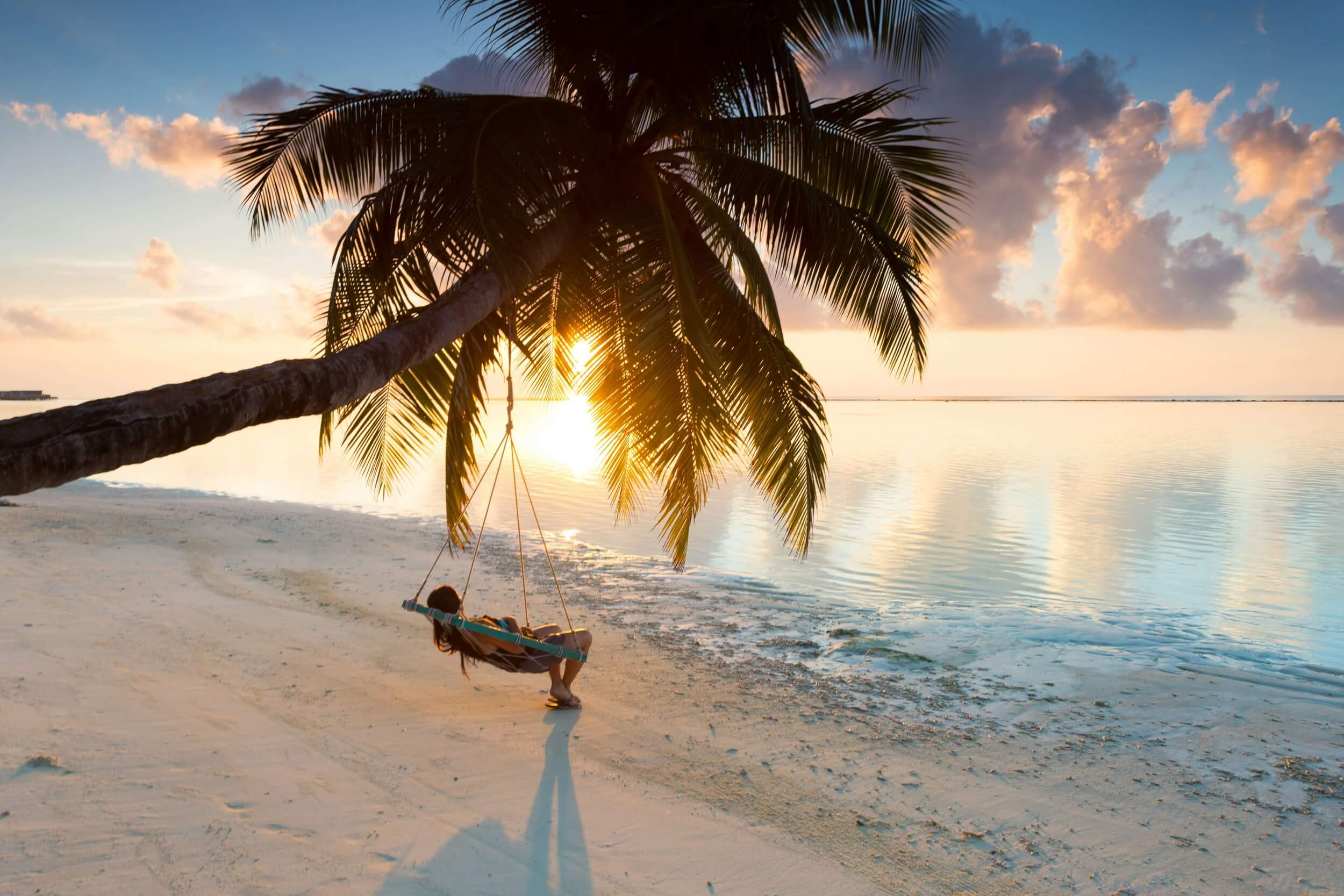
Insider-led Spain Design & Concierge
Your insider team designs the trip around what you care about, then supports you in-country with private logistics, vetted partners, and concierge help when plans change.