

Córdoba
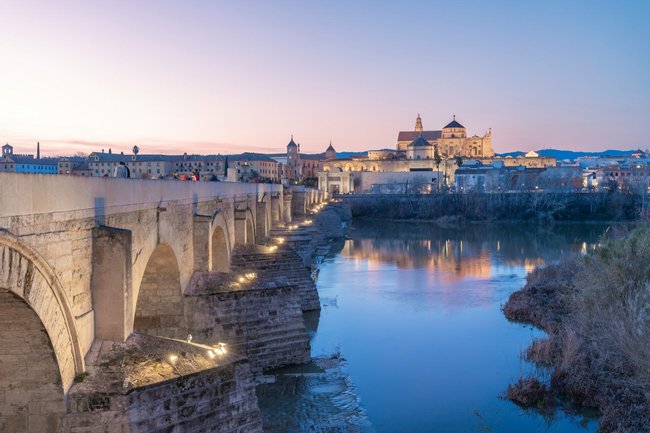
The former mosque that dominates Córdoba’s skyline, the Mezquita‑Cathedral, merges a forest of red‑and‑white arches with a Christian nave, creating a single monument that embodies centuries of change. Córdoba is a city in Andalusia, southern Spain, situated on the right bank of the Guadalquivir River. With a population of about 325 000 in 2024, it ranks among the country’s larger urban centres.
The river setting places the historic core on a fertile plain that experiences the highest summer temperatures in Spain and Europe, with average highs near 37 °C in July and August, while winters remain mild and relatively wet. Modern districts such as Zoco and the area around the railway station contrast with the ancient streets that wind through the old town.
Roman foundations date back to a colony founded in 206 BC, later becoming the capital of the Roman province Baetica. After Visigothic rule, the city was transformed in the eighth century into the capital of the Emirate and then the Caliphate of Córdoba, reaching the status of Europe’s second‑largest city by the tenth century. The Mezquita‑Cathedral received UNESCO World Heritage designation in 1984, and the status was extended in 1994 to encompass the entire historic centre. Nearby, the palace‑city of Madinat al‑Zahra also holds UNESCO World Heritage status, while the annual Festival de los Patios is recognized as UNESCO Intangible Cultural Heritage.
Visitors can trace Roman streets, admire the layered architecture of the Mezquita‑Cathedral, wander the ruins of Madinat al‑Zahra, and experience the courtyard celebrations of the patio festival, all within a city whose built environment tells a continuous story of cultural convergence.

Insider-led Spain Design & Concierge
Your insider team designs the trip around what you care about, then supports you in-country with private logistics, vetted partners, and concierge help when plans change.