Hiroshima
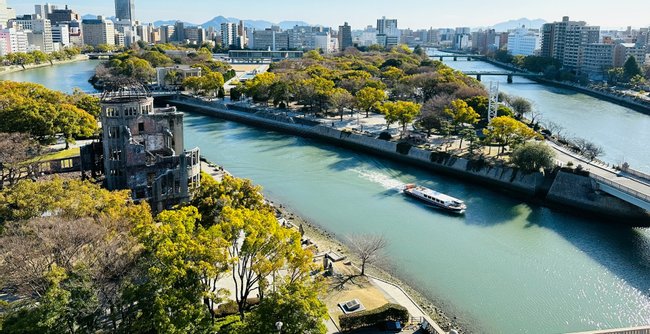
The city’s most recognizable landmark is the Hiroshima Peace Memorial, a UNESCO World Heritage Site that marks the exact spot where the atomic bomb detonated on 6 August 1945. Hiroshima lies on the delta of the Ōta River in western Honshu and serves as the capital of Hiroshima Prefecture, Japan. With a population of just under 1.2 million, it has rebuilt itself into the largest urban centre of the Chūgoku region.
Founded in 1589 as a castle town, the modern city spreads along the river’s flat plain and experiences a humid subtropical climate, with mild winters and hot, humid summers that peak in August. The reconstructed castle, locally called Rijō, houses a museum illustrating everyday life in the Edo period and encloses the Hiroshima Gokoku Shrine. Nearby gardens such as Shukkei‑en offer a landscaped view of miniature hills and ponds, while Hijiyama Park provides elevated vistas of the city and the bay. Buddhist sites including Mitaki‑dera and the historic Hiroshima Tōshō‑gū add spiritual depth to the urban fabric.
Cultural attractions cluster around the Peace Memorial Park, where the Peace Memorial Museum presents artifacts and testimonies of the 1945 bombing, and the Children’s Peace Monument stands as a symbol of hope. Art lovers can explore the Hiroshima Museum of Art, noted for its French Renaissance collection, the Prefectural Art Museum adjacent to Shukkei‑en, and the City Museum of Contemporary Art near Hijiyama Park. The city’s professional symphony orchestra performs at Wel City Hiroshima, and annual events such as the Hiroshima Flower Festival, the International Film Festival, and the former International Animation Festival draw visitors from abroad.
Each year on 6 August, the Peace Memorial Ceremony gathers people from around the world to remember the bombing, underscoring Hiroshima’s role as a living testament to peace.
