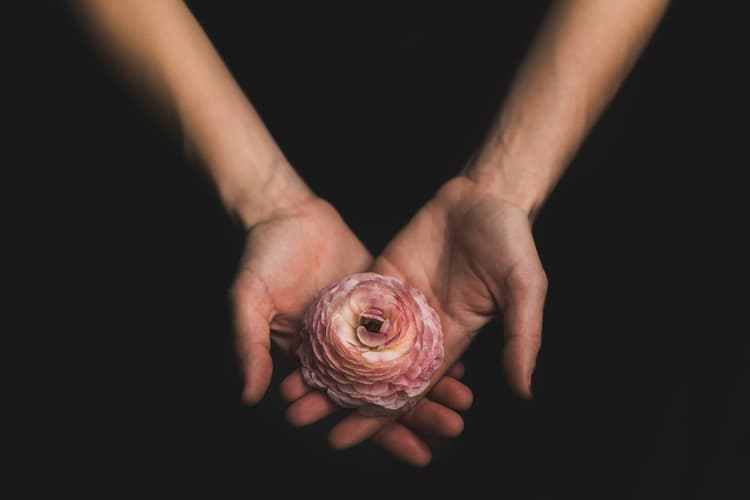
Sakura & Samurai Family Journey
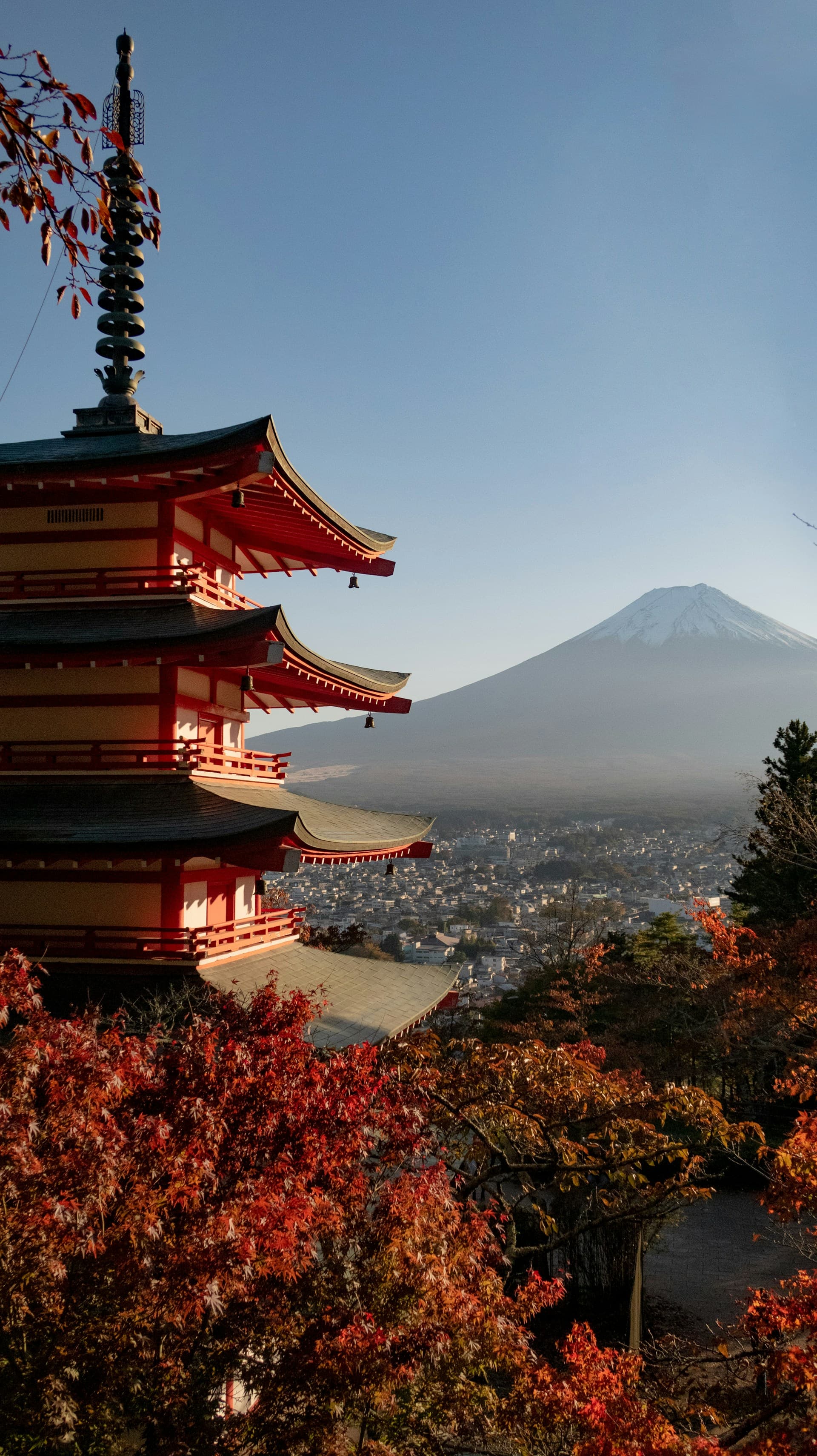
Embark on a vibrant family adventure that juxtaposes Tokyo’s neon energy with Kyoto’s timeless serenity, weaving together modern marvels and ancient samurai heritage. Travel from bustling Shibuya streets to serene Kiyomizu‑dera, explore cherry‑blossom lined parks, glide along the Sumida River, and discover Kyoto’s bamboo groves and tea houses. Friendly local guides and artisans will share stories, craft lessons, and culinary delights, leaving your family with lasting memories of Japan’s warm hospitality and cultural depth.
Places you'll stay
Tokyo
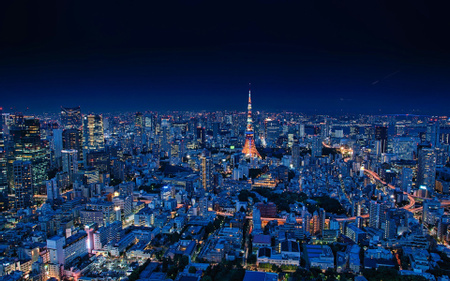
Tokyo Skytree rises as the world’s tallest tower, dominating the skyline of the capital of Japan. The metropolis lies at the head of Tokyo Bay in the Kantō region on Honshu’s central coast, and its 23 special wards form the historic core. With more than 14 million residents in the city proper in 2023, it ranks among the most populous urban areas worldwide.
Destination
Kyoto
Kyoto's landscape is dominated by a dense network of over 2,000 religious sites, a legacy of its eleven centuries as Japan's imperial capital. The city lies in the Kansai region on Honshu, serving as the capital of Kyoto Prefecture in western Japan. With a population of 1.46 million in 2020, it anchors the Greater Kyoto metropolitan area of roughly 3.8 million people.
Destination
Moments to look forward to
Iwatayama Monkey Park
A troop of more than 120 Japanese macaques watches visitors from a ridge that crowns Mount Arashiyama, a spot reached by a steep 1.45‑kilometre walk in Kyoto, Japan. The park sits opposite the Ōi River from the Arashiyama train station and operates as a commercial attraction where the monkeys receive food supplied by staff and sold on site. It opened to the public in March 1957 after the land was donated by businessman Sonosuke Iwata, whose name also marks the mountain.
Attraction
Arashiyama Bamboo Forest
The forest’s most striking feature is a canopy of towering bamboo that rises in tight, green columns, creating a natural tunnel that draws countless visitors. This bamboo grove lies in Japan and is accessed by a well‑known sightseeing path that climbs uphill through the stalks. The route offers a clear sense of direction as it winds upward, inviting travelers to follow its gentle ascent.
Attraction
Todai-ji Daibutsuden (Great Buddha Hall)
The hall’s most striking element is a massive Buddha statue that dominates the interior of the historic Buddhist temple in Japan. This ancient complex houses the statue within a spacious wooden structure that has stood for centuries. Around the temple grounds, deer move freely, adding an unexpected living presence to the sacred site.
Attraction
Mount Wakakusa
The hill that ignites each January in a blaze of dead grass is known locally as Mount Wakakusa. Rising 342 metres (1,122 ft) to the east of Nara Park, the modest elevation carries the literal meaning “young grass”. It also appears on maps as Mount Mikasa, and it belongs to the city of Nara in Nara Prefecture, Japan. Access to the summit is barred from 12 December through 17 March each year.
Attraction
Nara Park
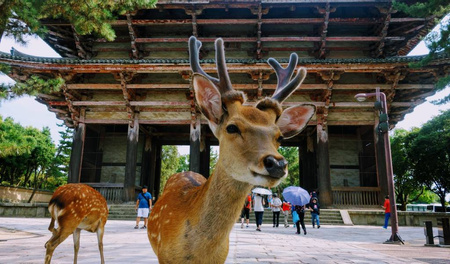
Free‑roaming sika deer number more than 1,200, and the animals are officially classified as a natural treasure. The park lies at the foot of Mount Wakakusa in the city of Nara, Japan, and its origins date to 1880, making it one of the country’s oldest public parks. It is managed by Nara Prefecture and carries the “Places of Scenic Beauty” designation from the Ministry of Education, Culture, Sports, Science and Technology.
Attraction
Kyoto Cycling Tour Project (Kyoto Station Cycle Terminal)
A glass‑and‑steel pavilion that opened in 2015 marks the only dedicated cycling hub inside Kyoto Station, allowing travelers to pick up a bike and set off for the city’s historic districts without leaving the rail complex. The Kyoto Cycling Tour Project operates the terminal, a point‑of‑sale, repair workshop and information centre that links directly to the city’s network of bike lanes. It sits in the central prefecture of Japan, adjacent to the station’s north exit.
Attraction
Gion Weeping Cherry Tree
A single weeping cherry, its branches drooping like a pink curtain over the stone steps of Yasaka Shrine, draws crowds each spring in Kyoto’s Gion district. The tree, known locally as Gion Shidarezakura, stands on the shrine’s north side and is a focal point for hanami in the historic neighbourhood of Japan.
Attraction
Gion
Gion’s narrow lanes have housed Japan’s most exclusive geisha community since the Sengoku period, anchored by the historic Yasaka Shrine. Located in the Higashiyama ward of Kyoto, the district originated as an entertainment quarter serving pilgrims to the shrine. The name derives from the Buddhist term Jetavana, translated into Japanese as Gion.
Attraction
Shirakawa Canal
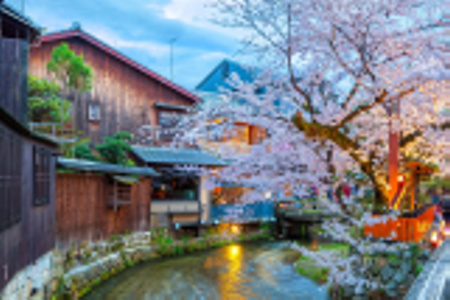
The canal’s most striking feature is its 400‑year‑old stone‑lined towpath that follows a straight, shallow waterway cut through the low‑lying fields of central Osaka. Built in 1625 to bring fresh water from the Yodo River into the growing merchant quarter, Shirakawa Canal now threads the Nakanoshima district of Osaka, Japan, and serves as a pedestrian corridor framed by historic warehouses and seasonal plantings.
Attraction
teamLab Biovortex Kyoto
The vortex of light that rises from the floor of the Kyoto Railway Museum’s new hall is the first thing visitors notice, a kinetic cloud that seems to breathe with every step. teamLab Biovortex Kyoto is an immersive digital‑art installation created by the interdisciplinary collective teamLab, situated in Shimogyo‑ku, Kyoto, Japan. It opened to the public in March 2023 as a partnership between the museum and JR West, and it occupies a purpose‑built 1,200 square‑metre space within the historic museum complex.
Attraction
Imperial Palace
The Imperial Palace occupies the former site of Edo Castle, Japan’s historic feudal stronghold, and now spreads across a 1.15‑square‑kilometre park‑like expanse in the Chiyoda district of Tokyo. It serves as the main residence of the emperor and houses the administrative heart of the Imperial Household. The complex includes the Fukiage Palace, where the emperor’s private quarters are located, and the main palace, known as the Kyūden, which hosts official ceremonies and receptions.
Attraction
Chidorigafuchi Park
A long, narrow strip of green follows the moat of a palace, its footpath opening onto rows of cherry trees that burst into color each spring. The park lies in Japan and offers a linear promenade that mirrors the water’s edge, inviting walkers to trace the historic waterway. Its defining feature is the combination of a historic moat, a dedicated walking lane, and the seasonal display of blossoms that frame the scene.
Attraction
SAMURAI NINJA MUSEUM Kyoto
A compact museum in Kyoto lets visitors try their hand at samurai and ninja techniques while surrounded by authentic Edo‑period armor and swords. It occupies a modest space in the city of Kyoto, Japan, and focuses on hands‑on learning as well as historical display.
Attraction
Tokyo DisneySea
A maritime theme runs through every corner of Tokyo DisneySea, a Disney resort park that greets guests at the Mediterranean Harbor entrance. The park sits in Urayasu, Chiba Prefecture, Japan, and opened on 4 September 2001 after a construction cost of 335 billion yen. In 2024 it welcomed 12.4 million visitors, ranking it seventh among the world’s most visited theme parks and third in Japan.
Attraction
Mysterious Island
A theme park that turns the undersea realm of Jules Verne’s famous novel into a walkable experience defines Mysterious Island in Japan. The attraction recreates the world of Captain Nemo, the enigmatic submarine commander, and invites visitors to explore his imagined oceanic domain. Situated within the country, the park blends amusement rides with literary scenery, offering a concrete link between fiction and physical space.
Attraction
Tokyo Disneyland
The first Disney park built outside the United States opened its gates on 15 April 1983 in Urayasu, Chiba, just beyond Tokyo. Spanning 126 acres, the resort‑adjacent theme park operates under a license from the Walt Disney Company but is owned and run by the Oriental Land Company. Its main entrance sits beside both Maihama Station and Tokyo Disneyland Station, linking the park directly to the city’s rail network.
Attraction
Enchanted Tale of Beauty and the Beast
A trackless dark ride that brings Disney’s 1991 animated classic to life opened in Tokyo Disneyland in 2020. Enchanted Tale of Beauty and the Beast (美女と野獣 “魔法のものがたり”) invites guests to board free‑moving vehicles that glide through a series of illuminated scenes, each recreating a moment from the beloved story. The ride’s trackless system lets the cars weave independently, giving the impression of wandering through the enchanted castle and its surrounding forest without visible rails.
Attraction
Incredible Stays
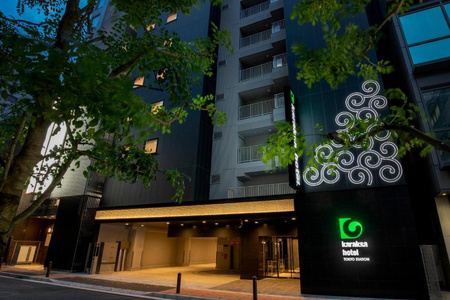
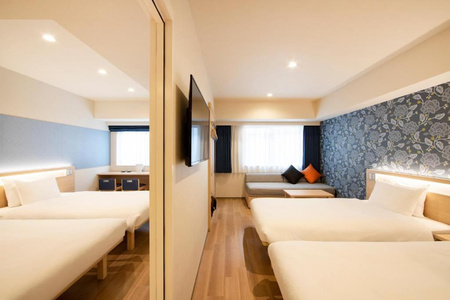
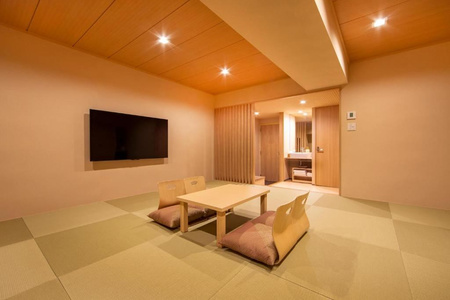
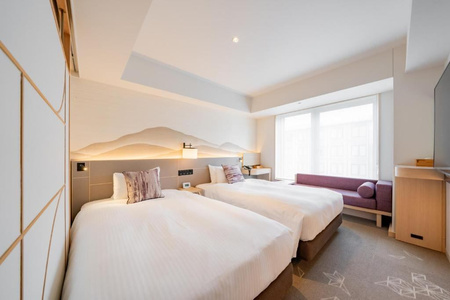
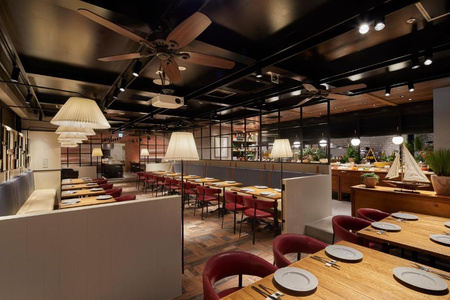
Hotel Recommendation #1
A hand-picked stay in Tokyo.
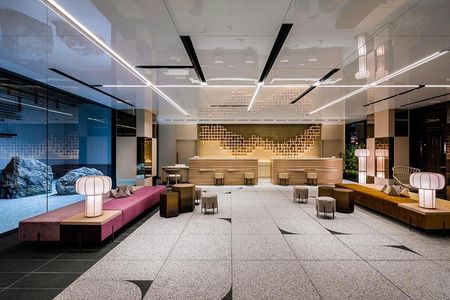
Hotel Recommendation #2
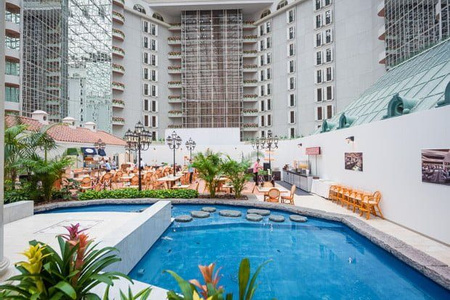
A 9.2/5 guest-rated stay in Kyoto.
Hotel Recommendation #3
A hand-picked stay in Tokyo.
Curated to you
Insider-led Japan Design & Concierge
Your insider team designs the trip around what you care about, then supports you in-country with private logistics, vetted partners, and concierge help when plans change.