Santería in Cuba: History, Beliefs and Where to See It
 Reviewed by Zach Smith, Local Insider
Updated September 2026 by Zach Smith: I removed unsourced follower statistics, corrected the description of Obatalá, noted that Fidel Castro died in 2016, and dropped the old CUC tipping figure now that Cuba no longer uses that currency.
Santería is a fusion of Catholic practices and West African Yoruba beliefs. Its roots in Cuba reach back to the 17th century, and it has been embedded in Cuban society ever since. Estimates of how many Cubans practice it vary widely, but it is one of the most visible faiths on the island, and many people who call themselves Catholic also take part in Santería rituals. Cuba is still the religious center of Santería, but the faith has spread to many other countries as well, including the U.S.

Santería's roots can be traced to the Lucumí religion, which was practiced by the Yoruba peoples of modern-day Benin and Nigeria. Enslaved West Africans were brought to Cuba from the 17th century onward, with the largest numbers of Yoruba arriving in the 18th and 19th centuries, and they brought their religious tradition with them. They were banned from practicing their own religion, so they disguised their gods as Catholic figures and continued to pray to them as they pleased. As such, in Santería (the name means Way of the Saints), Catholic saints represent Yoruba divine beings, known as orishas.
For centuries, Santería, which is also known as the Regla de Ocha, was practiced in secret, and survived orally from one generation to another. After the Revolution, Santería was openly acknowledged but was criticized by the government as being folksy witchcraft. In the 1980s and 1990s, there was a resurgence of interest in Santería, and today it enjoys widespread appeal throughout much of Cuba.
Fidel Castro, who died in 2016, was long rumored to have Santería sympathies. That may be in part due to an auspicious event during his victory speech on January 8, 1959. While Fidel was addressing the crowd, white doves were released, and one of them landed on his shoulder. White doves are symbols of Obatalá, the orisha of peace and purity. Not surprisingly, many people took this as a sign that the gods wanted Fidel to lead Cuba.
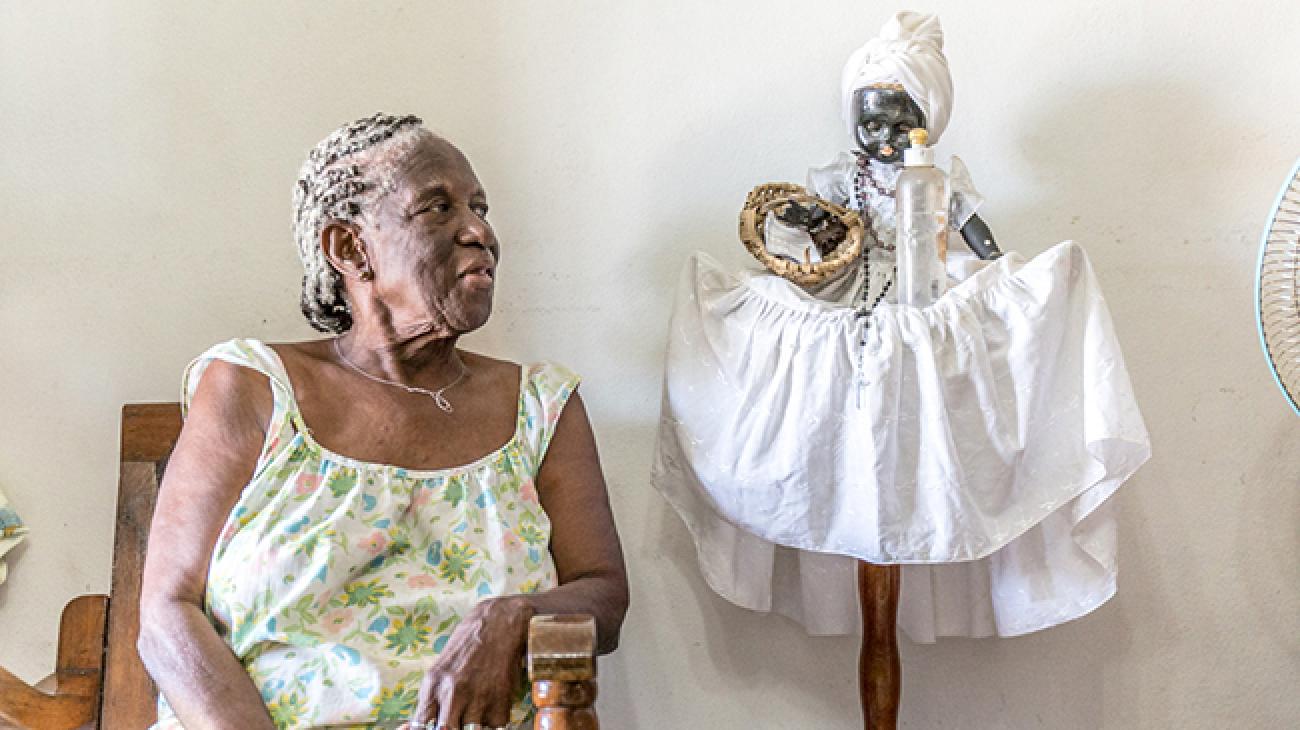
The combining of concepts and terminology from different religions, in this case from Catholicism and the Lucumí religion, is called religious syncretism. In the minds of many Cubans, the two religions parallel one another, rather than existing as one unified religion. They also don't see contradictions between the two faiths. Practitioners attend Catholic mass and might even baptize their children, while also practicing forms of Lucumí in their home. In the house of a Santero, you might find statues of Catholic saints alongside orisha symbols.
Cuba is not alone in this. In the Guatemalan highlands, Maya and Catholic traditions blend in much the same way, and the Day of the Dead celebrations the local travel planners at Anywhere point travelers toward are a vivid example, described in our look at Guatemala's sacred spaces.
Beliefs
Santería followers believe that one God, Olodumare, created the universe and that the world is cared for by lesser divine beings known as orishas. Similar to ancient Greek gods, the orishas represent various forces of nature along with certain human characteristics; for example, Yemayá is the orisha of the sea and motherhood.

The orishas are thought to perform miracles for adherents, and can also be blamed for unfortunate events. If an individual has consistently bad luck, they must appease their orisha to achieve harmony and balance in their life. The followers, however, can't communicate directly with these divine beings. Santería priests act as intermediaries, and the high priests known as babalawos interpret the will of the gods using divination, which involves an elaborate ceremony that often includes rum, drums, cigars, and animal sacrifice. The relationship with the Santeros is also beneficial to the orishas: they only continue to exist if humans worship them. The orishas are thus not immortal, but depend on human devotion and sacrifice to survive.

Strolling through the streets of Cuba, you'll occasionally come across people wearing all white clothing; chances are these people are going through their Santería initiation. People of all ages can choose to follow Santería, with an initiation process that sets the follower on la regla de ocha (the way of the orishas). The initiations are ritualistic and involve elaborate ceremonies. For a year afterward, initiates (known as iyawós) traditionally dress only in white and stay inside at night, and are not to be touched by anyone aside from family members or partners.
Every follower is assigned to an orisha who will guide him or her throughout life. There are hundreds of orishas in Yoruba tradition, but only a couple of dozen are regularly worshiped in Cuba. There's Ochún, who wears yellow and is associated with the Virgen de la Caridad (the Virgin of Charity). If you visit the El Cobre basilica near Santiago, you'll see followers sporting yellow clothes and wearing yellow and white beads in homage to Ochún. Changó is another popular orisha. The orisha of fire, thunder, and war, he is often seen carrying a double-headed axe and is associated with red and white. His Catholic avatar is Santa Barbara.
Obatalá, the orisha of creation, peace, and wisdom, is often described as the father of the orishas. Obatalá dresses in white and is associated with the Virgen de las Mercedes (Our Lady of Mercy); some of Obatalá's paths, or manifestations, are male and some are female. Yemayá rules the ocean and is the orisha of motherhood. Not surprisingly, she wears blue and white, and is associated with the Virgen de Regla. Santeros often have statues of saints in their home, and may even have an altar where pastries, candles, fruits, and coins are offered to their orisha.
There are no official churches or temples in the religion. As such, ceremonies and rituals are usually performed at home or in public.
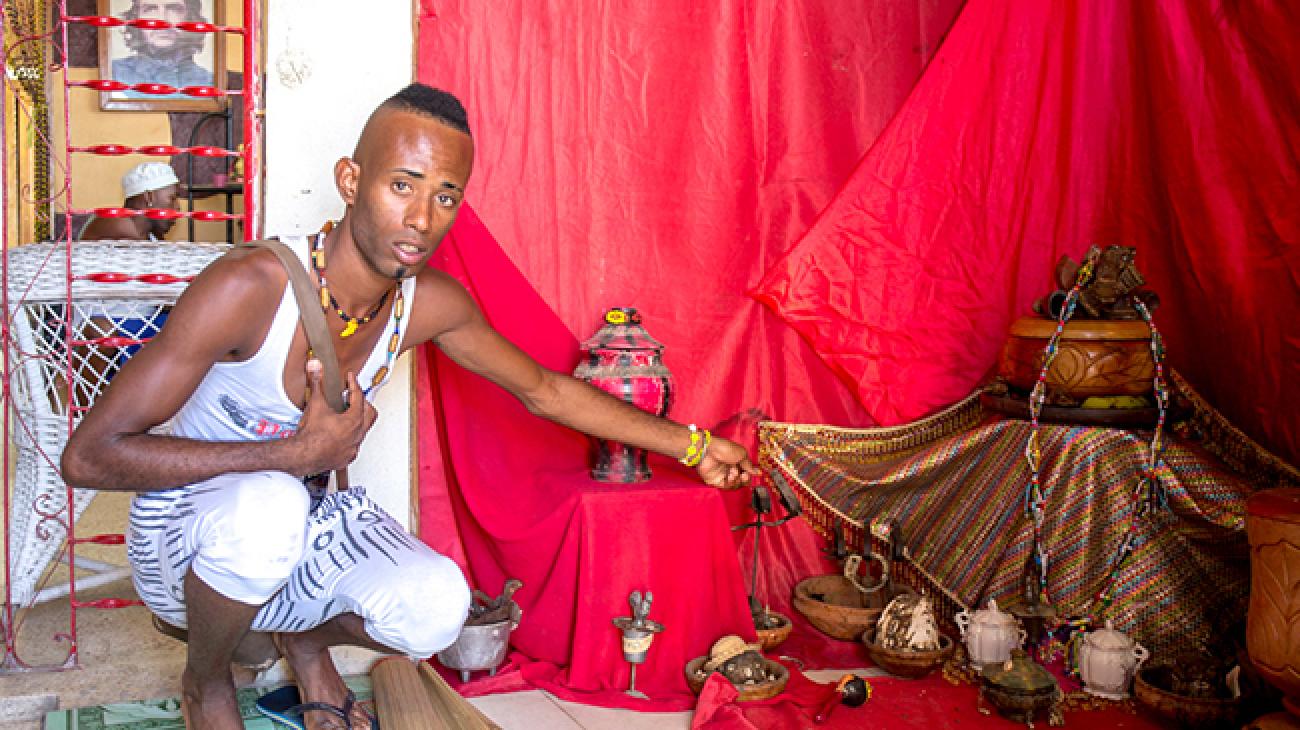
And because Santería has no single written scripture, much of the faith is passed down orally. This is why ceremonies and rites are so important.
Exploring Santería in Cuba
Santería is popular throughout all of Cuba, but the cities of Santiago de Cuba, Matanzas, and Havana have the largest number of followers. In each of these places, there are opportunities to learn more about the religion.
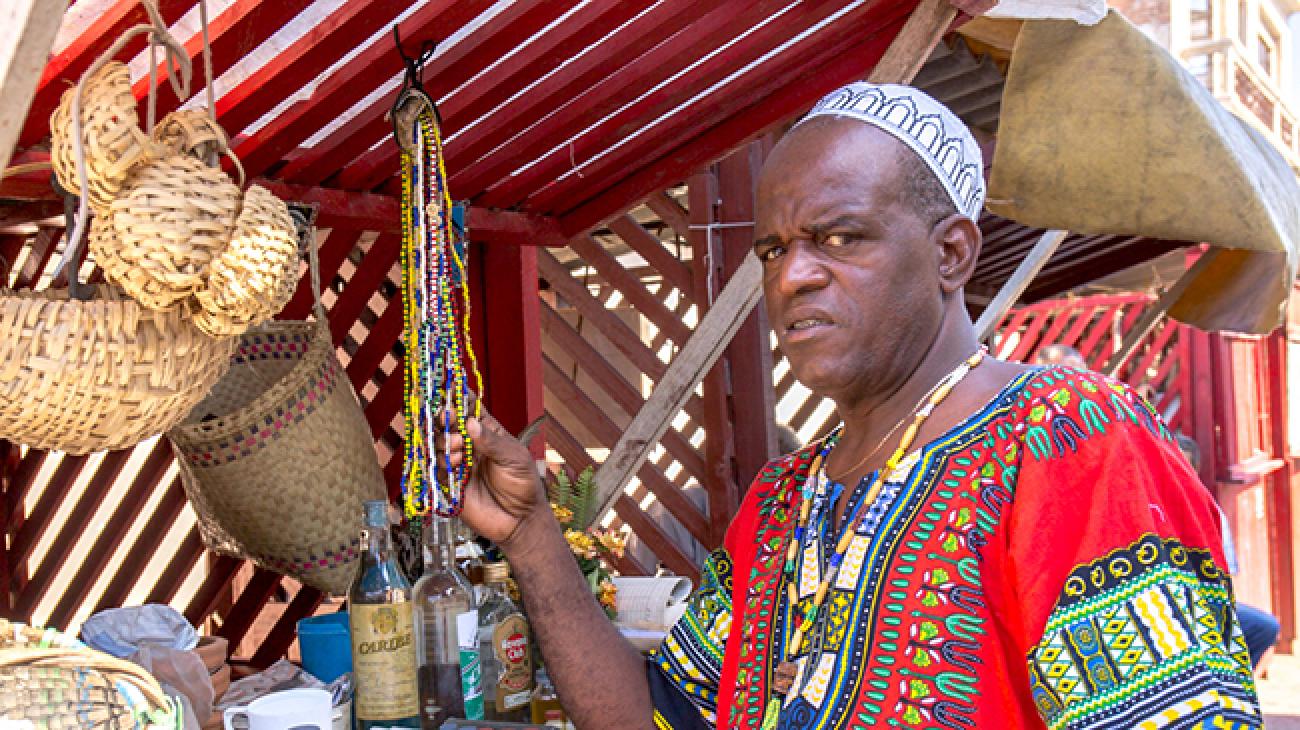
Santiago has a high concentration of Afro-Cubans, and not surprisingly, a large number of Santeros. While here, you can sometimes see Santería ceremonies being performed in Plaza Dolores; these usually include dancing, chanting, and drumming. There are small side streets in Santiago that are lined with stands selling items used in ceremonies, including feathers, candles, bones, stones, herbs, and live animals. Feel free to ask people about the religion and, if given permission, take photographs.

Visits to the basilica at El Cobre, which is about 12 miles (20 km) from Santiago, will also be instructive. Many Santeros make the journey here to pray to Ochún, also known as the Virgin of Charity, who is enshrined in a glass case above the church altar. While here, you'll see people wearing yellow clothes and buying sunflowers in honor of Ochún. This shrine is very special to Catholics too (the Virgin of Charity is Cuba's patron saint), and thus offers travelers a fascinating look at the intersection between Catholicism and Santería.

In Regla, a town on the eastern side of Havana harbor, you'll often see Santería shrines in front of homes. A number of babalawos live in Regla, and while here, it's possible to have them give you advice for a small fee. You might also visit Iglesia de Nuestra Señora de Regla, which hosts the black Virgen de Regla, who is associated with Yemayá and is the patron saint of sailors. The neighboring town of Guanabacoa is also an important center for Santería. In fact, when Santeros find themselves in a difficult position, they sometimes say that they are going to have to go to Guanabacoa to find a babalawo to help solve their problems.
A large number of enslaved Africans were brought to Cuba via Matanzas during the 19th century, and Santería gained a strong following here. To this day, the province is an important site for Santería followers. At the Museo de la Ruta del Esclavo, in the Castillo de San Severino, you can explore a room dedicated to Santería and other Afro-Cuban religions; there are even life-size models of orishas.
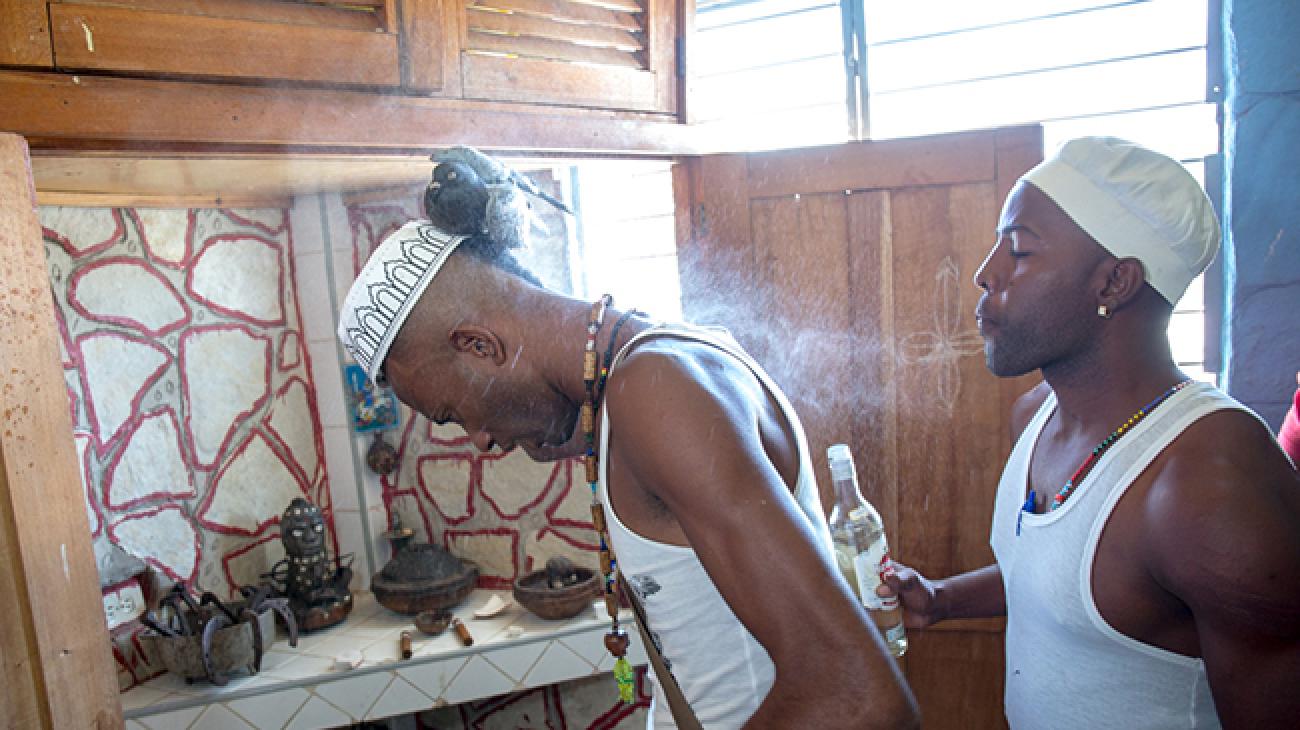
While in Cuba, you may be able to witness private Santería ceremonies. These aren't widely held for tourists, but if you really want to learn more about Santería, you may be able to have a local Santero arrange a ceremony for you. The ceremonies are sensual, powerful affairs, where men kill pigeons and roosters, smoke cigars, spit rum, and play drums. It's unlike anything you've probably ever seen. If you do participate in one of these ceremonies, be sure to tip the babalawo afterwards; this not only pays for his time and effort, but also helps reimburse the costs of the ceremony, which includes the animals, rum, cigars, and more.
When interacting with Santeros, please be respectful of their religion. If you watch a ceremony or take photographs, it's customary to offer a tip afterwards. For longer ceremonies, be prepared to tip more generously, and if you're unsure, ask your host what is appropriate before the ceremony begins.