Cuba's Classic Cars and the Cubans Who Keep Them Running
 Reviewed by Zach Smith, Local Insider
Updated September 2026 by Zach Smith: I replaced the old CUC tour prices with current US dollar rates (Cuba retired the CUC in 2021), dated the car prices and wage figures, and clarified that the 60,000-car count is an estimate.
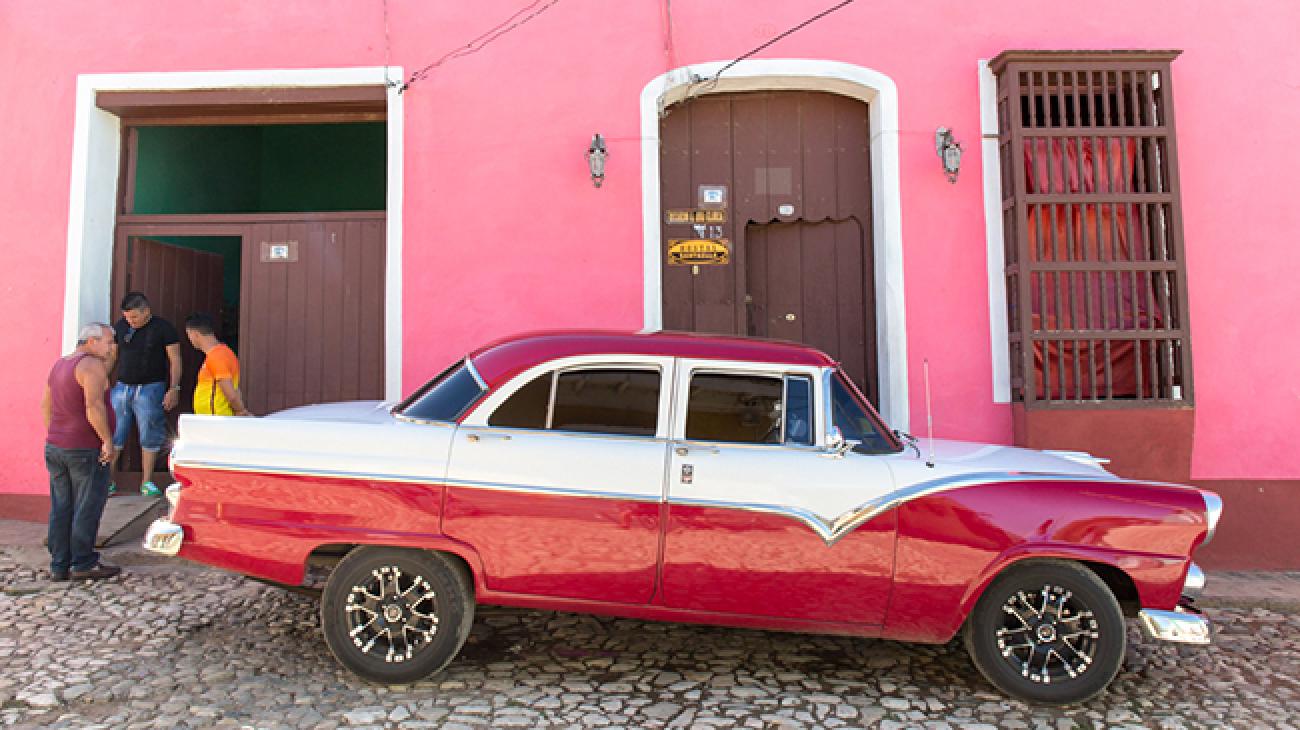
If you're a classic car buff, Cuba is just about the greatest place on the planet. It's like one big car show, where autos from the 1940s and 1950s motor along the streets and highways. There are Chevrolets, Fords, Pontiacs, Buicks, Dodges, Plymouths, and Studebakers. The cars run the gamut from mint condition to downright dilapidated. Well-preserved cars have exteriors that shine with chrome and new paint jobs, while the worse-off autos are held together with odd parts and scrap metal.

American cars were imported into Cuba for about 50 years, beginning near the early 20th century. After the Cuban Revolution, the U.S. embargo was erected and Castro banned the importation of American cars and mechanical parts. That's why Cuba is the way it is today: essentially a living museum for classic cars. The old American autos are often kept running with parts and pieces that were never intended for them. It's not uncommon to find a beautiful 1950s Chevy with a Russian engine, something that would be considered sacrilege to serious car collectors.
That same make-do ingenuity shows up across the region. Planners at Anywhere, a Latin America travel agency, see it in Central America too, where retired US school buses are reborn as brightly painted "chicken buses", and the rides out to the ancient Maya ruins of Central America are often as memorable as the sites themselves.
Of the cars imported since 1959, Russian-made Ladas are the most common. You'll see these small, boxy cars everywhere you go. More recently, Chinese Geelys, Citroëns, and Nissans have entered the scene. Geelys have been a common rental car, and you'll see tourists driving them around much of Cuba. The cars look and drive fine, but they are somewhat unreliable and not very durable.

The government allowed pre-revolutionary cars to be bought and sold for decades, but newer cars were long reserved for doctors, Communist officials, sports stars, and the like. In 2011, Cubans were permitted to buy and sell used cars freely, which marked a major change in the Cuban auto market.
The government, however, tightly controls the new car market and charges very high prices. When state dealerships opened new-car sales to the public in 2014, a new Peugeot was listed at more than $250,000. Needless to say, prices like that are completely out of reach for most Cubans, whose official state salaries are worth only tens of dollars a month at informal exchange rates. Even so, a small number of Cubans with private businesses or family abroad can afford newer imports, including the occasional Mercedes, Audi, or BMW. You'll sometimes see these cars flying down the highway, passing old beaters that are toiling along in the right lane.
Mechanical Wizardry
Estimates vary, but a figure often cited is that around 60,000 classic American cars are still in Cuba. By some estimates, about half of these cars hail from the 1950s, with most of the rest from the 1940s and 1930s. The cars are often family heirlooms, passed down from generation to generation.
As you drive around Cuba, you'll see men hunched over cars, repairing engines and fixing exhaust systems. Since the country lacks replacement parts and in some cases the necessary tools for fixing the vehicles, the locals are extremely crafty and adept in their repairs. Quite simply, Cuban ingenuity has kept these old American cars on the road. Mechanics find ways to use imperfect parts and keep the things running.
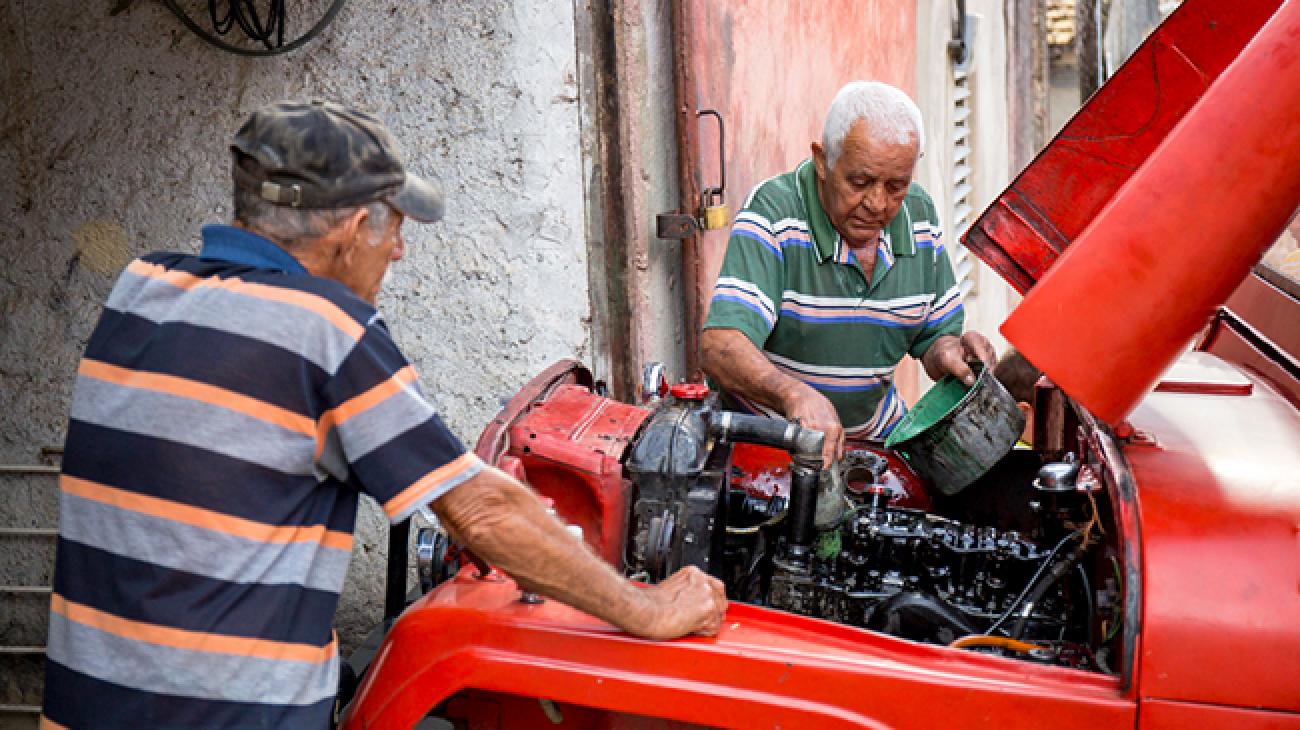
In some cases, Cubans have even had to create materials from scratch to keep their car alive. Russian cars, usually Ladas and Volgas, are dissected into their useful parts, and hood ornaments are sometimes handmade from scrap metal. Cuban mechanics are truly the wizards and MacGyvers of the automotive world.

On many older cars, the windows might not roll down and the exterior might be touched up with several layers of paint. The original engines are almost always tweaked, and many cars have Soviet engines powered by diesel. If a car is unable to be fixed, it can be broken down into component parts, which are then used to restore other classic cars.
Riding in Classic Cars
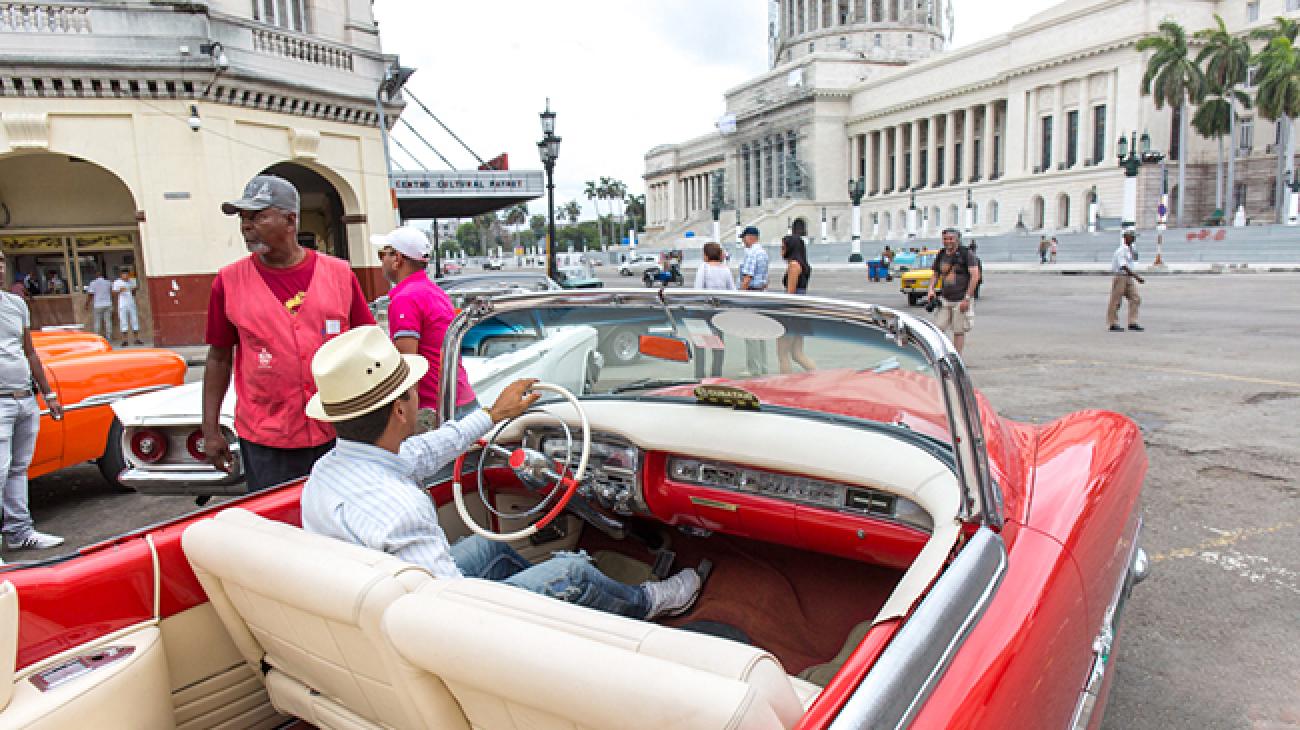
Travelers can take driving tours in classic cars, especially in more touristy areas like Havana Vieja and Varadero. In these places, there are usually rows of beautiful cars lined up for visitors to choose from. Many of the cars are convertibles, which are perfect for cruising slowly and taking pictures. If you're traveling from the United States, check first how to legally travel to Cuba as an American, since U.S. rules limit who can go and what you can spend money on.
To take a tour in a classic car, simply find the car that you like best and tell the driver how long you'd like to drive around for. Oftentimes they will recommend a route, but you're also free to direct them where you want to go. If you're in Havana, it's pleasant to drive along the oceanfront Malecón; sunset is an especially beautiful time of day to cruise this section of the city.

You'll typically pay a flat hourly rate per car, not per person, and in cash. As of 2026, an hour in Havana usually runs about US$30 to $50, depending on the car and whether you book ahead or negotiate on the street; agree on the price before you set off. Before you head out on your tour, hop behind the steering wheel and have someone snap a few photos of you at the helm. All of your friends at home will go crazy once they see you behind the wheel of a 1956 Chevy.
Many of the taxis in Cuba are also classic cars. These vehicles tend to be in much worse condition than the cars aimed at tourists, and are often used to transport locals around town. The taxis are shared and often carry more people than the car was intended to hold. This results in increased stress on the car and causes the vehicle to require more frequent maintenance.
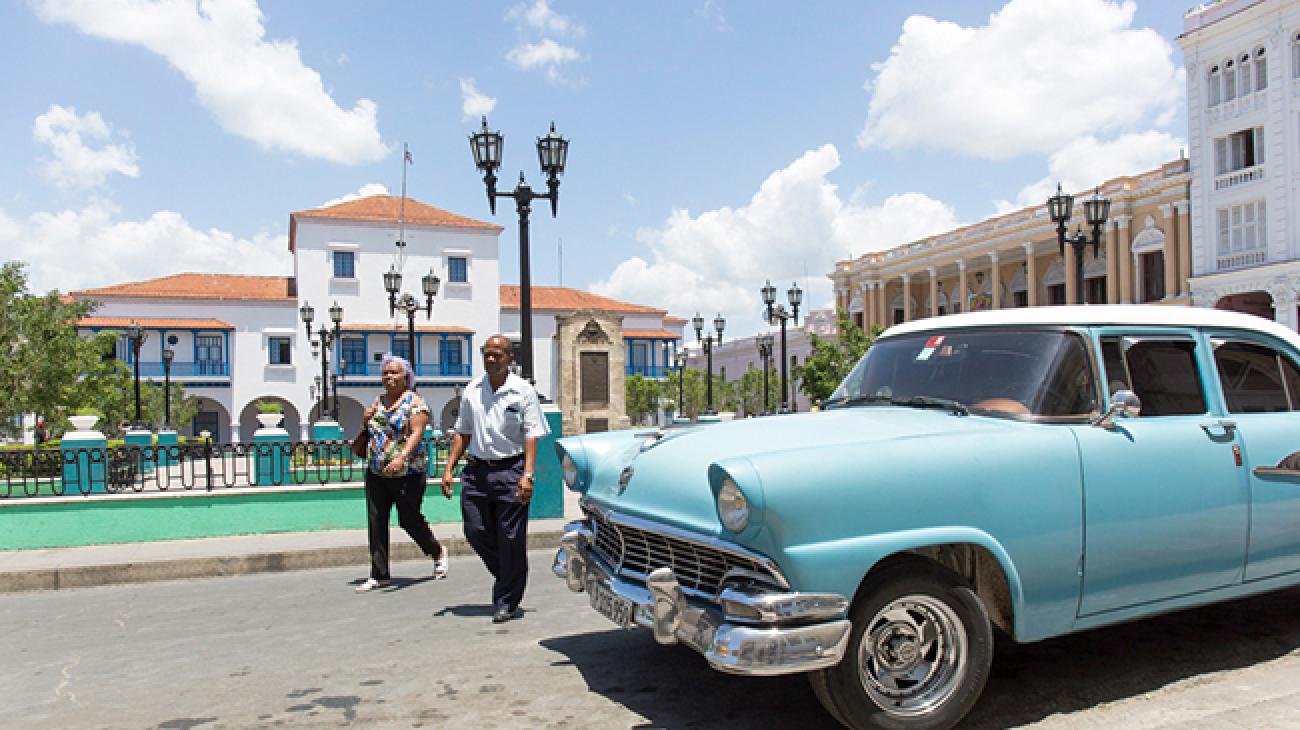
Traveling in these taxis offers travelers another interesting look into the classic car culture in Cuba. You'll see the wear and tear that the cars have taken over the years, and observe some of the impressive ways that they are held together. If you're interested in mechanics, ask your driver to tell you about his car; chances are he'll be proud of the crafty ways that he has managed to keep his car on the road.
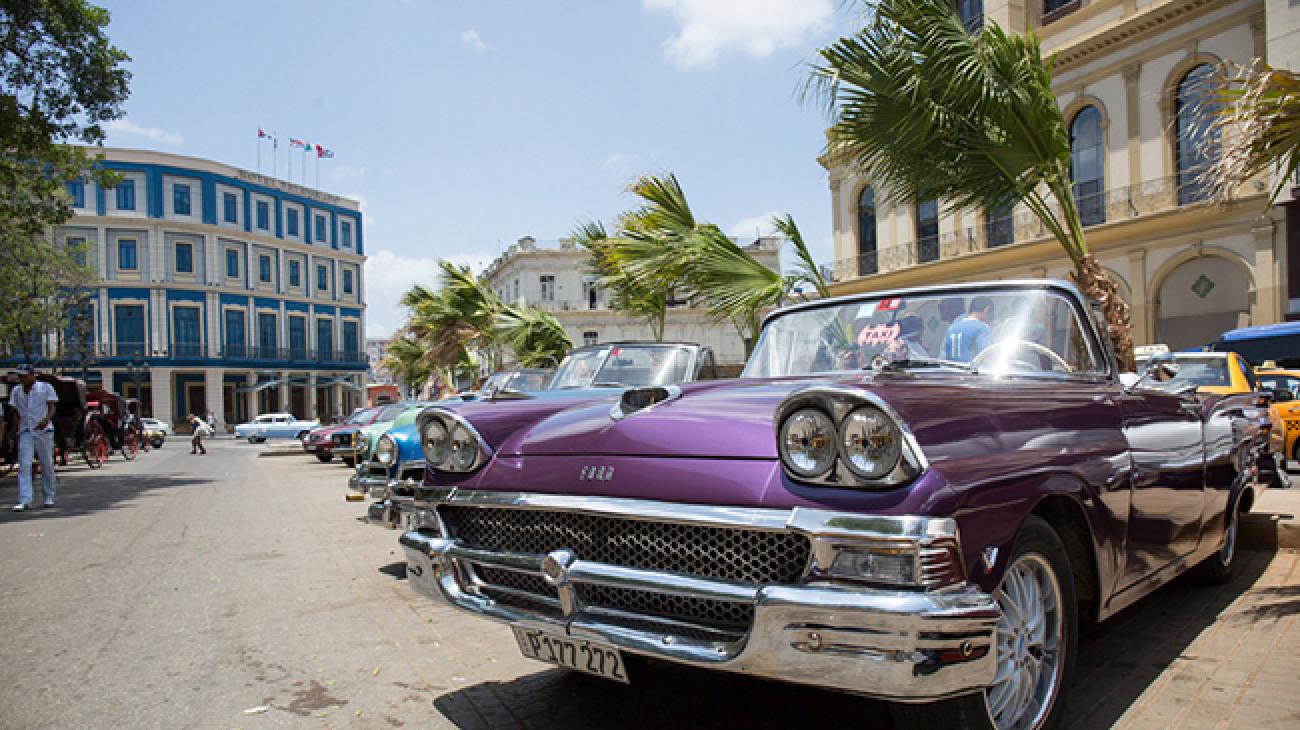
One other good thing about taking classic car taxis: aside from bike taxis, they're among the cheapest ways to get around in Cuba.
Buying Cuban Classic Cars
American car enthusiasts are chomping at the bit to get their hands on classic cars in Cuba. But the U.S. embargo bars importing Cuban-origin goods into the United States, and Cuba has long restricted taking the old cars off the island. That might change someday.
Regardless, according to some car professionals, serious car collectors are better off trying to find a vintage auto in the U.S., since most of the cars in Cuba have not received the best care. As we've already explained, most Cuban cars have been kept running using foreign replacement parts that can affect the functioning and value of the vehicle.
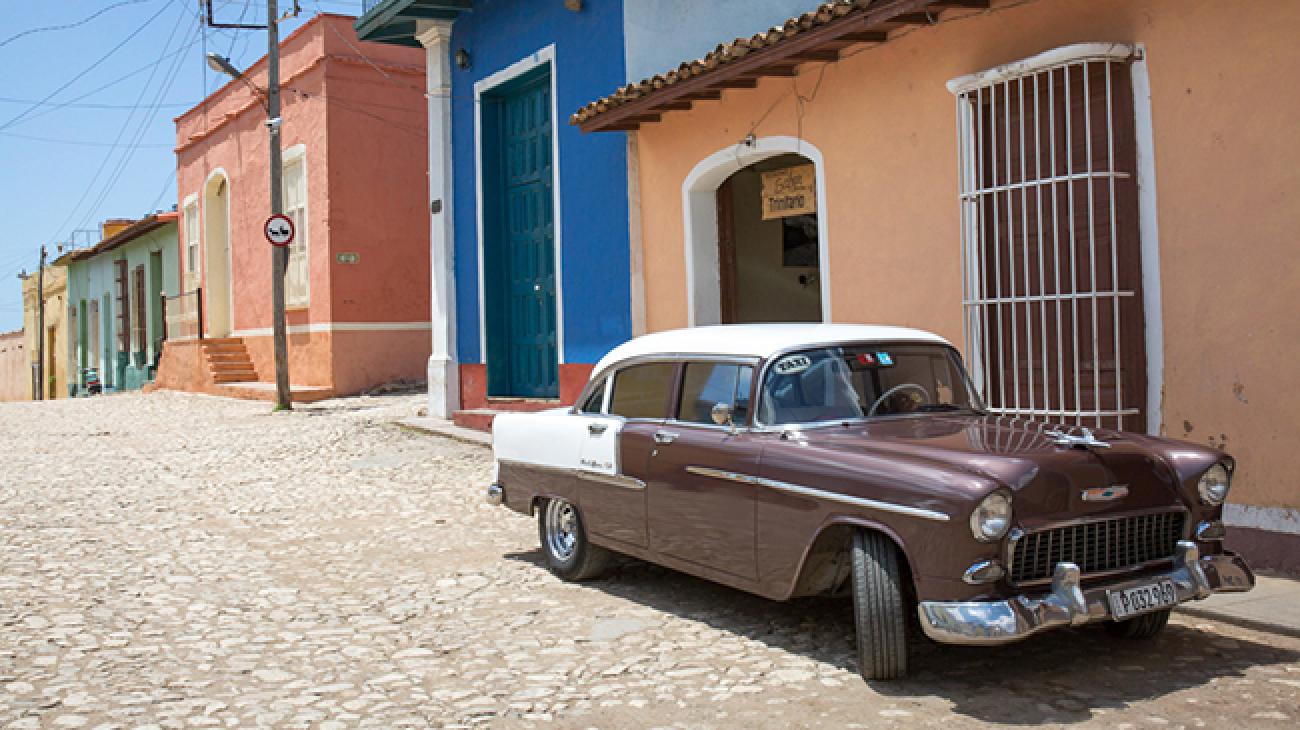
Still, some American collectors may be interested in purchasing Cuban cars in order to own a piece of Cuban history. But that's just the rub: these cars are a part of the Cuban identity, and even if the embargo is lifted, it's hard to imagine them all leaving the island. It would dramatically change the cultural fabric and automotive aesthetic of Cuba, which is used to having these old autos rambling down its roads.
If the embargo were lifted, the Cuban auto market would be flooded with replacement parts and repair manuals. This would be the most significant result that lifting the embargo could have on the car culture in Cuba. Old cars could be repaired properly and be kept on the roads for decades to come.