Farming in Cuba: Sugar, Tobacco and Organic Agriculture
 Reviewed by Zach Smith, Local Insider
Updated September 2026 by Zach Smith: I dated the older statistics, added the collapse of recent sugar harvests, noted that Raúl Castro stepped down as president in 2018 and as party leader in 2021, and reflected the 2021 rule change that lets farmers sell beef.
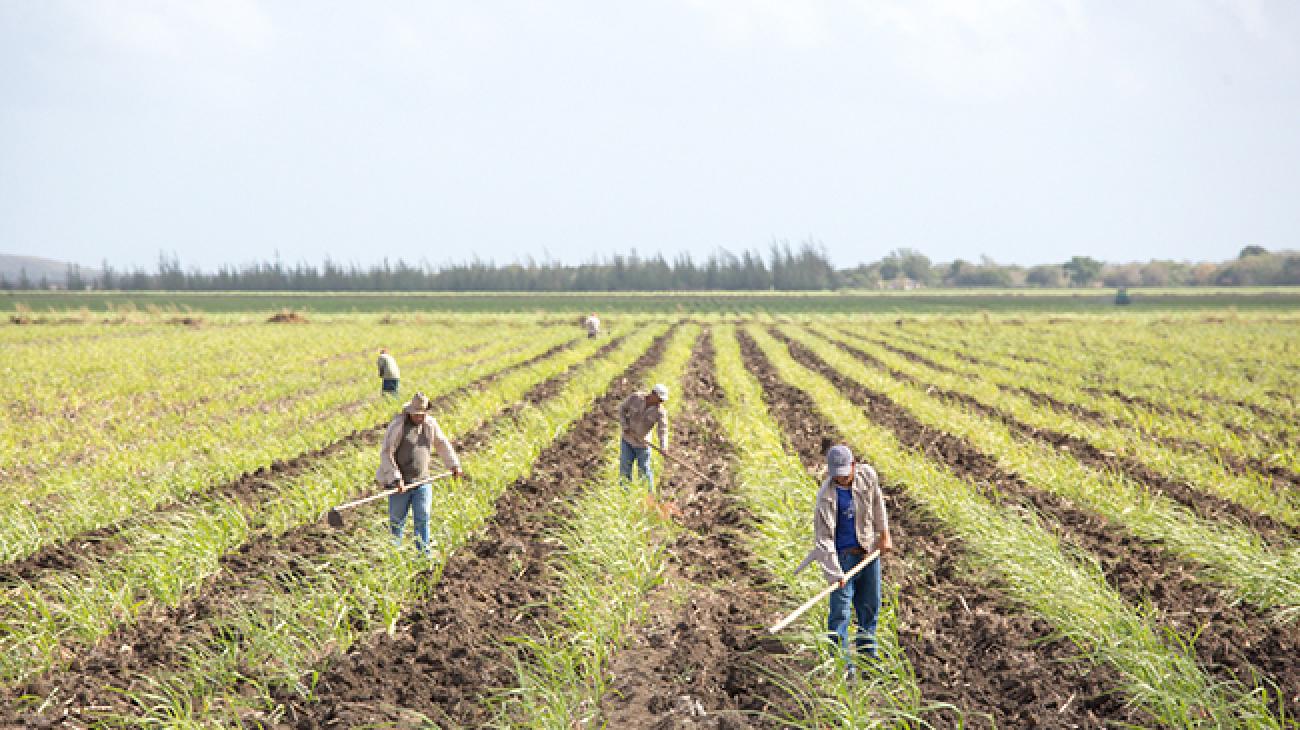
As you drive around Cuba, you'll see fields of sugarcane, tobacco, and corn spread into the distance. Despite the scenic appearance, Cuba has long struggled with its agricultural production. For decades, huge portions of the island have lain fallow, and to this day the country imports the majority of its food. Cuba still has a long way to go until it has the ability to feed the majority of its people.
Cuba has an enormous potential when it comes to agriculture. René Dumont, a well-known French agronomist, once said, "with proper management, Cuba could adequately feed five times its current population." As it stands, Cuba can't even feed its own population. In 2010, Cuba imported about 80 percent of the food that it consumed, and the U.S., through an exception to the embargo for food sales, was its largest single supplier. Estimates today still put food imports at 70 to 80 percent of what Cubans eat, and large areas of farmland remain idle or overgrown with invasive marabú scrub.
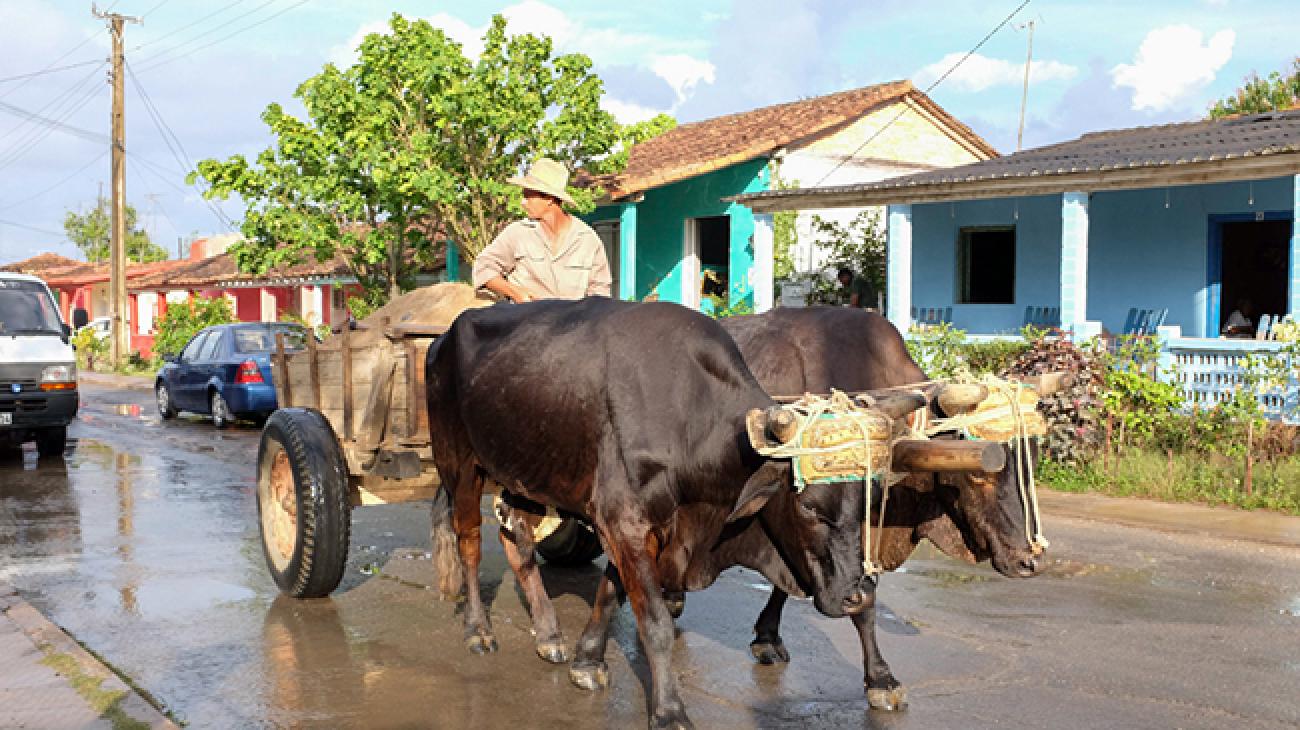
During Batista's time, Cuba's most arable lands were planted with sugarcane. The sugar was then exported to the U.S. and other countries. After the Revolution, the farms were seized by the state and continued to produce sugarcane, most of which was sent to the Soviet Union (along with rum). In exchange, the Soviets sent petrochemicals, oil, food, and machinery to Cuba. Once the Soviet Union collapsed, the arrangement went kaput, and agriculture took a serious hit in Cuba. Because Cuba was so reliant on international shipments of food, the country was ill prepared to feed its own people. Farmers were skilled in large-scale industrial agriculture, but little else.
Sugar shaped Cuba the way other crops shaped its neighbors. In Central America, Anywhere's trip planners often route travelers through highland coffee and cacao farms on the way to Tikal, Copán and Caracol, cities built by the Maya, who were growing cacao long before sugarcane reached the Caribbean.
In the early 1990s, things took another nosedive when Cuba was hit with droughts and storms. At the same time, farmers were unable to get important materials, like fertilizer and farming equipment, which would have greatly increased the crop yield.
From 1990 to 1994, there was a massive drop in the production of food in Cuba and widespread hunger across the island. During this Special Period, as Fidel euphemistically called it, caloric consumption plummeted and the average Cuban lost about 20 pounds. Foreign trade also collapsed, and the economy shrank by roughly a third. U.S. policies of the time, which tightened the embargo and penalized foreign companies that did business with Cuba, deepened the drop in trade.
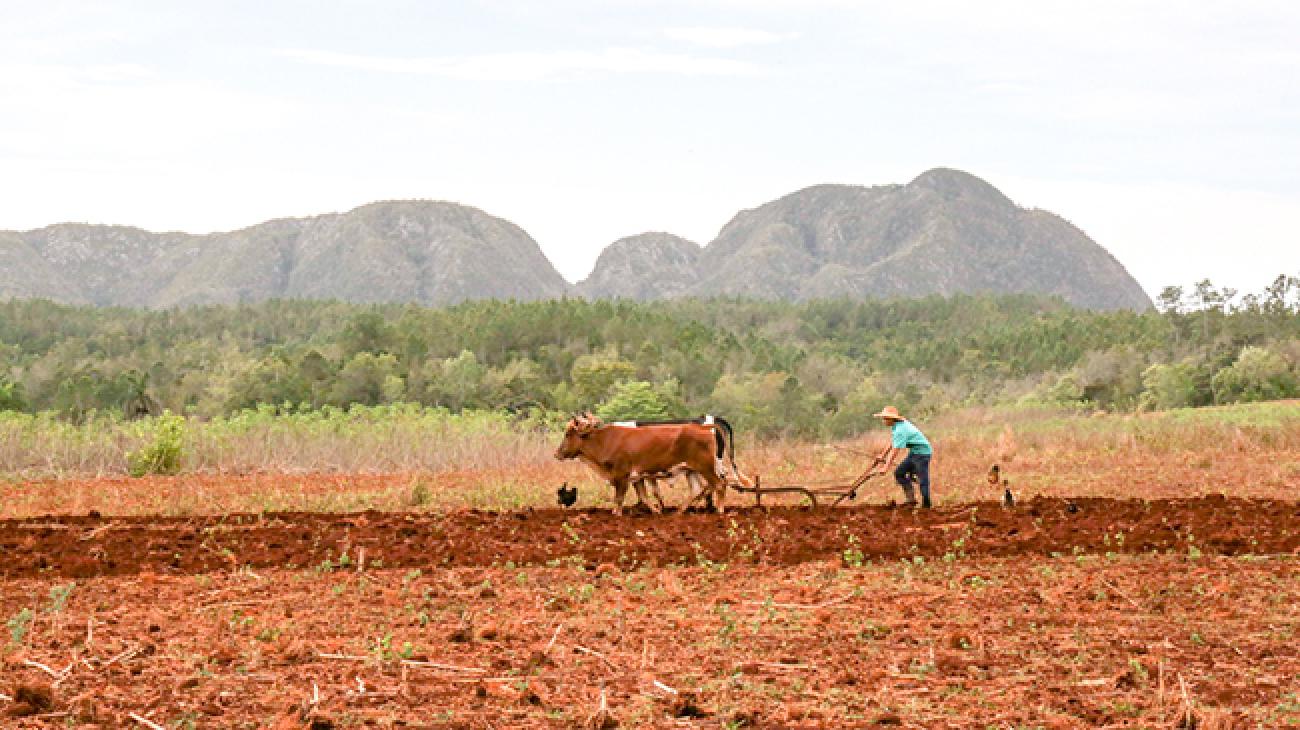
In 1993, the government started to change its ways and decentralize the management of the country's farms. It created cooperatives that farmed government land but were allowed to own their crop, even though the crop was still sold to the state at a fixed price. Today, private farmers and cooperatives grow most of Cuba's food, but they have long been required to sell the bulk of their contracted harvest to the state purchasing agency, Acopio, at state-set prices, with only the surplus sold in markets.
Under Raúl Castro, who led Cuba from 2008 until he handed the presidency to Miguel Díaz-Canel in 2018 (and stepped down as Communist Party leader in 2021), the government pushed through new land reforms. From 2008, millions of acres of idle state land were leased for free in usufruct to motivate Cuban farmers to take up the plow. These farmers are encouraged to invest time and effort in keeping the land healthy, and can pass the leases along to their families.
Local committees have gained more say over the production of their food, and farmers have been paid higher prices for some crops. More recently, the government has allowed more private sale of produce outside the state system.
Despite all of these changes, Cuba still struggles to produce enough food for its people, and shortages have worsened during the economic crisis of the 2020s. Cubans also spend a tremendous amount of money on food. Although Cubans receive a monthly food ration from the government, the ration covers only part of the month, and most households spend the large majority of their income on food.
Organic Farming
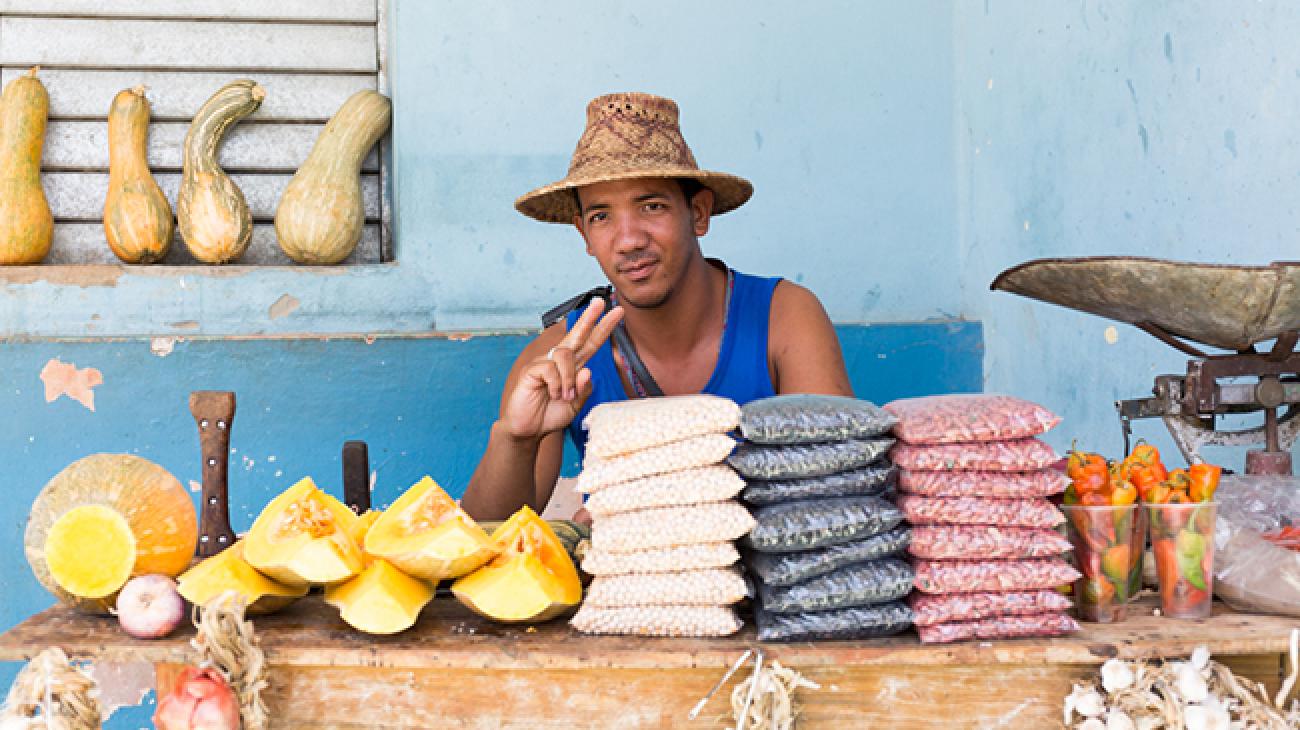
In the 1990s, small, urban community-run gardens popped up all over Cuba. These organopónicos grow produce with little or no chemical fertilizer or pesticides. They arose as a response to food scarcity after the collapse of the Soviet Union, and at their peak they supplied a large share of the fresh vegetables eaten in Havana and other cities. Cuba previously used more fertilizer per acre than the U.S., but was pushed toward a more environmental ethic when it comes to food production.
Up until the collapse of the Soviet Union, Cuba imported a huge amount of agricultural chemicals. After the fall of the Soviet bear, the supply chain dried up and Cuba was unable to afford pesticides and fertilizers from other countries.
Previously, Cuba's agronomists supported the idea of large industrial collective agriculture. Once industrial-size farms became impossible, they had to return to the drawing board and find a way to continue growing crops. Local farmers insisted on more control of the land, and after some resistance, the government eventually decentralized the management of farms. Today, the state still owns most of the land, but it leases plots to farmers who are willing to produce food.
Lacking herbicides, pesticides, and fertilizers, Cuba's agronomists pushed a system of agro-ecology. Agro-ecology relies on permaculture instead of monoculture, and uses natural systems to keep the crops healthy and in check. For example, marigolds are used to attract pollinators; nitrogen-fixing beans replace inorganic fertilizer; natural insecticides keep harmful bugs away; and nutrient-rich compost is made from organic products and manure. By the mid-2000s, Cuba was growing much of its produce with a fraction of the chemicals it had used in the 1980s, a real agricultural achievement.
In the 2000s and 2010s, Venezuelan oil and aid helped bring chemical fertilizer back to Cuban farms, and the move towards organic agriculture seemed less necessary. Some Cuban farmers warned at the time of the 2015 thaw in U.S.–Cuba relations that more chemical inputs could follow. Since then, Venezuela's own crisis and Cuba's shortage of hard currency have made fuel, fertilizer, and animal feed scarce again, and yields of staples like rice, pork, and milk have fallen.
What Cuba Grows
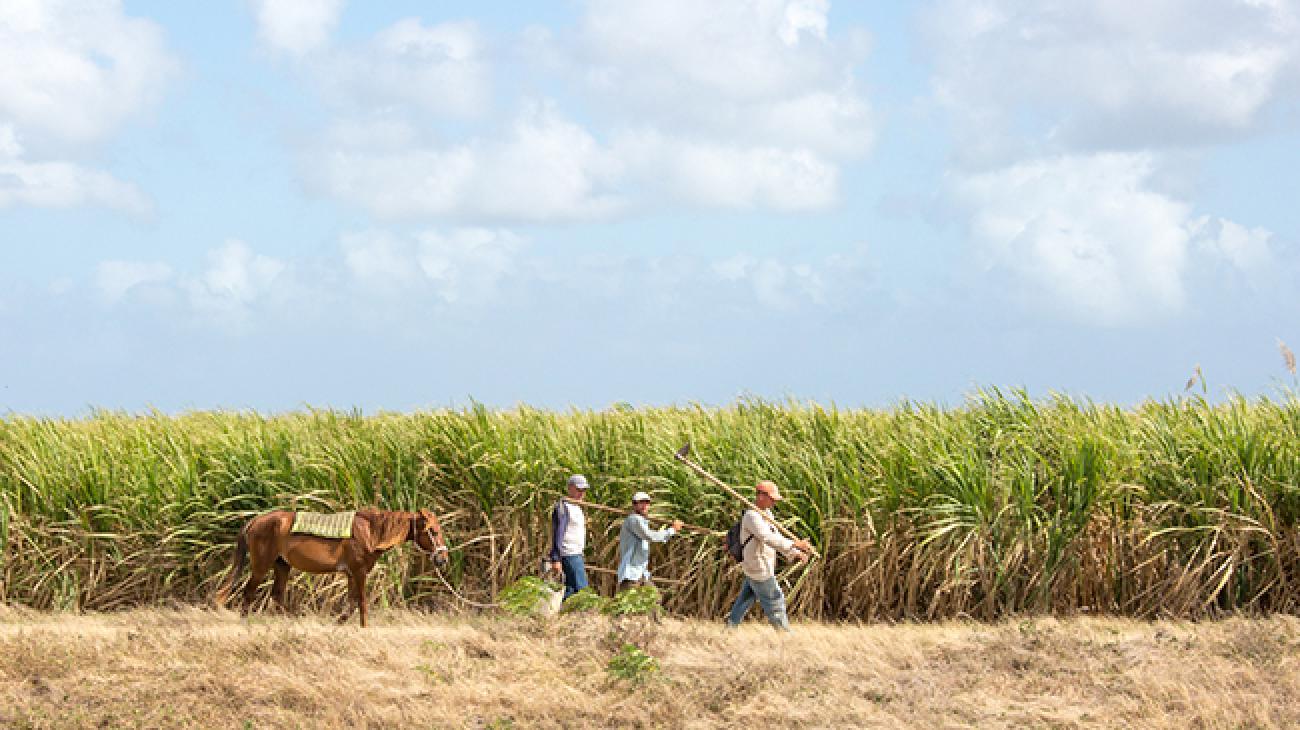
Sugar production has a long history in Cuba, and for entire decades sugarcane has enjoyed a virtual monoculture on this island. Sugar was originally exported to countries with imperialistic interests in Cuba, including Spain, the United States, and the Soviet Union. In the 1970s, Cuba produced about 5 million tons of sugar per year; by the late 1980s, it was producing about 7.5 million tons per year. Of this, nearly 75 percent was sent to the Soviet Union.
Needless to say, the collapse of the Soviet Union had a major impact on Cuba's economy and the sugar industry. Output fell through the 1990s, and in 2002 the government announced the closure of 71 of its 156 sugar mills and converted much of the former cane land to other crops. The decline has continued: according to Cuban press reports, the 2024–2025 harvest produced less than 150,000 tons of sugar, with only a handful of mills grinding cane, the smallest harvest in more than a century.
In the Valle de los Ingenios, which is located just outside Trinidad, you can visit several old sugar plantations. You can explore the estate houses where the owners lived and see the tools that were used to keep the mills running. The Valle was Cuba's most important sugar region during the 19th century, and the wealth it generated helped create many of the old mansions that are still standing in Trinidad.
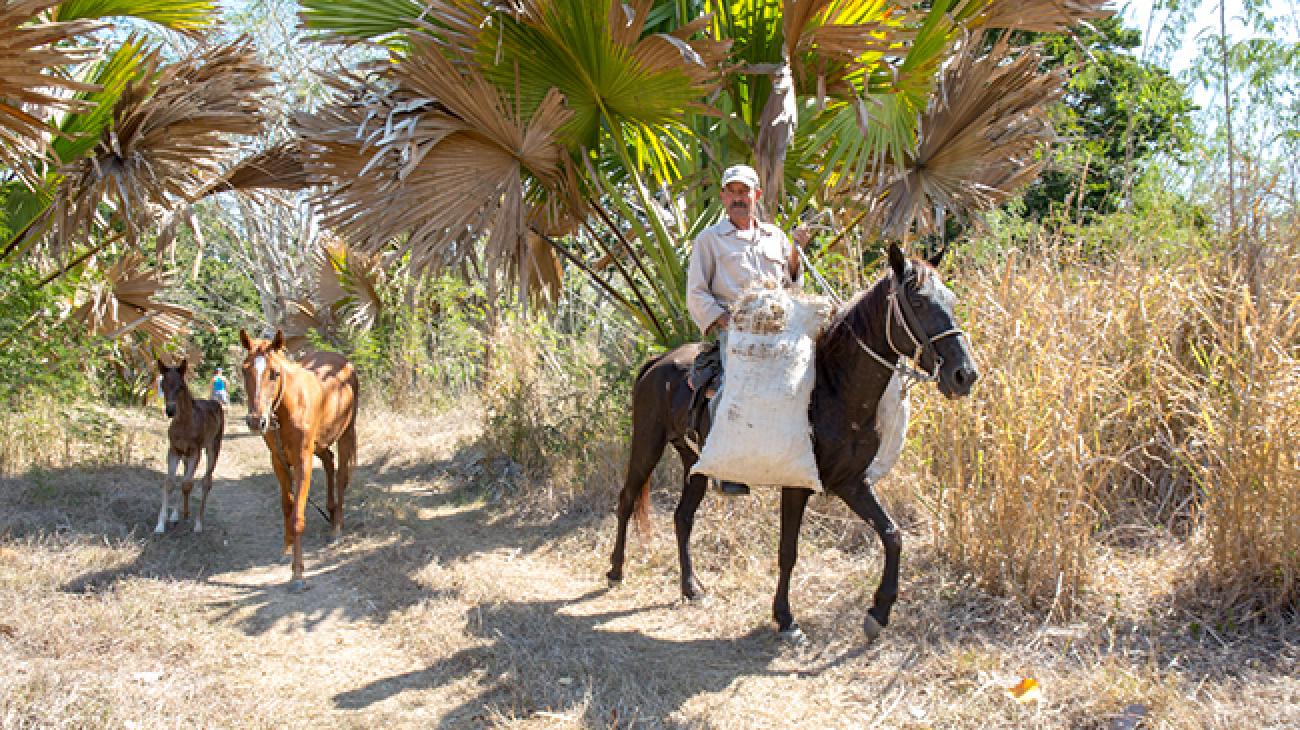
The other crop you're likely to see in Cuba is tobacco, one of the country's most valuable agricultural exports. The most important growing area is the Vuelta Abajo in Pinar del Río Province; the Sancti Spíritus and Villa Clara Provinces also grow a good amount of tobacco, most of it within the Vuelta Arriba region. Most tobacco farms in Cuba are privately worked and small. Cuban cigars are sold worldwide through Habanos S.A., with Spain, China, and France among the largest markets.
Excellent coffee comes from Cuba, too. Most coffee is grown in the mountains of eastern Cuba, and some of the best comes from the Sierra del Escambray above Trinidad. There are a few coffee houses in this area that serve up fresh, delicious brew. Cuba does not, however, produce nearly as much coffee as it once did, and the top quality coffee is exported.
Citrus is also grown in Cuba. Most of it goes into juices or extracts and is exported. Foreign investors, including from Israel and Chile, have put money into Cuban citrus production.
Prior to the Revolution, Cuba had millions of head of cattle. After Fidel took power, the herd fell sharply, recovered in the 1970s and 1980s as the state prioritized animal husbandry, and then declined again after the Soviet collapse. Milk and beef production remain well below their old levels.
For decades, private farmers could raise cattle but could not slaughter them or sell the meat; if a cow died, the farmer could be fined. In 2021, the government began allowing farmers who meet their state delivery quotas to slaughter and sell some beef and milk. Even so, except at upscale restaurants, one rarely finds beef on the menu in Cuba, and it is priced out of most Cubans' budgets.