Internet Access in Cuba: Wi-Fi Parks, Mobile Data and Limits
 Reviewed by Zach Smith, Local Insider
Updated September 2026 by Zach Smith: I rewrote this guide to reflect Cuba's public Wi-Fi parks (2015), home internet (2017), and mobile data (since December 2018), replaced the U.S. Interests Section with the U.S. Embassy, removed the old CUC prices, and added the 2021 shutdowns and the 2025 ETECSA price changes.
When it comes to the Internet, Cuba has long been considered one of the least connected countries in the world. Access has expanded a great deal since the mid-2010s, but the Internet is still slow, costly for most Cubans, and closely controlled by the state. There are serious ethical implications to Cuba's limited Internet access, as well as logistical difficulties for travelers. The following guide breaks down some of the most important points on Internet use in Cuba.
In practice, expect to be offline far more than elsewhere in the region. Anywhere is a travel company whose planners work mostly in Central America, where hotel Wi-Fi and 4G now reach many of the lodges near the Maya ruins of Tikal and Caracol; in Cuba, connections are slower, pricier, and less reliable, so download maps, translations, and booking confirmations before you arrive.
The Current State of the Internet in Cuba
In terms of telecommunications, Cuba has lagged far behind its neighbors: in the International Telecommunication Union's 2013 ICT Development Index, it ranked 125th out of 166 countries. Until 2013, Cuba was connected to the Internet via satellite, which made the connection slow and limited the amount of data that could be sent into and out of Cuba. In 2013 Cuba activated an undersea fiber optic cable connected to Venezuela, which improved the speed of the Internet and the amount of data that can be exchanged.
All telecommunications in Cuba are run by the state-owned company ETECSA. Incredibly, Cuban citizens have only been permitted to own personal computers since 2008, and for years Internet access was limited to ETECSA offices, a few state institutions, and tourist hotels. Aside from a few choice individuals (including government officials, academics, and doctors), most Cubans could not have Internet in their home.
Before public Wi-Fi arrived, free connections were rare. One was at the U.S. Interests Section in Havana, which became the U.S. Embassy when the two countries restored diplomatic relations in 2015; many Cubans were fearful of using the Internet there because of the political implications of doing so. Another was at an artist's studio in Havana. The artist, who goes by the name Kcho, was allowed an Internet connection, and in 2014 he installed wireless routers and shared the connection with the public. Crowds of people stood outside the walls of his studio using the Internet throughout the day and night.
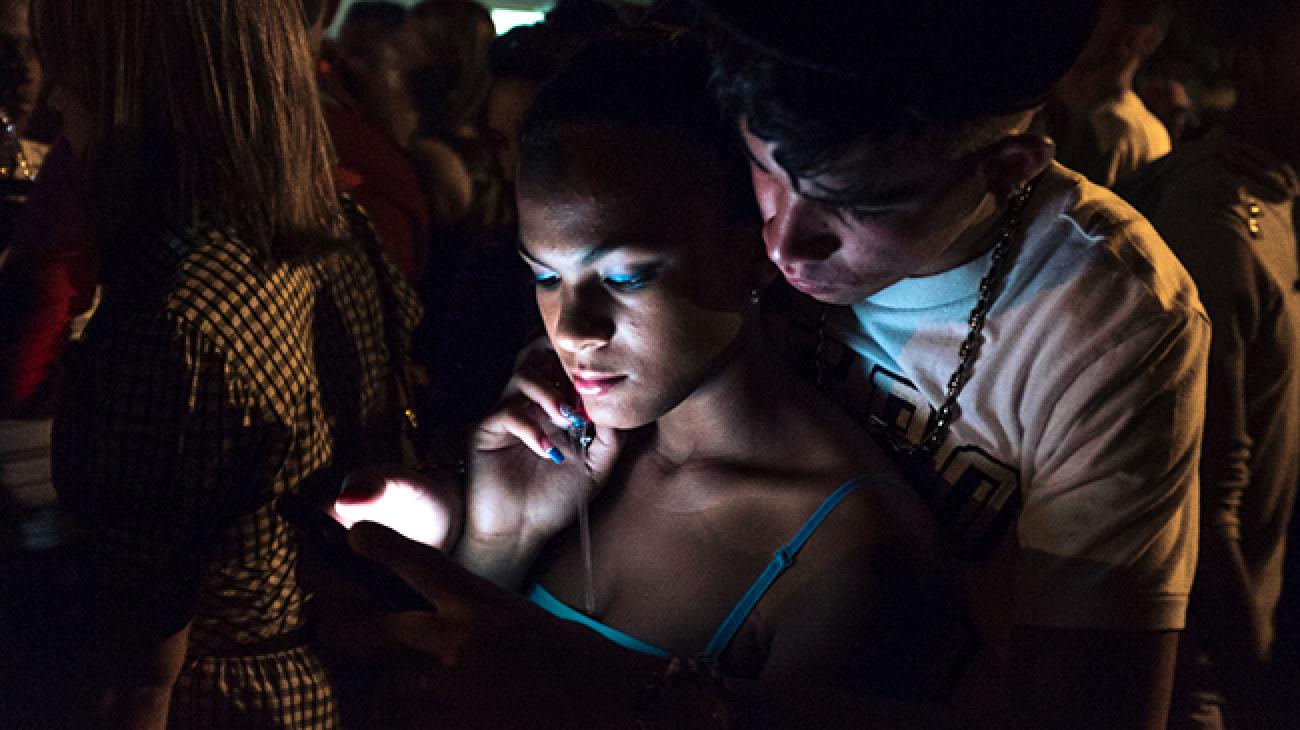
Things began to change in 2015, when ETECSA opened its first public Wi-Fi hotspots in parks and plazas. Users buy prepaid Nauta cards with a login code, and the parks quickly became social hubs where you'd see crowds of Cubans on video calls with relatives abroad. Home Internet, sold as Nauta Hogar, followed with a pilot in Old Havana in late 2016 and a wider rollout from 2017. In December 2018, ETECSA opened 3G mobile data to the public for the first time, and 4G service began in 2019. Today, the phone is how most connected Cubans get online, and WhatsApp is the everyday way to call and message.
Access is still far from free or open. The government blocks a number of independent news sites, and it has shown it will restrict the network in moments of unrest: during the nationwide protests of July 11, 2021, mobile Internet was cut and social media and messaging apps were blocked for days. Frequent power outages, including island-wide blackouts in recent years, also knock connections offline.
Cost remains the biggest barrier. State salaries are very low, and data has always been expensive relative to them. In May 2025, ETECSA capped how much mobile credit customers can top up in Cuban pesos each month and began selling larger data packages priced in U.S. dollars. The move, which Cubans nicknamed the tarifazo, drew unusually open criticism, including from university students, and ETECSA added some cheaper peso plans in response. For many Cubans without relatives sending money from abroad, regular Internet use is still out of reach.
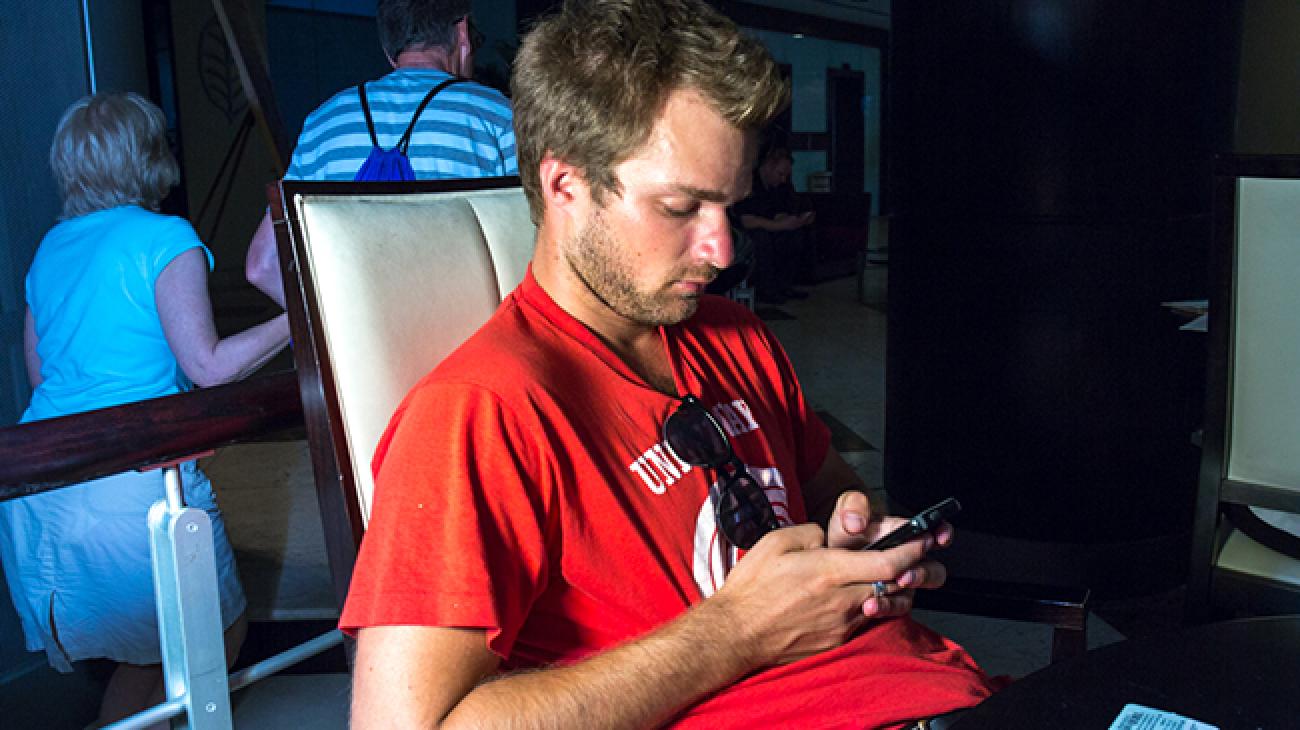
The spread of mobile data has also changed Cuban street life. Before 2018, one silver lining of limited access was that locals were rarely immersed in their own devices when socializing with friends and neighbors. That is less true today, though in much of the country you'll still see more conversation and laughter on the street than screens.
Using the Internet
As a traveler in Cuba, your options for getting online are better than they used to be, but still limited:
- Wi-Fi with a Nauta card. Wi-Fi is available in public hotspots (usually parks and plazas) and in most larger hotels. You'll need a prepaid Nauta card, sold at ETECSA offices and some hotels; bring your passport. Hotel Wi-Fi is usually more expensive and is often only available in the lobby.
- A local SIM. ETECSA sells prepaid tourist SIMs that include mobile data, available at the airport and ETECSA offices. Coverage is decent in cities and weak in rural areas.
- Roaming. Check with your home carrier before you go; roaming in Cuba can be very expensive, and not every carrier offers it.
Your passport number is recorded when you buy a card or SIM, so it's safe to assume your Internet use can be monitored. Anonymous use of the Internet is not really possible in Cuba.
Most major apps work, but some foreign websites and services block Cuban IP addresses because of U.S. sanctions, and U.S.-issued bank cards generally don't work on the island. American visitors should also read up on how to legally travel to Cuba as an American before booking.
If you want to save time and money, download offline maps and write out emails and messages ahead of time, then send them once you have a connection. And plan for the occasional day with no signal at all: power cuts can take hotspots and cell towers down with them.