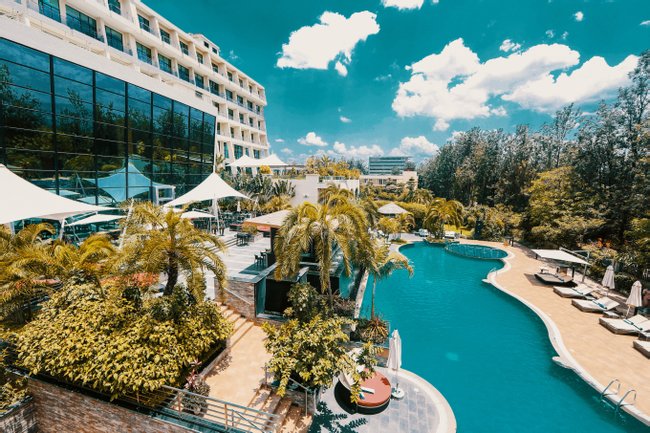
Kigali
Founded in 1907 asa German administrative outpost, Kigali sits at the geographic centre of Rwanda and spreads across a landscape of rolling hills, valleys and steep ridges. The city functions as Rwanda’s capital, its largest urban area and a province‑level administrative unit. With a population of 1,745,555 in August 2022, it is roughly seven times larger than the nation’s second‑largest city.
Visitors walk through districts that climb from valley floors near 1,300 m to hilltops such as Mount Kigali at 1,853 m and Mount Jali at 2,071 m, experiencing a cityscape that rises and falls with the terrain. The Nyabarongo River outlines the western and southern limits of the municipal area, while the Nyabugogo River threads through the city, flowing from Lake Muhazi between the two prominent peaks before joining the Nyabarongo. Along the riverbanks, wetlands provide flood protection and host a restored marshland known as Umusambi Village, where grey‑crowned cranes find shelter.
Kigali’s modern layout reflects its post‑1994 reconstruction, with the three districts of Gasabo, Kicukiro and Nyarugenge forming the core of governance and service‑driven commerce. The city’s elevation of 1,567 m gives it a cooler tropical savanna climate, and its steep slopes create distinct neighbourhoods that can be explored on foot. The combination of central location, dramatic topography and a rebuilt urban fabric makes Kigali a city defined by its hills and the rivers that carve them.
Kigali itineraries
Explore hand-picked Kigali itineraries designed by local insiders who know every hidden corner. Each trip is completely flexible, customized to your pace, travel style, and budget.
7 days · Kigali, Nyungwe, Volcanoes National Park
Couple
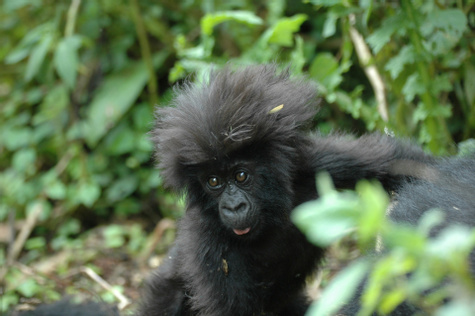
Dubbed the land of thousand hills ,Rwanda is a the land of contrast and constantly rated as the cleanest and safest country in Africa. This trip features two ecologically distinct regions with the highest diversity of primates- the lesser known Nyungwe's primeval forest boasts over 13 species of primates, and Volcanoes National Park has 13 habituated Gorilla families, this itinerary offers unparralled experience in primate watching , and the sceneries, and birdlife will equally take your breath away.
Rwanda
8 days · Kigali, Nyungwe, Volcanoes National Park
Couple
Dubbed the land of thousand hills ,Rwanda is a the land of contrast and constantly rated as the cleanest and safest country in Africa. This luxury trip features two ecologically distinct regions with the highest diversity of primates- the lesser known Nyungwe's primeval forest boasts over 13 species of primates, and Volcanoes National Park has 13 habituated Gorilla families, this itinerary offers unparralled experience in primate watching , and the sceneries, and birdlife will equally take your breath away.
Rwanda