Money in Ecuador
In September 2000, the United States dollar became the official currency of Ecuador. Prior to this change, the Ecuadorian currency was the sucre. Travelers from the U.S. will be happy to not have to exchange their currency here, although the switch has made Ecuador more expensive than it once was.
Ecuador’s coins are of the same denomination as U.S. coins but have different symbols — there are nickels ($0.05), dimes ($0.10), quarters ($0.25), and half dollars ($0.50). 100 cents equals one dollar. American and Ecuadorian coins are used interchangeably. Though there have been many constitutional changes, Ecuador enjoys a stable government and a growing economy, which means you should not encounter any significant issues during your trip.
What currency does Ecuador use?
Ecuador uses the U.S. dollar. It has been the country's legal currency since 9 January 2000, when it replaced the sucre, so travelers from the U.S. don't need to change money at all. The Central Bank of Ecuador also mints its own centavo coins, which circulate alongside U.S. coins at the same value — you'll get both in your change.
Bring clean, untorn bills in small denominations. Many smaller businesses won't break — or won't accept — $50 and $100 notes, so $1, $5, $10 and $20 bills are the most useful, and it pays to hold on to small change. If you're coming from outside the U.S., you can change money at banks and casas de cambio in Quito and Guayaquil (see Changing Money below), but it is simpler to arrive with some dollars and use ATMs.
How much cash should I carry in Ecuador?
Carry enough small bills for the day's incidentals and put larger costs on a card. When hotels, transfers and guided tours are prepaid — as they are on the trips our Ecuador Insiders design — cash mainly covers tips, taxis, snacks, market purchases and meals at smaller local restaurants.
As a rule of thumb, around $50–75 per person covers a relaxed day of eating at local places; allow $100–150 if you plan to dine at traveler-oriented restaurants, have drinks and shop for souvenirs. If your hotel includes breakfast, you'll need less. Take more to rural areas, markets and the Galápagos, where card acceptance is patchier and ATMs are fewer.
Keep your cash in $1–$20 bills, split it between a money belt and your day bag, and leave the rest in your hotel safe.
Banks and ATMs
ATMs are common in Ecuador's cities and larger towns; the major banks include Banco Pichincha, Banco Guayaquil and Produbanco. Use machines inside banks or shopping centers during the day. Withdrawal limits and fees are set by the local bank and by your own card issuer, so check both before you travel, and tell your bank you'll be abroad so your card isn't blocked for suspected fraud.
In the Galápagos, banks and ATMs are few and can run short of cash, and credit cards are not accepted everywhere, so arrive with enough dollars for the islands. The Galápagos National Park entrance fee — US$200 for foreign visitors aged 12 and over and US$100 for younger children (lower rates apply to citizens of Andean Community and Mercosur countries) — is collected by park rangers when you land at Baltra or San Cristóbal.
Credit Cards
In Ecuador's cities you can use credit cards at nicer shops, hotels, and restaurants. All major credit cards are accepted here; Visa and MasterCard are the most widely used. In more rural areas, cash is often the only form of payment that businesses will accept. It can be tough to find places to break larger bills, so hold onto small change when you have it.
Are traveler's checks accepted in Ecuador?
Rarely. Some banks and casas de cambio in the larger cities will still cash traveler's checks, but very few hotels, restaurants or shops accept them as payment, and those that do are usually upscale. A mix of cards and a reserve of U.S. cash is far more practical today.
If you do bring traveler's checks, keep a separate record of the serial numbers so they can be replaced if they are lost or stolen, and expect to show your passport when you cash them.
Changing Money
American citizens will have no need to exchange currency, but if you’re coming from a country other than the U.S., you can exchange your currency at banks in Ecuador. It’s a good idea to have a small amount of U.S. dollars on hand in case there are any problems exchanging your own currency.
If possible, try to change money in major cities like Quito and Guayaquil, which have the best exchange rates. If the banks are closed, you can also change currency at casas de cambio, which are legal and credible but may have slightly worse exchange rates than banks. You can also exchange money at airports and larger hotels.
How much should I tip in Ecuador?
Tipping in Ecuador is appreciated rather than obligatory, and modest by North American standards. Ecuador's value-added tax (IVA) is 15%, and many upscale restaurants also add a 10% service charge to the bill, so check before you add more. If you want to tip your server, hand the money to them directly rather than leaving it on the table.
Guides do expect a tip: roughly $5–10 per person for a day on a group tour, and more for a private guide. A dollar is enough for porters, bellhops and hairdressers. Private drivers appreciate a tip after a long transfer, but taxi drivers don't expect one. Tipping is always a personal decision — reward good service, and don't feel obliged when it wasn't.
Can you bargain in Ecuador?
Yes — in open-air markets, but not in shops. Prices are fixed in supermarkets, department stores, malls and most boutiques. At craft and produce markets, gentle bargaining is part of the exchange: ask for a better price, especially when buying several pieces, and be ready to walk away politely, because sellers will often call you back with a better offer.
Keep it friendly and in proportion — a dollar or two matters far more to an artisan than to you, and the best pieces are worth paying for. On a private trip, your guide can point you to reputable workshops and tell you what a fair price looks like.
See our Ecuador vacation packages.
Related Travel Guides
- Development and Society in Ecuador
- Ecuador AirBnB
- Ecuador Entry Requirements
- Ecuadorian Chocolate
- Ecuadorian History
- Ecuador's Government and Economy
- Environmental Issues in Ecuador
- Food and Drink in Ecuador
- Getting Around in Ecuador
- Getting to Ecuador
- Holidays and Festivals in Ecuador
- Is Ecuador Safe?
- Money in Ecuador
- Music and Art in Ecuador
- Religion in Ecuador
- The Geography of Ecuador
- The People and Culture of Ecuador
Ecuador itineraries from local insiders
Explore hand-picked Ecuador itineraries designed by local insiders who know every hidden corner. Each trip is completely flexible, customized to your pace, travel style, and budget.
Inland, Islands & Amazon
Ecuador is a wonderful country where we were able to travel by road for over 1200 KM during our two weeks trip and see the different parts of the country.
Ecuador
Two Weeks in Ecuador
Embark on a two‑week Ecuador adventure that juxtaposes bustling Andean capitals with remote volcanic islands, delivering a vivid contrast of urban energy and pristine nature. Traverse Quito’s historic streets, soar over the crater lake of Quilotoa, then island‑hop to the Galápagos for lava tunnels, Santa Cruz highlands, and sea‑lion encounters. Guided by knowledgeable locals, you’ll taste traditional cuisine, hear indigenous stories, and return with a deep appreciation for Ecuador’s cultural richness and extraordinary biodiversity.
Ecuador
Everything We Had Hoped For
I loved using Anywhere Ecuador for this trip! We had a fantastic time. I gave a four out of five because we had some logistical challenges with our day trips and getting back to the airport.
Ecuador
It Was Hard to Say Goodbye
Ecuador is a beautiful country from Quito all the way to the coast of Guayaquil. It is definitely a must. Percy was amazing in helping us plan our trip, as I must have changed my itinerary about a million times. Even when I had questions during our trip he was right there ready to help and took care of everything. Now, there are no words to describe our driver, (which we were lucky to have for 9 days) Ricardo. He was professional, friendly and went above and beyond to help make our Ecuador experience one to remember. It was sad to say good bye, but one thing is for sure when we plan our next trip to Ecuador we will be asking for Ricardo again.
Ecuador
Treasures of The Galapagos
Words cannot express the wonderful experiences we had in Ecuador and the Galapagos Islands. We try to explain our enthusiasm for our trip to our friends, but words become inadequate and so we simply encourage them to arrange their own adventure to Ecuador/Galapagos through Anywhere! We are anxious to start planning a return trip to explore more of the mainland of Ecuador. We owe a great deal of our curiosity about Ecuador to our driver Ricardo, who was an enthusiastic cheerleader for the country.
Ecuador
Friends Ecuador Adventure
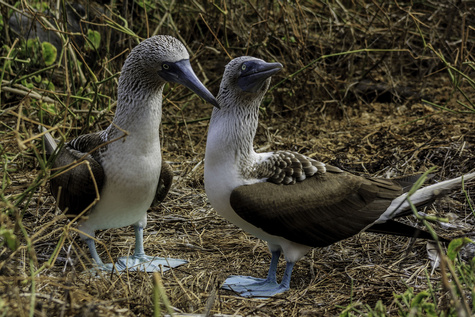
Joyce explored Ecuador’s diverse landscapes on an adventure that combined highland culture and coastal wonders. She trekked from Quito’s historic center to Baños’ volcanic landscape, then sailed to the Galápagos for island tours of Lobo, León Dormido, and San Cristóbal. Guides shared indigenous stories, local cuisine, and conservation insights, leaving Joyce with a lasting appreciation for Ecuador’s vibrant ecosystems and warm hospitality.
Ecuador
Ecuador Thoroughly Explored
The people and the beauty of the country
Ecuador
From The Andes to The Amazons
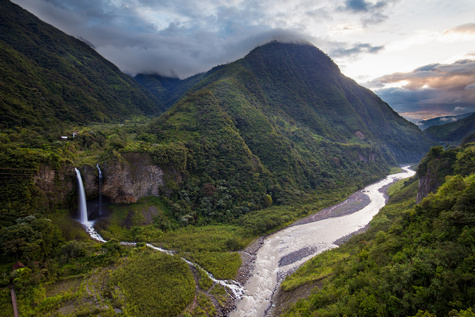
If adventure, nature, and culture are at the top of your travel to-do list, then prepare for a trip that you won’t soon forget. Experience the rugged beauty of Ecuador.
Ecuador
Andes Highlands to Galapagos
Have it all! Rest, relaxation, adventure, and nature are yours when you book this Signature Trip to Ecuador. From Quito to the Galapagos, Ecuador will enchant you…
Ecuador