
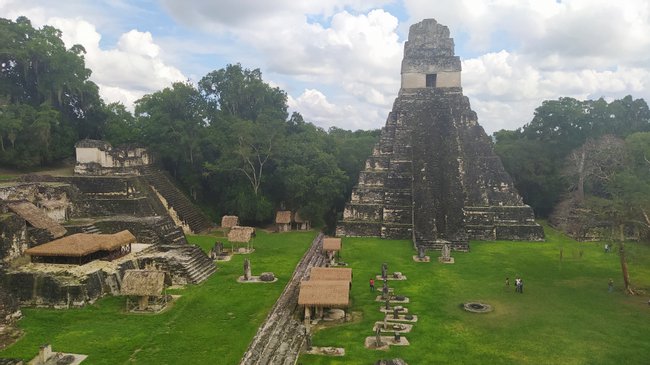
Tikal National Park
Set within the northern reaches of Guatemala’s Petén department is the incredible Mayan site of Tikal. With its massive Mayan temples, steep limestone pyramids and thick green jungles, Tikal is undoubtedly one of the top attractions in Guatemala. The ruins and surrounding forest are located within the Tikal National Park.
Created in 1956, the Tikal National Park is Guatemala’s oldest national park. It spreads across 222 square miles (575 sq km) and protects not only the Mayan ruins but also a huge swath of tropical forest and a great variety of wildlife. In this way it offers travelers a unique opportunity to combine cultural and environmental attractions. The park was declared a UNESCO World Heritage Site in 1979. Its importance to human heritage and natural history cannot be overstated.
History
Tikal was settled around 900 BC. It stayed fairly small for the next 200 years and remained a minor settlement throughout most of the middle Preclassic period. The late Preclassic period saw the completion of the ceremonial buildings in the North Acropolis and the pyramid at El Mundo Perdido.
Around the time of Christ, Tikal’s Great Plaza was being built and the city was growing. By the Early Classic period, around 250 AD, Tikal had become an important commercial, cultural, and religious center. Architecture became increasingly sophisticated and the great pyramid grew another 100 feet (30 m) in height. Art also took off around this time—the styles that dominated throughout the Classic period were honed in these early years.
King Yax Ehb’ Xox (First Step Shark) established Tikal’s first dynasty around 90 AD. This lineage was recognized by all of Tikal’s 33 subsequent rulers until 869 AD, when the historical record of Tikal fades.
With the help of Teotihuacán, a powerful city-state in Central Mexico, Tikal came to dominate central Petén for the next 500 years. Its location was ideal for lowland trade routes, and Tikal grew to become one of the wealthiest and most powerful Mayan city-states. In the fifth century AD Tikal went to war with Calakmul, a city-state in present-day Mexico, and suffered a decisive defeat. This led to a period of decreased activity in Tikal.
Tikal again grew dominant in 682 AD under the new leadership of Hasaw Chan K’awil (Heavenly Standard Bearer). During this time, Hasaw Chan K’awil and his ancestors constructed the six great temples in Tikal’s ceremonial center. At the peak of the Classical period, Tikal covered about 12 square miles (30 sq km) and was home to at least 100,000 people.
Conditions worsened for Tikal and other Mayan cities in the Guatemalan lowlands during the 9th century. The last inscription in Tikal’s history dates to 869 AD. By the late 10th century, Tikal was completed abandoned.
Tikal was forgotten and taken over by the jungle until its rediscovery in the 17th century. The Guatemalan government commissioned explorers to visit the site in 1877 and a scientific study began four years later. Archaeological investigations continued throughout the rest of the 20th century.
Exploring the Park
Tikal can be explored over the course of one or several days. There are ruins to look at, trails to walk along, and animals to observe. It’s truly an incredible place.
Understandably, most visitors are here to see the ruins, which are indeed impressive. Most of the structures that still stand today were built around the end of the 7th century. Trails connect the various ruins and offer up good looks at the dense jungles of the Tikal National Park. During your explorations, you may come across spider monkeys, coatis, and several types of birds.
The Great Plaza is one of Tikal’s highlights. Here you’ll find Temple I, which you’ve undoubtedly already seen on posters and other tourism brochures. It’s a massive and awe-inspiring structure that rises to a height of 144 feet (44 meters). Temple I was built to honor Hasaw Chan K’awil, one of Tikal’s most prominent rulers. Across the plaza is Temple II, which you can sometimes climb to get views of the surrounding area.
Some of Tikal’s other important ruins include the North Acropolis, which has 12 temples sitting atop it, and the palaces of the Central Acropolis. The latter consists of a series of stairways and interconnected rooms that may have served as administrative offices and homes for Tikal’s elite. There are tons of other ruins at Tikal – including Temple III, Temple IV, Temple V, and the South Acropolis – that are equally fascinating to visit.
In addition to exploring Tikal’s ruins and walking along its trails, travelers can visit the park’s two zip lines. One zip line has 11 platforms and cables that range from 250–500 feet (75–150 m). The second zip line is more thrilling and includes a 650-foot (200-m) cable that’s 130 feet (40 m) above the ground.
Bird watching tours can also be arranged. Over 400 species of birds have been recorded at Tikal, and you can search for some of them atop Temple IV (Tikal’s highest structure). Morning is the best time to see birds.
Tikal National Park itineraries from local insiders
Explore hand-picked Tikal National Park itineraries designed by local insiders who know every hidden corner. Each trip is completely flexible, customized to your pace, travel style, and budget.
Explore Belize Together
Megan’s family vacation in Belize blended adventure and relaxation for a memorable Caribbean getaway. They trekked from San Ignacio’s rainforest highlands to the Tikal ruins, then snorkeled with sharks and rays at Hol Chan Reef along Belize’s tropical coast. Friendly locals and knowledgeable guides shared Maya history and coastal traditions, leaving Megan’s family with a deeper appreciation for Belize’s vibrant heritage and natural wonders.

A Belize Adventure to Remember
Such a great trip from start to finish. Our kids had such a great time and we did as well. Everything was planned so perfectly! Thank you Rodrigo!
Mother and Son's Belize Adventure
Anywhere has always (third trip booked) done a great job in the choices, planning and logistics. Best travel company ever!!
Beaches to Mayan Ruins
I would recommend Anywhere.com. We've used their services twice, in Costa Rica and Belize. For the second trip, Belize, we did feel we had to communicate more often to get the trip sorted out, but in the end, Anywhere totally came through for us. Every connection was smooth, every accommodation well-represented, and every tour well worth the trip.
The Best of Guatemala
From the volcanic highlands to the misty lake shores, this adventure captures Guatemala’s dramatic contrasts of ancient ruins, vibrant markets, and rugged natural wonders. After arriving in Guatemala City, you’ll head to cool Lake Atitlán for kayaking and coffee tours, then ride ATVs on Pacaya’s volcanic slopes before exploring Tikal’s towering temples. Friendly locals and knowledgeable guides will immerse you in Maya heritage, bustling street food scenes, and serene lake villages, leaving you with stories and a deeper connection to Guatemala’s soul.
Exclusive Guatemala
Embark on an exclusive, luxury adventure that juxtaposes tranquil highland lakes, dense jungle wilderness, and vibrant colonial charm across Guatemala's most iconic landscapes. You’ll glide from the cool shores of Lake Atitlán to the rainforests surrounding Tikal, then ascend the volcanic slopes of Acatenango before winding through the coffee farms of Antigua. Local experts and passionate hosts will lead horseback rides, private lake tours, and a traditional temazcal ceremony, leaving you with unforgettable memories of Guatemala’s heritage and natural splendor.
Explore and Connect
Embark on an adventurous couples vacation in Guatemala that balances vibrant markets, soaring canopies, and tranquil lakes while keeping the budget‑friendly spirit alive. From the high‑altitude colors of Chichicastenango and its bustling market to the serene waters of Lake Atitlán, then zip‑lining over cloud forests and unwinding on Monterrico’s Pacific shore. Local guides and friendly hosts weave authentic stories into each activity, leaving you with unforgettable memories of culture, nature, and shared adventure that feel both intimate and enriching.
Artisan Explorer in Guatemala
the culture is so rich and diverse, the colors, the music, language, dance, art, artesania, nature, and most of all the people are very nice and wonderful
You Better Belize It—For Two
Hungry for adventure and romance? This trip for two is sure to satisfy you. Stay in the middle of an emerald jungle; later, find yourself luxuriating on Ambergis Caye.
Exploring Belize with No Barriers
Enjoy unlimited access to the best of Belize when you take yourself on a grand adventure. You’ll explore beaches, jungles, and even go on aquatic excursions. #VacationExcitement
A Grand Family Anniversary Trip
Belize is beautiful and completely exceeded our expectations. This special 50th wedding anniversary celebration trip for the 10 of us went flawlessly, and we all couldn’t wait to come back!
This is the Jungle? Ohh La La!
Take the children on an exciting adventure without sacrificing your comfort. Spend time outdoors, then enjoy high thread count linens, swimming pools, and private transportation.
Colorful Cultural Adventures
Explore the world in vivid color when you make your way through Guatemala. Get outdoors, enjoy cultural exchanges, learn something new. Sample the best of Guatemala now!
The Colors & Culture of Guatemala
Don’t just take your family somewhere new, teach them about the world on a colorful expedition of Guatemala full of outdoor adventures, history, and cultural exchanges.
An Expedition in Guatemala & Belize
You’re an intrepid traveler with an explorer’s spirit –– it’s time to make your way through the wild heart of Guatemala and Belize. This vacation, walk with the ancients.
Experiences in Tikal National Park
Explore hand-picked Tikal National Park tours and experiences led by local insiders, from wildlife encounters to cultural deep-dives.
From Antigua to Tikal National Park GNT
Tikal One Day - EX
Amazing Tikal Sunrise Tour -EX
Majestic Tikal Sunset -Ex
Enchanting Tikal Sunrise/Sunset
Amazing Tikal Tour
Where to stay in Tikal National Park
From boutique lodges to luxury resorts, every Tikal National Park accommodation is hand-picked by our local insiders for location, comfort, and character.
Hotel Petén
Is located in the town of Flores. The hotel has a central location and rooms with beautiful views of the Lake Petén Itzá.
Hotel Casona del Lago
Is located in the town Santa Elena. The hotel lies along the shores of Lake Petén Itzá and has clean, spacious rooms. It’s a short walk from Flores.
Hotel del Patio
This hotel is located in the town of Santa Elena, which lies along the shores of Lake Petén Itzá. It has a tasty restaurant and rooms with modern amenities.
Casona de La Isla
A hotel on the island town of Flores. This resort has a pleasant swimming pool and excellent views of Lake Petén Itzá.
Casa Azul Guest House & Hotel
The hotel is located on the island of Flores in Petén. This resort has simple and clean rooms, some of which overlook Lake Petén Itzá.
Bolontiku Boutique Hotel
This Boutique Hotel is a luxury resort where you can spend your days making the most of Lake Petén Itzá. While you’re staying here you can explore the lake with a kayak, a paddleboard, or a paddleboat.
Hotel Villa Maya
The hotel is set on a private nature reserve outside the town of Santa Elena and Lake Petén Itzá. The property is gorgeous (and set between two small lakes) and the accommodations here are well furnished.
Las Lagunas Boutique Hotel, Peten
Experience the richness of the jungle at this hotel. Located in the heart of Petén, this hotel is close to the Tikal, Uaxactún and Yaxhá ruins.
Camino Real Tikal
The hotel is located 45 minutes from the Tikal National Park. Set along the shores of Lake Petén Itzá, it has comfortable rooms and a beautiful location.
Hotel La Lancha
This hotel is located in a forested area above Lake Petén Itzá. The resort is beautiful and comfortable, and has just ten rooms.
Insider-led Guatemala Design & Concierge
Your insider team designs the trip around what you care about, then supports you in-country with private logistics, vetted partners, and concierge help when plans change.