


Ostional National Wildlife Refuge
A crucial nesting site for the Olive Ridley sea turtle, the Ostional National Wildlife Refuge is made up of Nosara Beach (Playa Nosara), Ostional Beach (Playa Ostional) and the beachside town of Ostional. The reserve occupies 9 miles (15km) of coastline and protects 613 acres (248 ha) worth of precious sea and land habitat.
Plan my TripPlanned with a local insider, takes just 2 minutes.
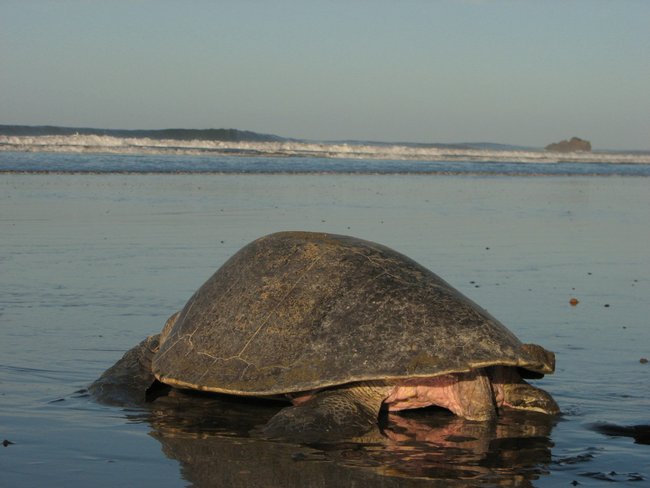
The main attraction of the park starts in July and lasts until December when hundreds of Olive Ridley Sea Turtles assemble off the coast then barrage the beachhead during the nights that precede a full moon. These mass beach arrivals that occur every three or four weeks are known locally as arribadas. Each arribada lasts about a week, as wave after wave of turtles swim ashore, sometimes totaling up to 150,000. The Ridley can be sighted making its way inland at all times of the year-though far less frequently after the typical mating season. Leatherbacks and Pacific green turtles can also be sighted from October to January.
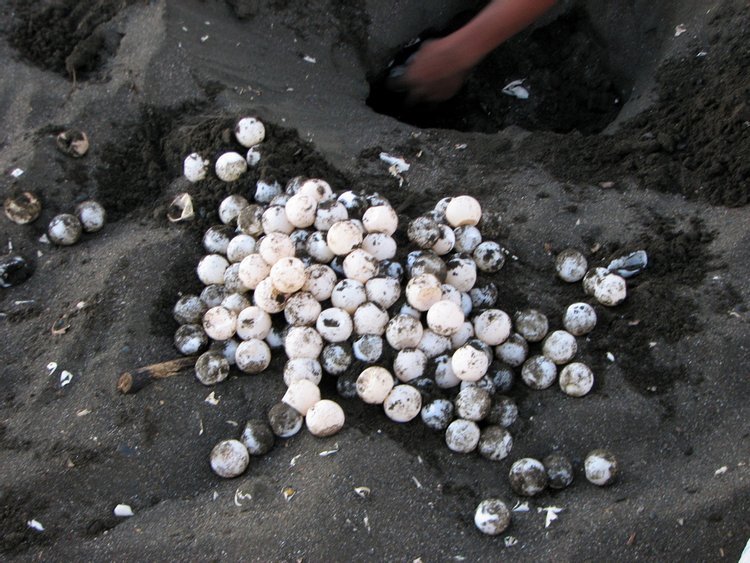
Residents of Ostional have collaborated with state officials to organize an imaginative conservation effort that benefits both the Ridley and the local economy. The number of turtles during the Ridley's arribadas can be so great that eggs laid on the first few nights are frequently destroyed by the next wave of turtles storming the beach. Thus, the locals are allowed to harvest the first clutches of eggs and sell them at a fair market price. This sanctioned cultivation has actually resulted in the hatching of more eggs, while simultaneously weakening the black-market for plundered eggs.
Aside from the turtles, many other animal species make the national refuge home including iguanas, monkeys, coatis, crabs, and many birds. The south end of the refuge near the Nosara River is home to many estuaries and mangroves rich in neotropical fauna.
Nearby Tamarindo offers park visitors convenient accommodations.
The bus ride from Nicoya lasts about 2.5 hours if road conditions are good-expect delays if roads are in disrepair. Private bus tours also run from San Jose. Flights from San Jose and Liberia run daily to Nosara, and are usually quite economical.
Wildlife Sightings
Spotted at Ostional National Wildlife Refuge
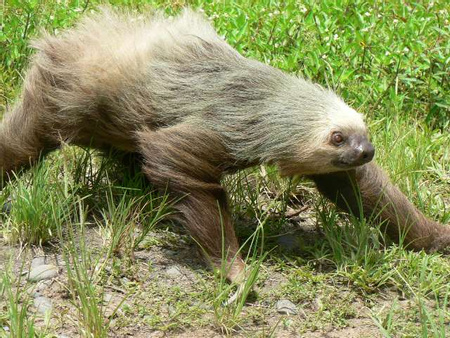
Sloths
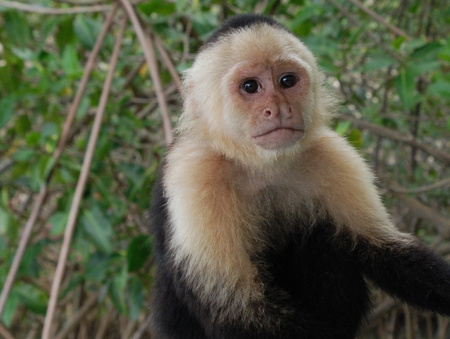
White-faced capuchin monkey
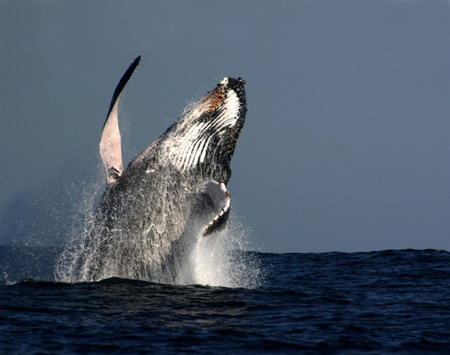
Humpback whale
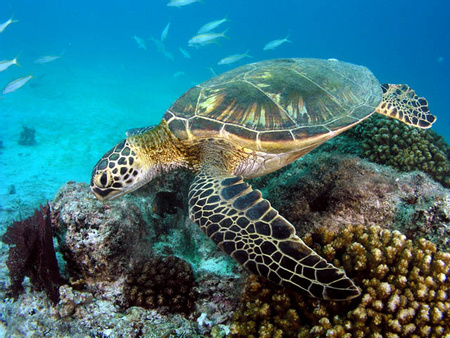
Sea turtles
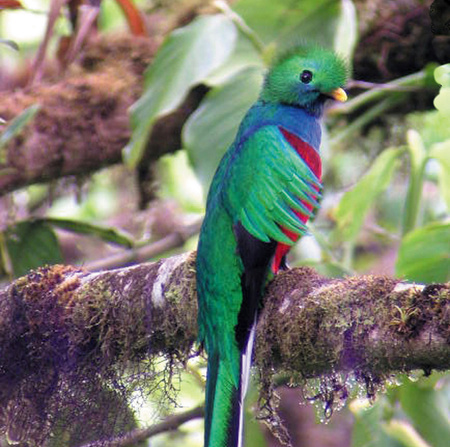
Resplendent quetzal
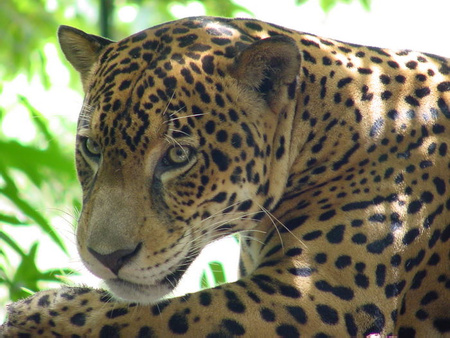
Jaguar
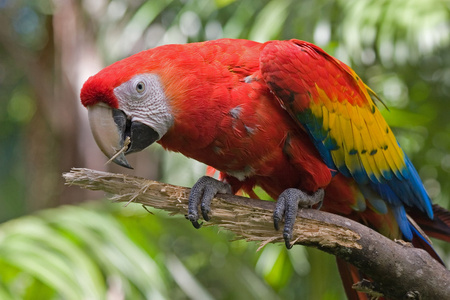
Scarlet macaw
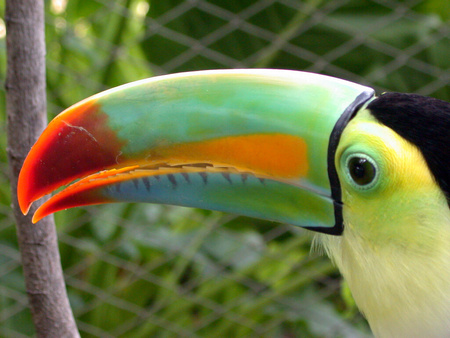
Keel-billed toucan
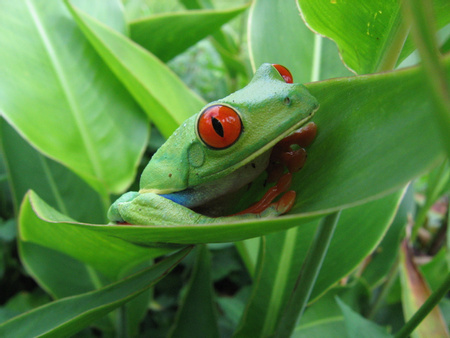
Red-eyed tree frog
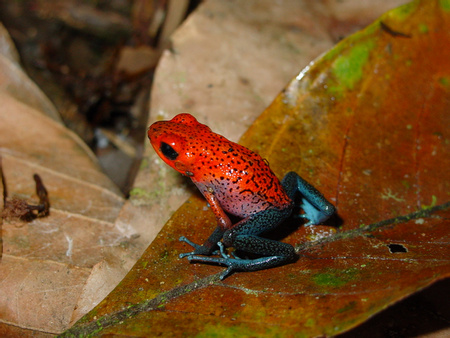
Blue jeans frog

Howler monkey
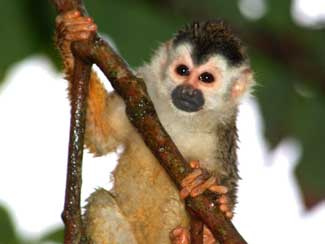
Squirrel monkey
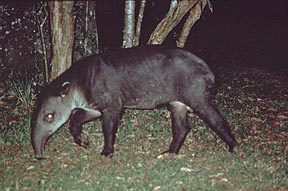
Baird's tapir
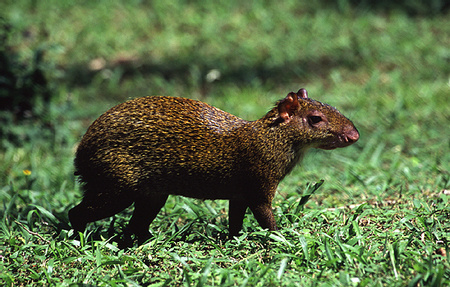
Agouti
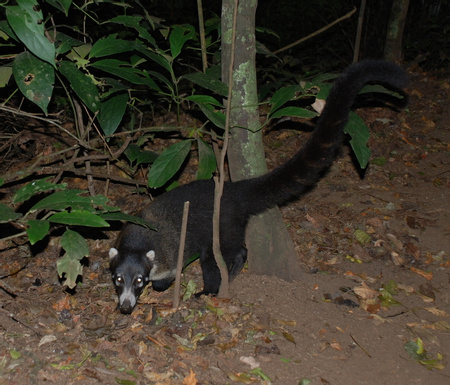
Coati
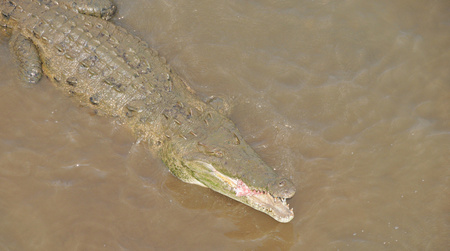
American crocodile
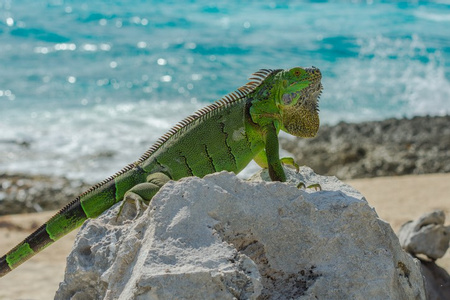
Green iguana
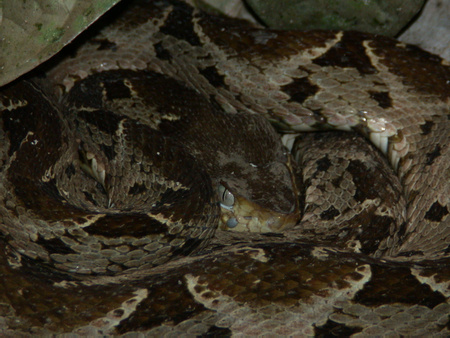
Fer-de-lance
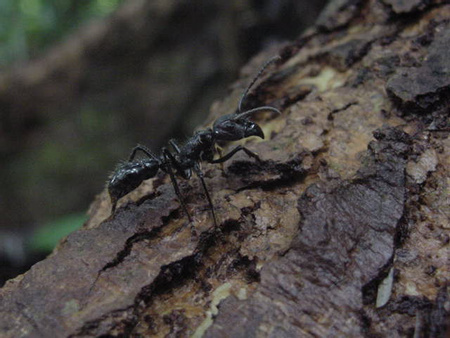
Bullet ant
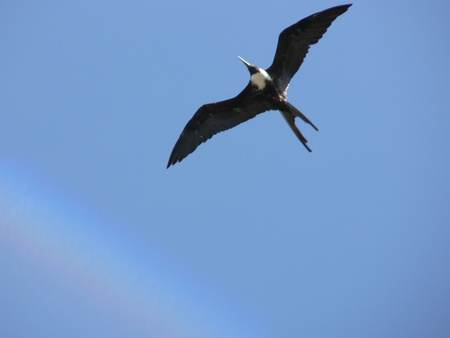
Magnificent frigatebird
Olive Ridley Sea Turtle
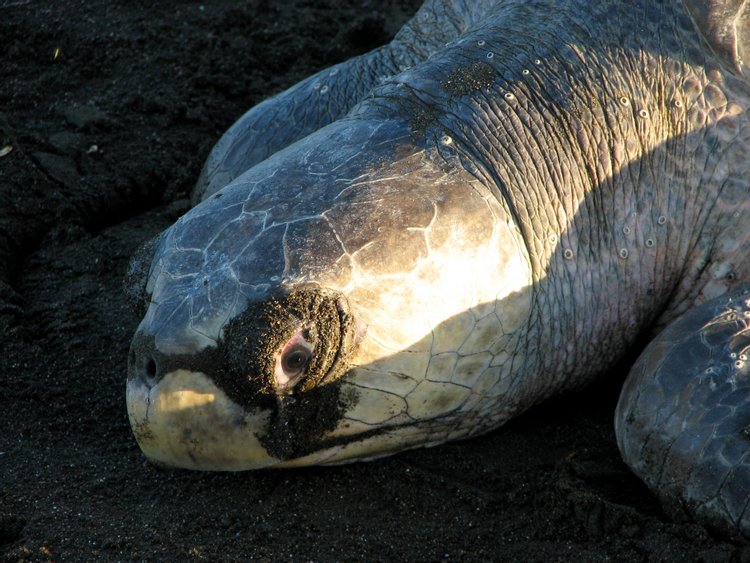
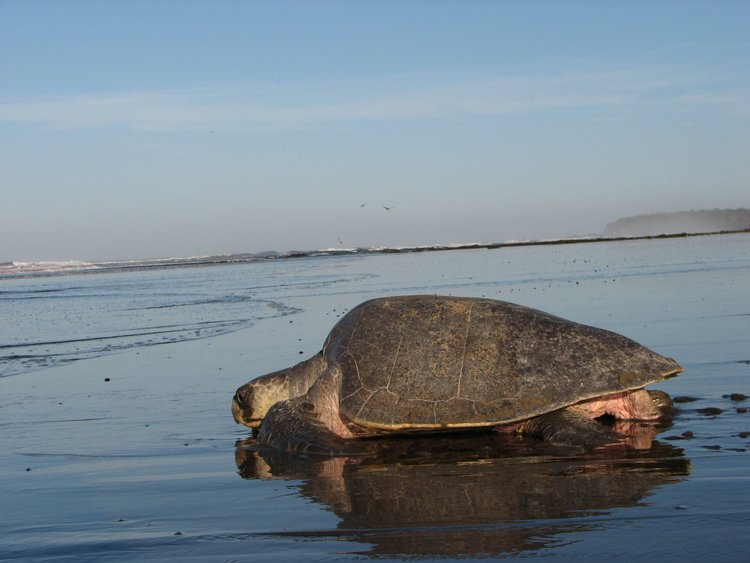
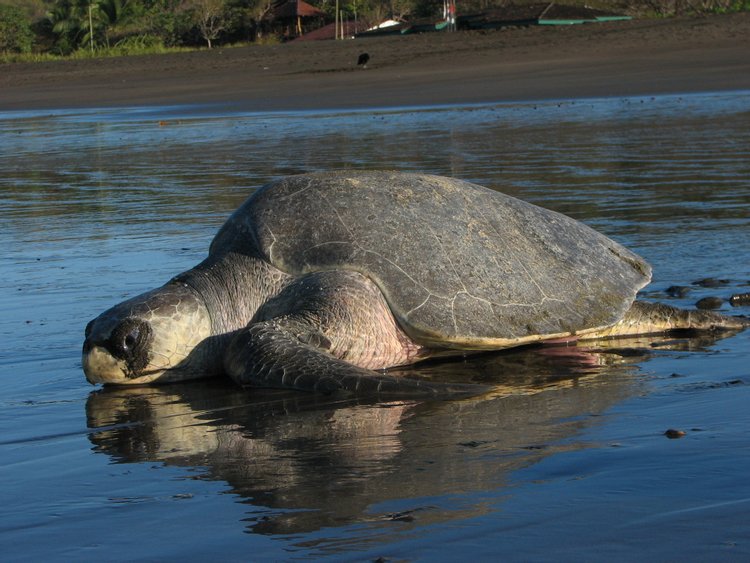
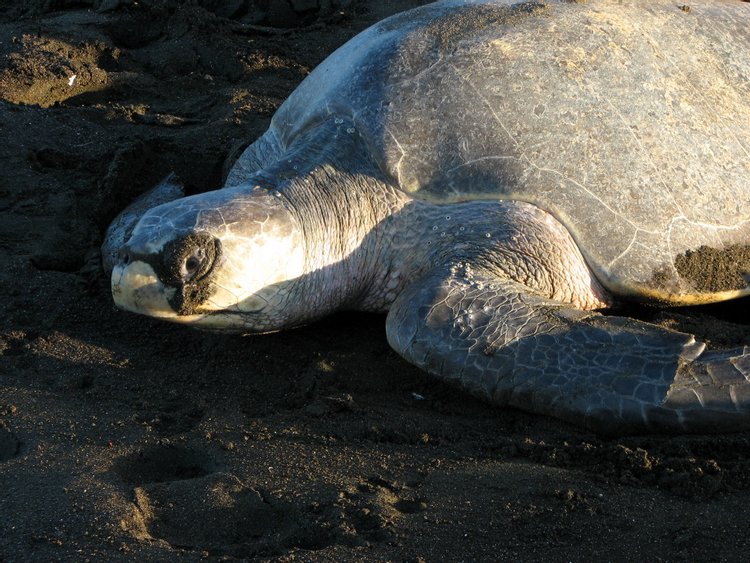
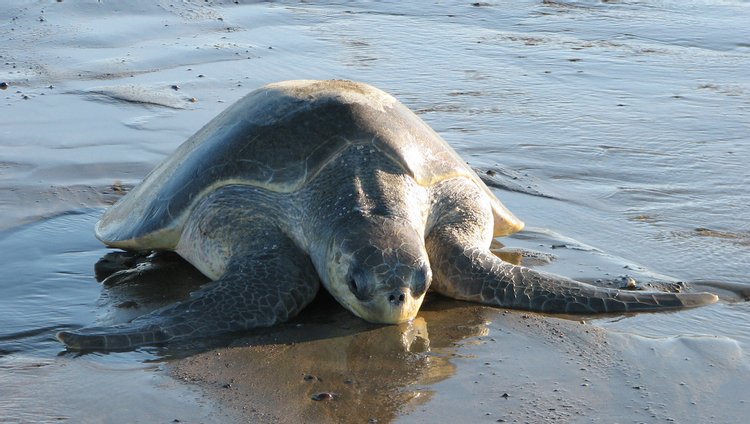
Olive Ridley (Lepidochelys olivacea). Spanish name: Tortuga lora
Habitat
The olive ridley swims among the warm waters of the tropics.
Physical Description
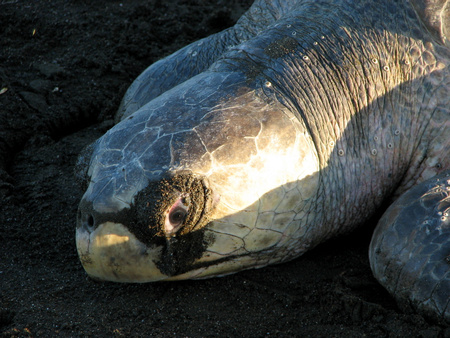
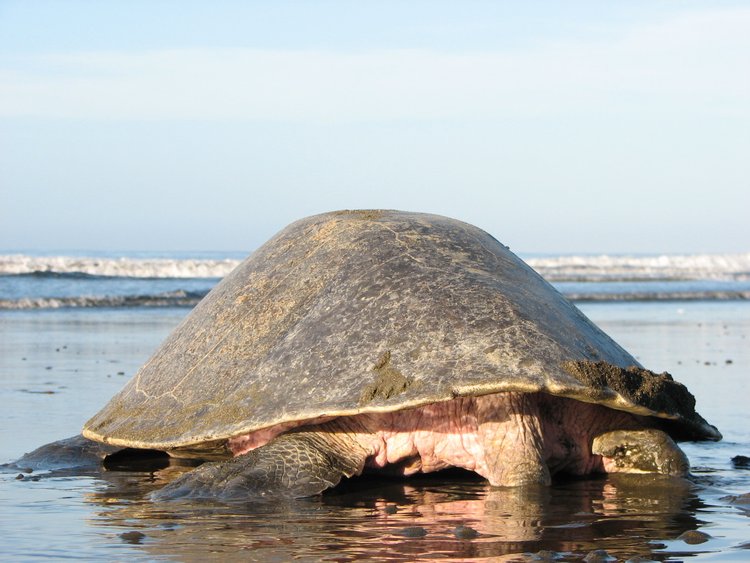
Its wide carapace (or shell) is heart-shaped and has 6 to 8 scutes (or plates) on each side of the center row. Two pairs of scales are on the face between the eyes and nostrils. On its upper sides the turtle is mostly an olive green color, with greenish-white on the undersides. Males have a long tail and a concave plastron (the belly side of the shell), while females have a short tail and a flat plastron.
Biology and Natural History
The olive ridley displays a spectacular behavior known as an arribada, which is a vast group of turtles collecting to nest at the same time and place, and it occur in five beaches in the world. Only one other species, the critically endangered Kemp's ridley (Lepidochelys kempi) holds these arribadas of synchronized nesting. Olive ridley arribadas peak in September or October. In the off season, small arribadas of 500 to 10,000 females may congregate between January and June.
The arribada begins and ends abruptly. More than 150,000 sea turtles congregate offshore in shallow waters. Once the females begin moving towards the shore in droves, they do not stop, continuing through daybreak or disturbance. If the weather is extremely bad, they may delay for a time and retain their eggs until the sky clears. The arribada lasts four to eight days, bringing waves of turtles up the beach at each high tide.
With so many turtles nesting in a small area, a lot of eggs are dug up or destroyed by the females who arrive later in the arribada. In some countries its legislation allows some egg harvesting at the beginning of the arribada to use the eggs that would otherwise be crushed.
Although the turtle is protected by international law, the olive ridley is still suffering many deaths and the magnificent arribadas are getting smaller. Trawling and fishing during a single arribada can cause devastating losses for this sensitive species. The effects of such damage last a long time.
The olive ridley is a vulnerable species. It is protected by international policies and illegal to hunt. Read about Sea Turtles: Promises and Threats to learn more about the challenges facing this animal.
Diet
Some of the important food groups for the olive ridley are fish, crabs, jellyfish, and mollusks.
Height/Weight
This sea turtle is small compared to its relatives. The carapace (or shell) is usually between 60 and 70 cm long. An adult female can weigh just over 40 kg.
Taxonomy
Order: Testudines
Family: Cheloniidae
Sources
Cornelius, S. E., in: Janzen, Daniel H. Costa Rican Natural History. Chicago: University of Chicago Press, 1983.
Leenders, Twan. A Guide to Amphibians and Reptiles of Costa Rica. Zona Tropical, S.A, Miami, FL, 2001.
Amy Strieter, Wildlife Writer