
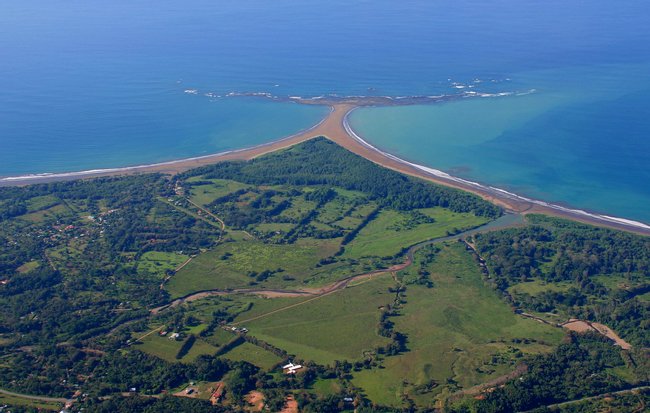
Marino Ballena National Park
Encompassing 270 acres of land (110 terrestrial hectares) and 13,300 acres of ocean (5,400 marine hectares) is the Marino Ballena National Park (Parque Nacional Marino Ballena). Positioned just 10 mi (16 km) south of Dominical and 112 mi (180 km) southwest of San Jose, Marino Ballena is one of the newest national parks in Costa Rica. Established in 1990, the park contains the largest coral reef on the Pacific side of Central America. The park&s waters are also great vantage points for viewing the humpback whale as it migrates (Dec. to April) from as far away as Alaska and Hawaii down to Cano Island, just off of the Osa Peninsula.
Plan my TripPlanned with a local insider, takes just 2 minutes.
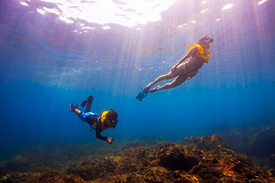
The water just off shore provides wonderful snorkeling as the park is mostly oceanic, except for the mangrove and wildlife riddled 9.3 miles (15 km) of coastline. Camping is permitted within the park. The entrance fee is $6, but is rarely collected.
At the north end of the park is Uvita, a small community with gorgeous beaches and incredibly clear-blue water. Playa Uvita is a good place to ride horseback, scuba dive, swim or just go for a walk on its clean sandy beach. The beach is inside the protected area of the park, so hunting any of the marine life is strictly prohibited. Snorkeling and scuba diving are favorite activities as are visits to the mangroves where green marine iguanas, Olive Ridley and Hawksbill turtles gather.
Boat tours are available to Ballena Island (Isla Ballena) 1.9 miles (3 km) offshore which provides an excellent opportunity to observe a plethora of marine life and explore the phenomenal ocean floor below.
Wildlife Sightings
Spotted at Marino Ballena National Park
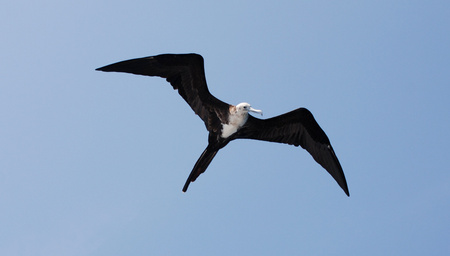
Magnificent Frigatebird
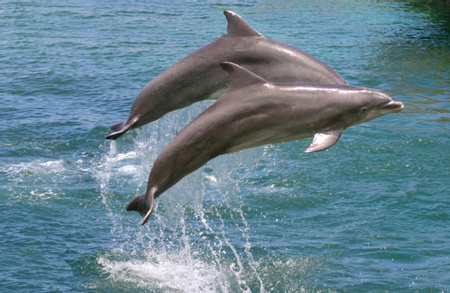
Bottle-nosed Dolphin
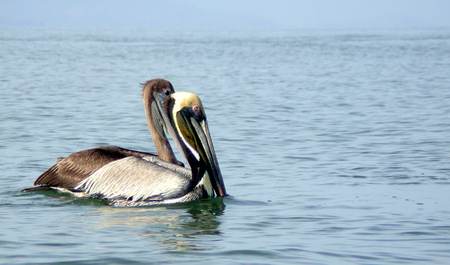
Brown Pelican
Common Dolphin
Fin Whale
Orca, Killer Whale
Pacific Spotted Dolphin
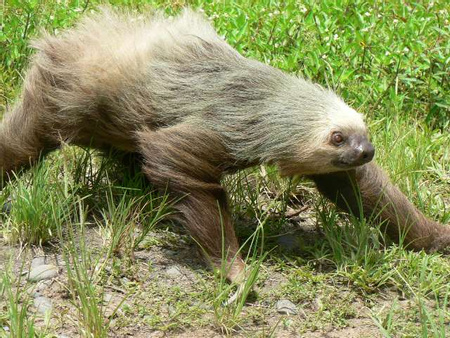
Sloths
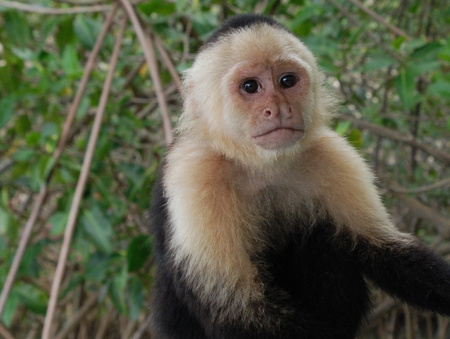
White-faced capuchin monkey
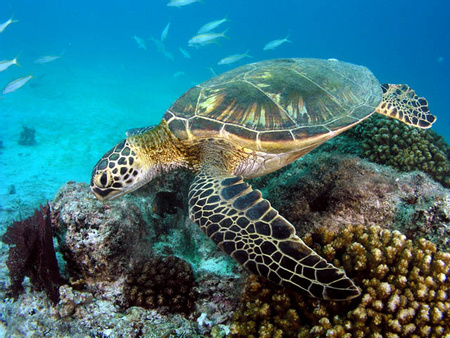
Sea turtles
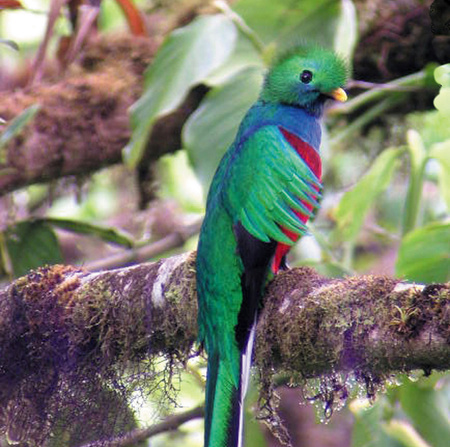
Resplendent quetzal
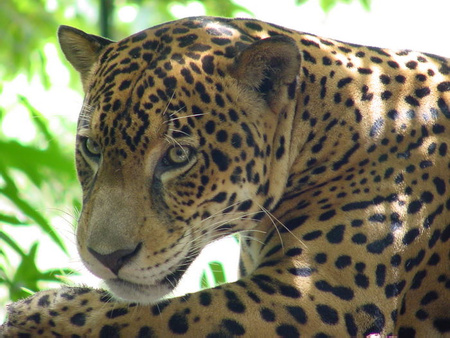
Jaguar
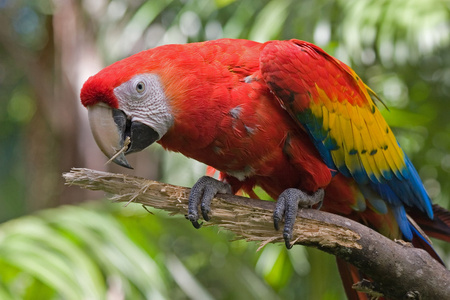
Scarlet macaw
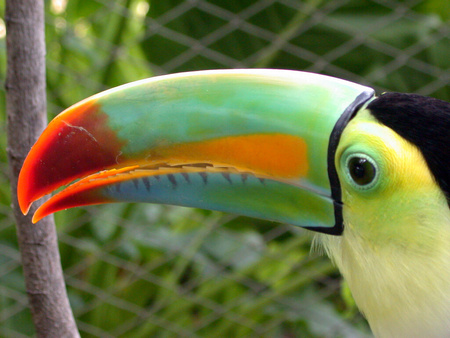
Keel-billed toucan
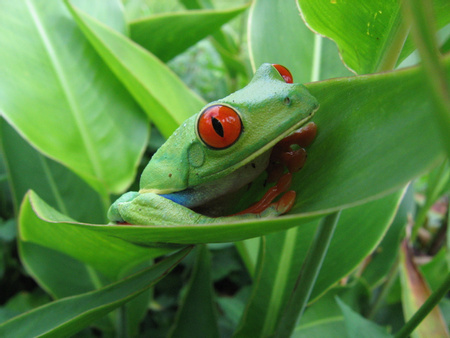
Red-eyed tree frog
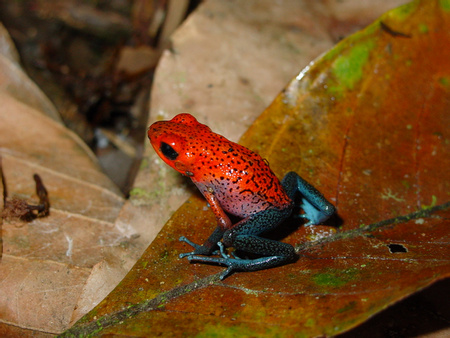
Blue jeans frog

Howler monkey
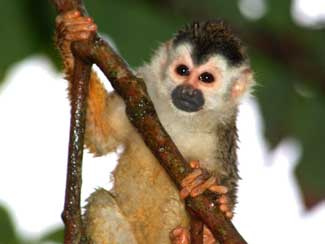
Squirrel monkey
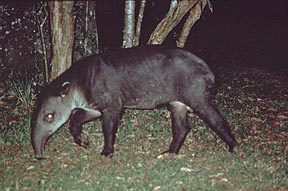
Baird's tapir
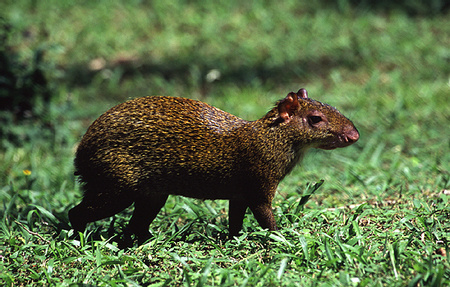
Agouti
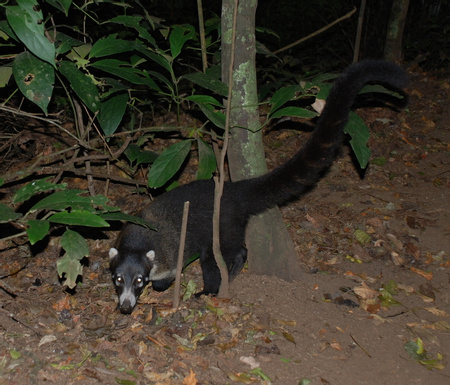
Coati
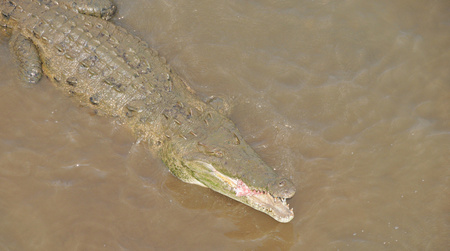
American crocodile
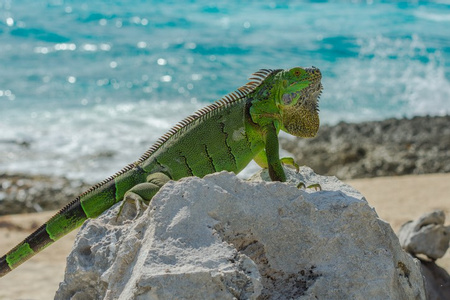
Green iguana
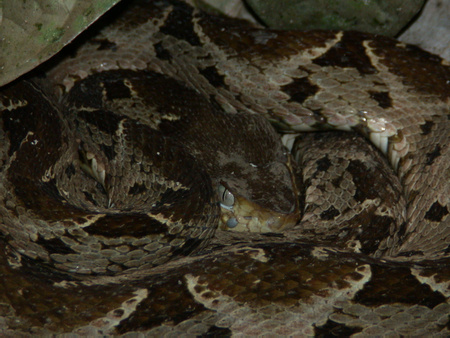
Fer-de-lance
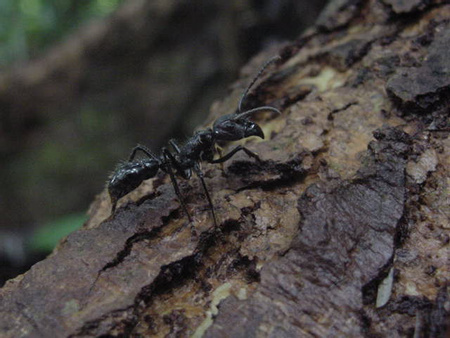
Bullet ant
Humpback Whale
Humpback Whale (Megaptera novaeangliae). Spanish name: Ballena Jorobada, Jibarte, Yubarta
Habitat
This whale lives in tropical to polar waters, depending on the season; they may gather into groups close to the shore.
Range
Found in every ocean, the humpback migrates from the poles towards tropical waters in the winter.
Physical Description
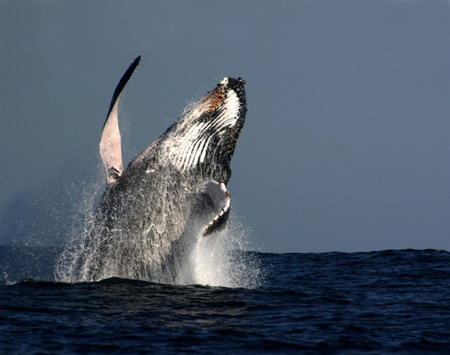
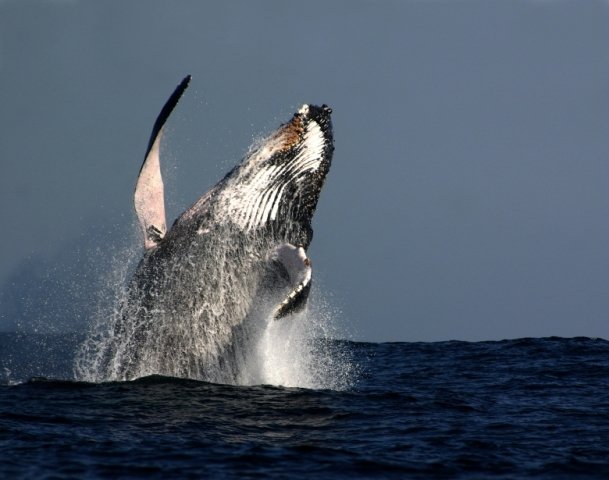
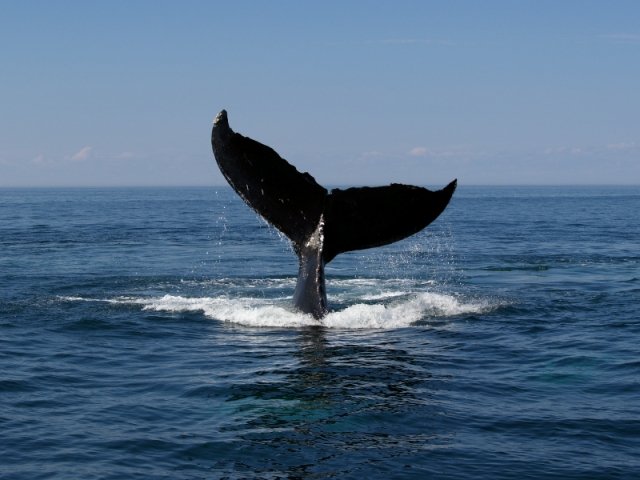
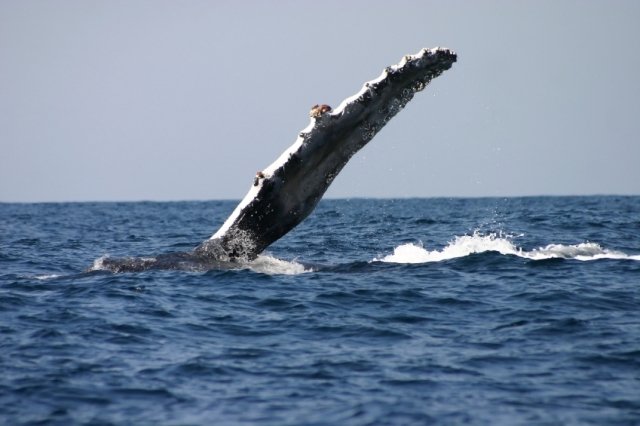
With a round, wide body that narrows towards the tail, and a flattened, slender head, the humpback has a characteristic shape. The white lumps on its head and jaw are home to parasites, whale lice (cirripeds), and crustaceans living in the whale's follicles or hairy tubercles. The main body color is black to gray, with lighter skin on the throat and belly and wide ridges along the length of the white skin. The humpback whale has a relatively small dorsal fin, and large flippers that are white on the edges.
Interesting Biology
The humpback can be seen breaching in coastal waters, lunging out of the water and smashing its huge back onto the water. Traveling alone, in small pods, or groups of up to 15 in feeding and breeding waters, these large, distinct whales are always exciting to see. The conspicuous fin and back rise out of the water as the humpback surfaces to breathe. The most acrobatic of the large whales, it bursts into the air with breathtaking energy and speed, even though most of the time it does not swim very fast (12 km/h) and only dives for about 15 minutes at a time.
Humpbacks communicate via sophisticated vocalizations. Since these social whales tend to congregate near coasts, they were especially exposed and devastated by whaling ships before they were declared a protected species in 1964. Unfortunately, whalers are still allowed to kill the humpback off the western coast of Greenland and Lesser Antilles. This large sea acrobat is also vulnerable to attack by killer whales.
Diet
The humpback hunts krill, plankton, and fish (such as cod, capelin, or herring). It captures prey in an interesting way: it circles beneath the shoal, making a ring of bubbles around the prey, causing them to rise slowly towards the surface; once they are surrounded in a net of bubbles, the humpback opens its large mouth and swallows them.
Height/Weight
Reaching a length of 15-17 m, Humpbacks can weigh 24-28 tons; females are somewhat larger.
Brief Taxonomy
Order: Cetacea
Family: Balaenopteridae
Sources
Saenz, Joel C., Grace Wong, and Eduardo Carrillo. Ballenas y delfines de America Central. Instituto Nacional de Biodiversidad. Costa Rica, 2004.
Henderson
-Amy Strieter, Wildlife Writer
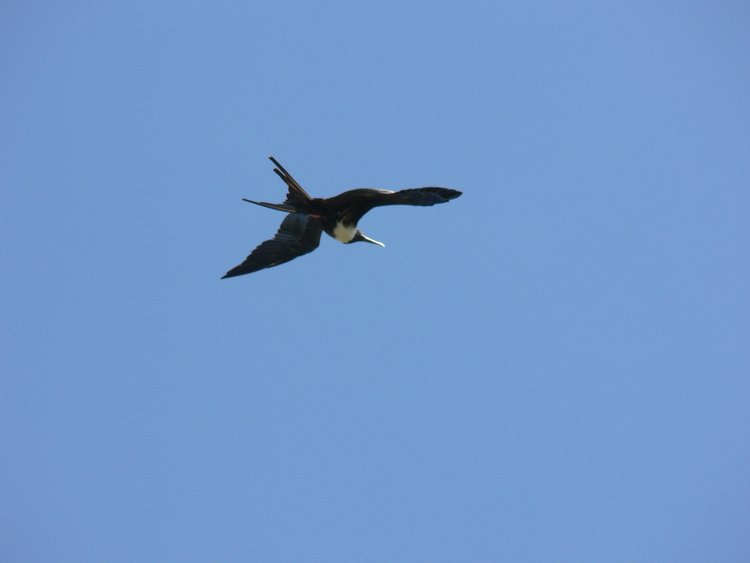
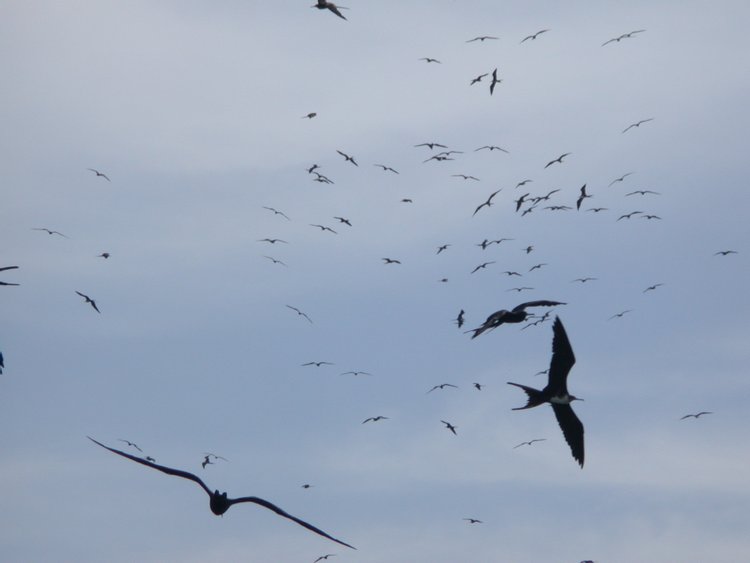
Magnificent Frigatebird
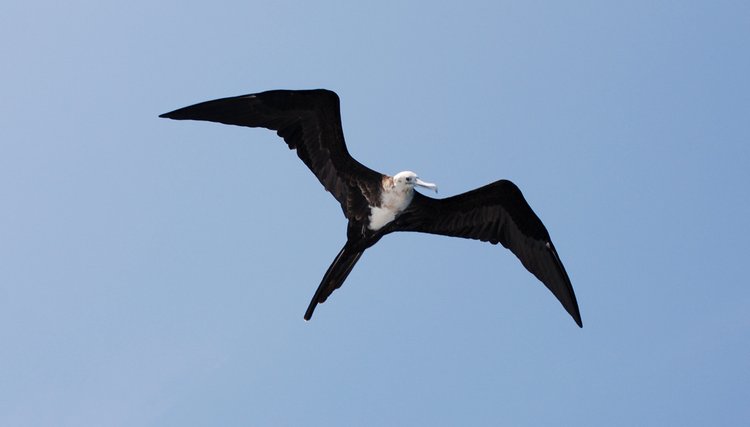
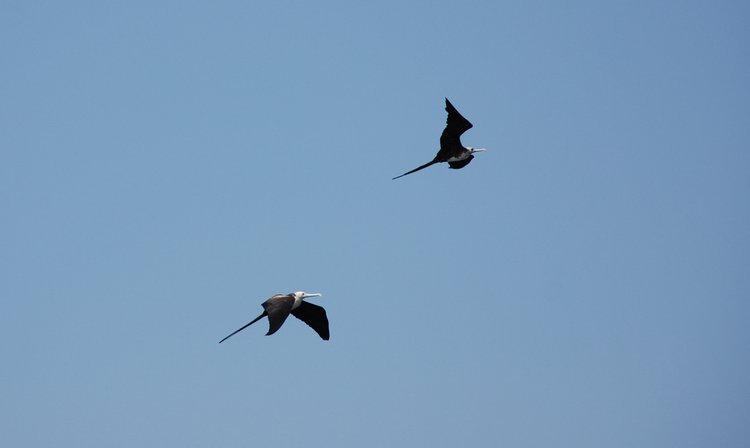
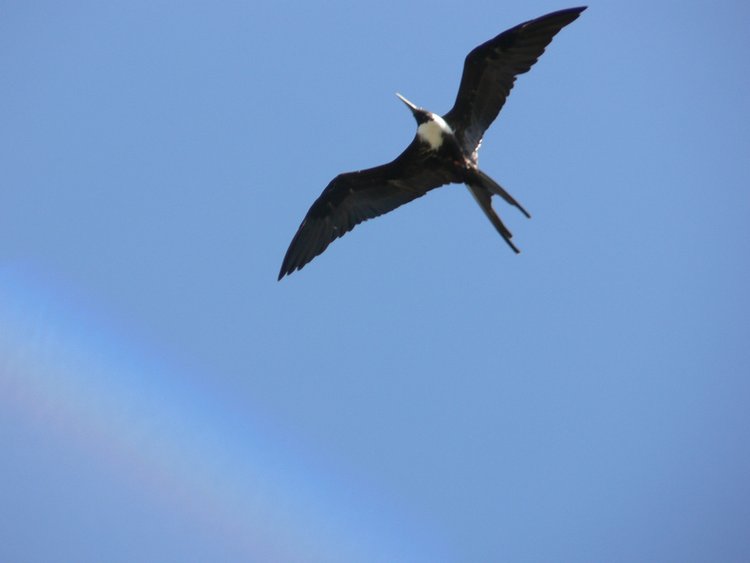
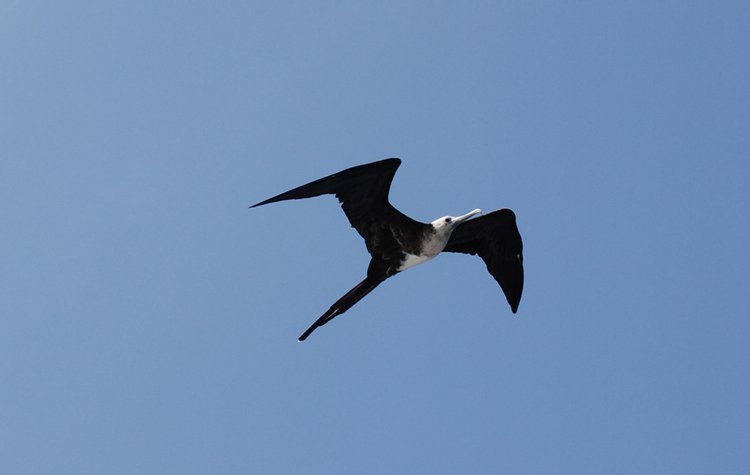
Magnificent Frigatebird (Fregata magnificens). Spanish name: Rabihorcado Magno
Habitat
This oceanic bird fishes over tropical coastal waters in Atlantic and Pacific oceans and roosts in coastal trees.
Range
On the Pacific side of the Americas, the Magnificent Frigatebird is present between Baja, California and Peru as well as in the Galapagos; on the Atlantic coast, it lives in the Caribbean and the Gulf of Mexico.
Physical Description
The most abundant species of frigatebirds, the Magnificent Frigatebird is exclusively oceanic, found in all tropical areas of the world. This bird has a distinctive profile, with a deeply forked tail and extremely long, slender and pointed wings. Its solid black form makes a bold outline against the sky, although it also has a faint brown bar across the upper wing, black or brown feet, and a gray bill. The male has a gular pouch (a throat pouch to accommodate large fish) that can be bright pink to red. The female has a grayer gular pouch, a white breast, a paler brown bar on the wing, and orbital skin around the eye that is violet-blue. Juveniles have a white head and breast, a striking pale bar on the wing, and a pale blue bill, orbital skin, and feet.
Interesting Biology
The Magnificent Frigatebird has the lowest wing loading of any known bird, meaning its wings are extraordinarily long for its size and weight-it can have a wingspan of 2 meters. Although the frigatebird can land and take off again, this can be difficult. As a result, this bird lives largely constrained to heights. It rests on tall trees on the shore or cliffs, as well as on ship rigging. It soars high in the air over the shore or coastal waters, but not usually far out over the ocean; once it sees flying fish or squid near the surface, it swoops down and snatches them-but never actually enters the water. The frigatebird is also frequently guilty of kleptoparasitism, and regularly steals food from other birds.
Frigatebirds may amass near fishing boats and towns, looking for offal to eat. They also build nests in colonies of up to 10,000 pairs of parents. These consist of twig platforms in the upper branches of trees where there are consistent winds to help them take off after they land; often a colony will be on a slope or an offshore island. The male brings the female materials, and she constructs the nest. They both aggressively guard the nest and share the incubation and feeding duties. They have a single egg which is large and fragile and requires 55 days of incubation before hatching; the hatchling grows slowly, relying on the parents for food for 6 months while it is in the nest, and after it fledges, the young still returns nightly for food for 14 more months, giving the frigatebird the longest known chick dependence in the world. These birds can live for more than 40 years, but their populations struggle with habitat destruction and human-introduced predators, such as cats.
Diet
The Magnificent Frigatebird eats mostly fish and squid, but is also a natural predatory threat to hatchling sea turtles on the beach.
Height/Weight
An adult male is 91 cm long and weighs 1.2 kg; it is smaller than the adult female, measuring 111 cm, and weighing 1.7 kg.
Brief Taxonomy
Order: Pelecaniformes
Family: Fregatidae
Sources
R. W. Schreiber in: Janzen, Daniel H. Costa Rican Natural History. Chicago: University of Chicago Press, 1983.
Skutch, Alexander F. and F. Gary Stiles. A Guide to the Birds of Costa Rica. Utica: Cornell University Press,1989.
Stiles, F. G. in: Janzen, Daniel H. Costa Rican Natural History. Chicago: University of Chicago Press, 1983.
Amy Strieter, Wildlife Writer
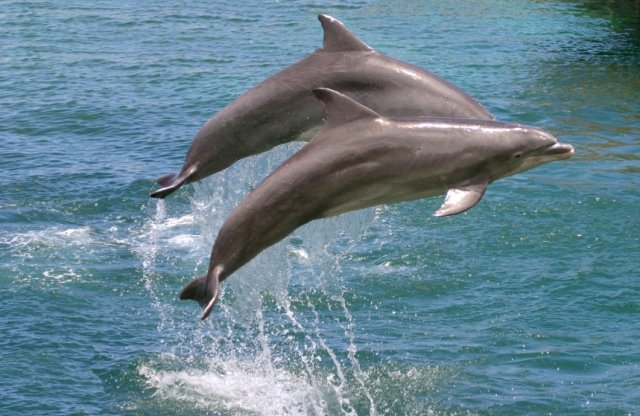
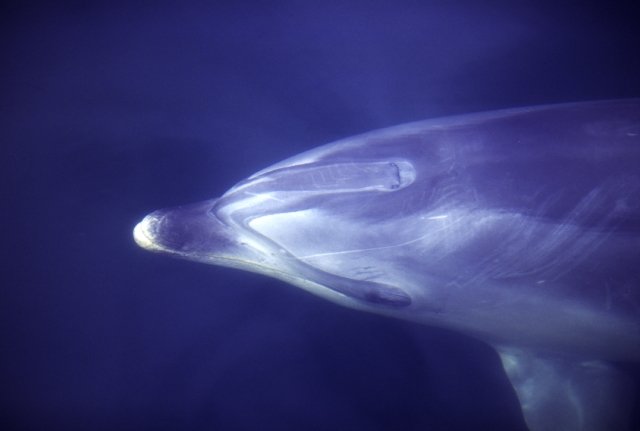
Bottle-nosed Dolphin
Bottle-nosed Dolphin (Tursiops truncatus). Spanish name: Tursion, Bufeo
Habitat
The bottle-nosed dolphin lives in coastal waters or off oceanic islands.
Range
This dolphin is found worldwide in the tropics and subtropics. On the Pacific side of the Americas, it lives from southern California to Chile; on the Atlantic side, from Nova Scotia to Patagonia.
Physical Description
This graceful marine mammal is named for its distinctly shaped beak. It also has a characteristic, rounded forehead. Its coloration is dark blue to gray with a whitish belly and white on the tip of its snout. Its flippers are small with darkened edges, and it has a modest-sized dorsal fin. This dolphin has up to 52 teeth that are 1 cm long.
Interesting Biology
The Bottle-nosed Dolphin locates prey and other objects using high-frequency sound pulses to echolocate objects underwater. Bottle-nosed dolphins can speed 18 km/hour through the water, after prey or when swimming in the wake of boats, leaping and exhibiting their acrobatic feats. This is one of the most thoroughly studied small dolphins, and because it is, as some say, the smartest animal in the water, this species is most commonly used for trained purposes.
There are two categories of groups within this species: those that stay closer to shore and those that live by oceanic islands. Groups by the mainland tend to number around 10 individuals, but about 25 in the open ocean. Both kinds of groups have intricate social structures with a hierarchy based on size. Males fight aggressively over females during the mating season, but outside of reproductive competition these dolphins may hunt cooperatively for their meals. Schools of adults may stay together for 2-3 years, but groups also aggregate and split over time. Dolphins have a complicated communication system involving vocalizations, touching, and visual display. The ancient Greeks believed these dolphins would save people from drowning and protect them from sharks; it is true that bottle-nosed dolphins will help injured members of their group, and help them to the surface and support them so they can breathe.
Every 2-3 years a mother has a single calf after a gestation period of 12 months. Pups are born 1 m long; they are weaned at 18 months, but stay with the mother for 5 years. They become extremely attached, and even if the calf dies, the mother will stay next to the body for some time.
The bottle-nosed dolphin has adjusted some of its behaviors to human presence in its waters. For example, they may take fish from nets or follow fishing boats for the waste dumped overboard. This sea acrobat was vigorously hunted during the twentieth century; although today it is protected, in some coastal areas it is still caught for food or because the dolphin competes with humans for fish. Commercial tuna fishing poses the greatest threat to the bottle-nosed dolphin, because the dolphins are netted along with the tuna catches.
Diet
This species hunts shrimp, fish, and squid; each dolphin eats 6-7 kg of food each day.
Height/Weight
Adults are usually 1.75-3.6 m long and weight 150-650 kg; males are larger than females.
Brief Taxonomy
Order: Cetacea
Family: Delphinidae
Sources
Eisenberg, John. Mammals of the Neotropics, Vol. 1. The University of Chicago Press: Chicago, 1989.
Janzen, Daniel H. Costa Rican Natural History. Chicago: University of Chicago Press, 1983.
Saenz, Joel C., Grace Wong, and Eduardo Carrillo. Ballenas y delfines de America Central. Instituto Nacional de Biodiversidad. Costa Rica, 2004.
-Amy Strieter, Wildlife Writer
Brown Pelican
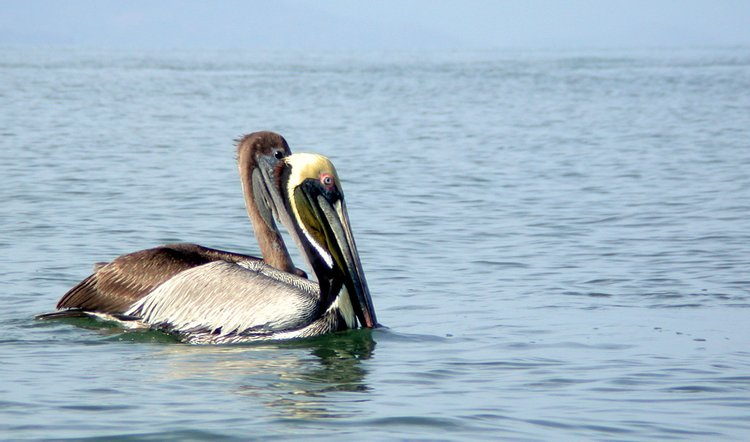
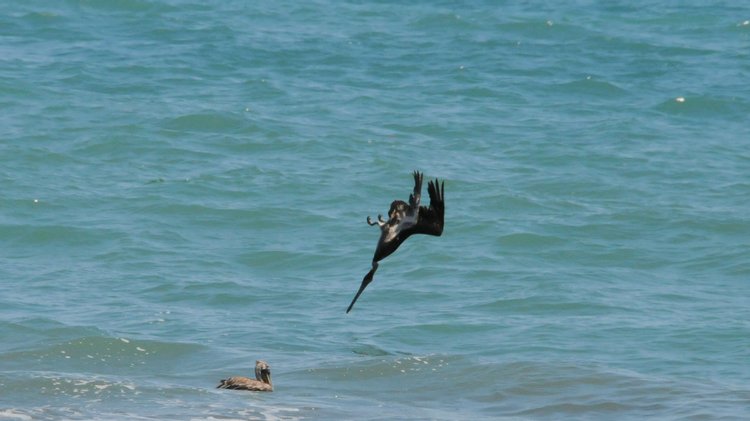
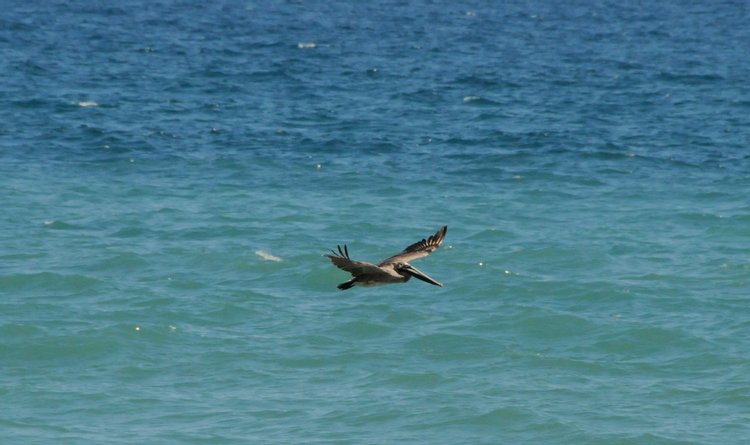
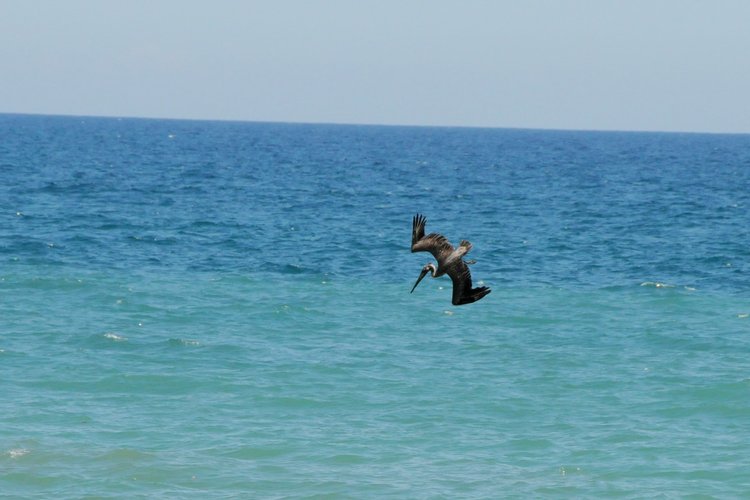
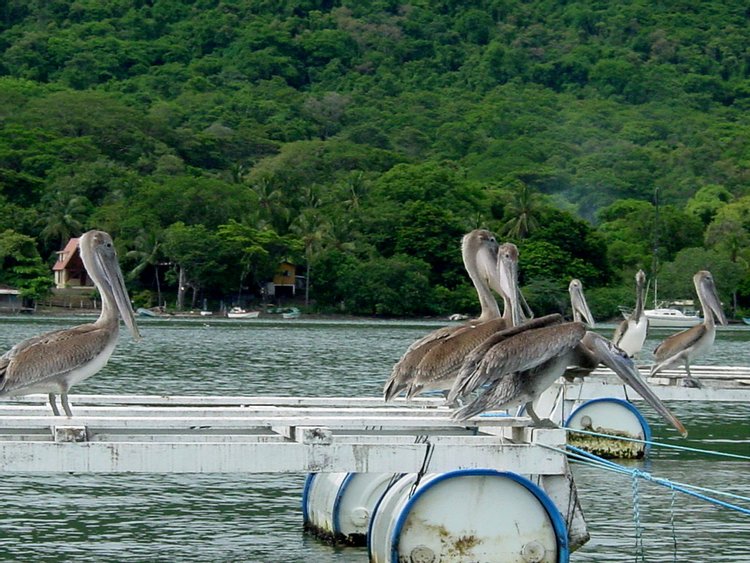
Brown Pelican (Pelecanus occidentalis). Spanish name: Pelicano Pardo, Buchon, Alcatraz
Habitat
This large pelican is found on coastal waters, around offshore islands, and occasionally in some river mouths and estuaries.
Range
It is common along the Pacific coast from southern British Colombia to southern Chile, and on the Atlantic from North Carolina to northern Brazil.
Physical Description/Interesting Biology
Large and graceful in flight, the characteristic profile of the Brown Pelican is an unmistakable favorite on both coasts. Flocks of these birds often fly in line or V-formation, flapping and gliding synchronously over the water. With long wings and necks, a large straight bill and an enormous gular pouch for swallowing fish, the pelican has a distinct profile, matching its distinct behavior. It is common along coastal waters, to see the Brown Pelican elegantly soaring and abruptly plunge-diving for fish from up to 10 m in the air. The Brown Pelican has air sacs in the chest to absorb the impact of the water, and uses its gular pouch to scoop fish that are near the surface. This bird may also take scraps from fishing areas and follow fishing boats for waste.
The Brown Pelican population suffered heavily from DDT in the 1960s and 1970s; their plight strongly influenced the ban on DDT in 1972. Chemicals like DDT contain chlorinated hydrocarbons that cause egg shells to be so thin that they break before the chicks hatch. This causes dramatic declines in population. Since the ban, the Brown Pelican populations in the United States have been recovering.
Young Brown Pelicans take 3 to 5 years to develop the full adult plumage with black-brown feathers on the underside and silvery brown on the back and wings, with a white or yellow head. Adult plumage changes throughout the year in complex patterns with the breeding cycle.
This pelican builds its small platform nest out of sticks at the top of a shrub or tree; the female lays 2 to 3 eggs, and both sexes share in parenting duties. Like all birds in the pelican family, the chicks, squealing loudly and pig-like, put their head into the mouth of the parent to eat regurgitated food. The parents and chicks can become very hot sitting in the sun at the nest. To avoid overheating while watching over the nest, a parent stands with its back to the sun and spreads its wings; this shades the front of its body, where the throat and gular pouch are cooled by the air because the blood vessels are close to the surface of the skin. Scientists have seen nesting colonies with hundreds of pelicans perfectly aligned and moving synchronously according to the sun's movement. Once a parent's mate returns, the hot adult speeds directly to water and dives in.
Diet
This large diving bird eats different kinds of fish.
Height/Weight
An adult Brown Pelican weighs 2 to 5 kg and is 109 cm long. Males are heavier and have longer wings and bills.
Brief Taxonomy
Order: Pelecaniformes
Family: Pelecanidae
Sources
R. W. Schreiber and M. B. McCoy in Janzen, Daniel H. Costa Rican Natural History. Chicago: University of Chicago Press, 1983.
Skutch, Alexander F. and F. Gary Stiles. A Guide to the Birds of Costa Rica. Utica: Cornell University Press,1989.
Stiles, F. G. in: Janzen, Daniel H. Costa Rican Natural History. Chicago: University of Chicago Press, 1983.
Amy Strieter, Wildlife Writer
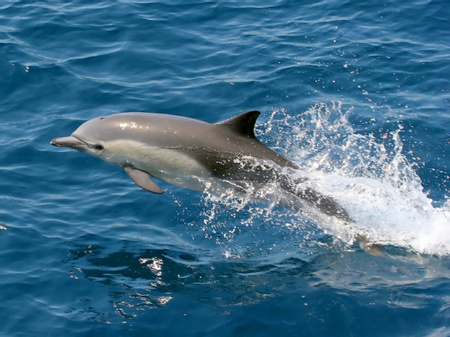
Common Dolphin
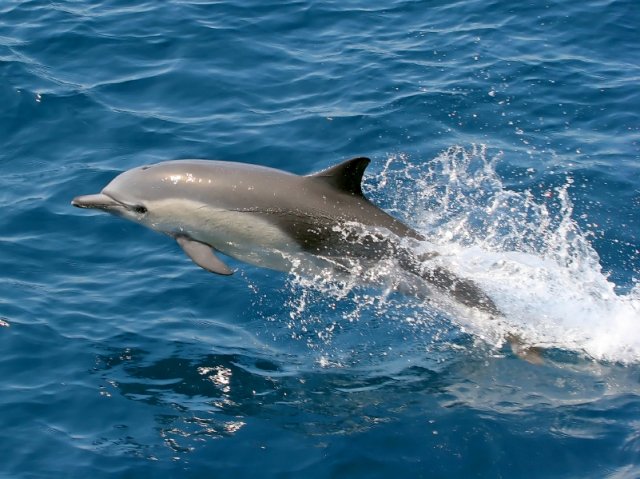
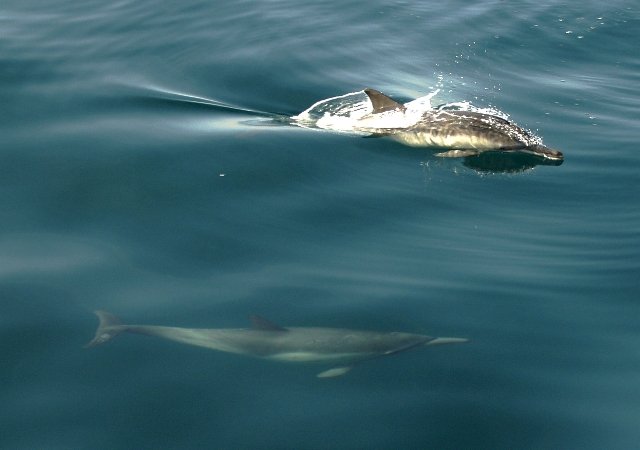
Common Dolphin (Delphinus delphis). Spanish name: Delfin comun, Bufeo
Habitat
This dolphin is found more often in the open ocean, but sometimes swims in shallow waters.
Range
An inhabitant of all oceans, the common dolphin lives in both tropical and temperate waters. In the Americas, it is found as far south as Chile.
Physical Description
The common dolphin has an elongate body with a black or blackish brown V-shaped patch on the back and white underside. The snout is black with white spots, and there are several dark lines on the face and extending from the lower jaw to the flippers. There are long white areas along the sides of the body as well. The dorsal fin is triangular and dark, the flippers sharp and pointed, and the flukes gray or black with a center notch.
Interesting Biology
This dolphin is not only common, but also is the most gregarious of dolphins; it is frequently found in herds with hundreds of individuals, and in the Black Sea can be found in masses of 300,000 because there is a concentration of fish high enough to support so many dolphins. This marine mammal may also mix herds with other species.
This dolphin can dive 280 m deep and stay underwater for up to 8 minutes; it is a fast swimmer on the surface of the water, reaching speeds of 46 km/h. It may swim nimbly alongside small boats or riding the waves before the bow. Common Dolphins use echolocation and many vocalizations to communicate with each other, and may be considered affectionate, as they help sick common dolphins stay afloat to breathe. Females can have 1-3 calves at a time, and wean them at 6 months.
This delightful dolphin is often caught in tuna fishing nets, or is intentionally killed by fishermen because it competes with them for fish.
Diet
The common dolphin eats a variety of fish, such as sardines, anchovies, and herrings, as well as squid and octopus. It eats 40 kg of food every day.
Height/Weight
This dolphin reaches lengths of 2.5 m and weighs 100-130 kg; the male is slightly larger.
Brief Taxonomy
Order: Cetacea
Family: Delphinidae
Sources
Saenz, Joel C., Grace Wong, and Eduardo Carrillo. Ballenas y delfines de America Central. Instituto Nacional de Biodiversidad. Costa Rica, 2004.
-Amy Strieter, Wildlife Writer
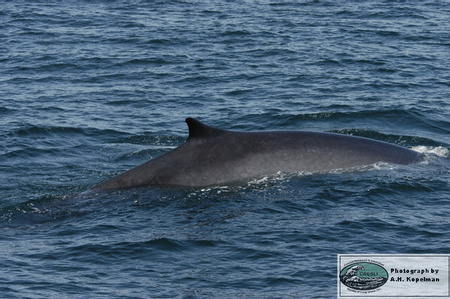
Fin Whale
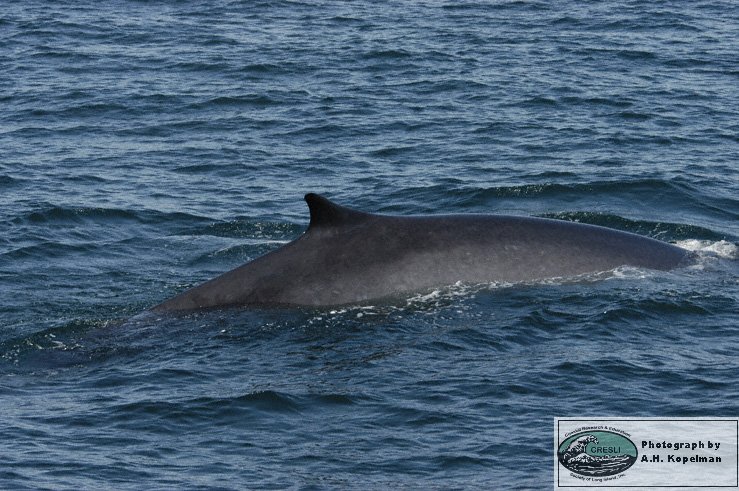
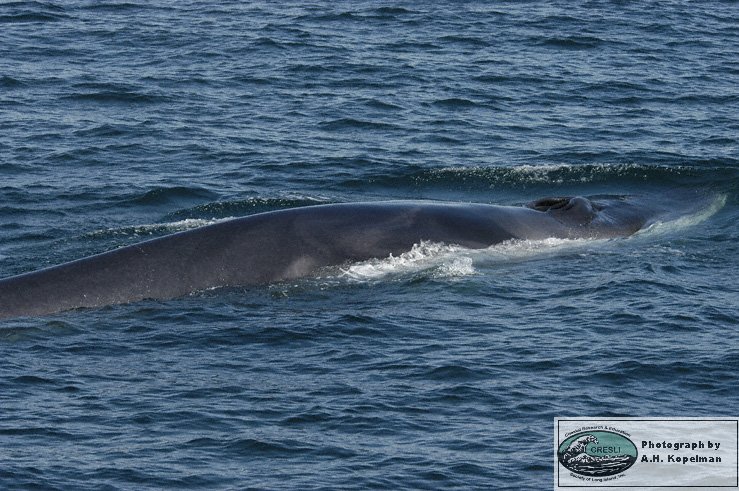
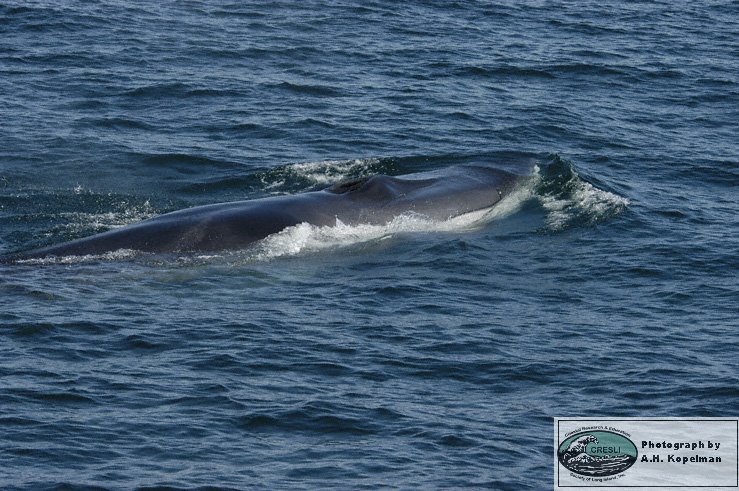
Fin Whale (Balaenoptera physalus). Spanish name: Rorcual Comun, Rorcual Careto
Habitat
This whale stays in deeper oceanic areas, avoiding shallow or coastal waters.
Physical Description
The long dark back of this whale is smudged with a lighter grayish area behind the head; the contrasting belly is white with many ventral grooves between the lower jaw and navel. The relatively small dorsal fin (60 cm high) is far back from the head, and the flippers are narrow and white underneath. The distinct head is flat, V-shaped when looked at from above, and the mouth full of plates for straining krill and other small food.
Interesting Biology
Second in size only to the blue whale, this enormous oceanic mammal lives travels to the poles in the spring and passes through the warm equatorial waters in the winter. It travels alone, in pairs, or in pods of up to 7 individuals; some temporary groups reach more than 50 individuals in feeding or resting areas.
The fin whale can dive up to 230 m, and is one of the fastest large whales, swimming up to 32 km/h. While hunting, it sends out low and high frequency pulses to find food and to communicate with other fin whales. When it resurfaces from a deep dive, a tall spout spurts from the blowhole 4-6 m high and visible from far away. This whale often leaps out of the water-an action called breaching-like the humpback whale, splashing water high into the air as it lands on its back.
The Fin Whale still faces hunting threats to a small degree off the coasts of Spain, Korea, and China.
Diet
This large whale is sustained by a variety of krill, crustaceans, invertebrates, jellyfish, squid, herring, and lamp fish.
Height/Weight
From 24 m to 27 m long and weighing 35-70 tons, size and weight varies with region, tending to be larger in the southern hemisphere.
Brief Taxonomy
Order: Cetacea
Family: Balaenopteridae
Sources
Saenz, Joel C., Grace Wong, and Eduardo Carrillo. Ballenas y delfines de America Central. Instituto Nacional de Biodiversidad. Costa Rica, 2004.
Amy Strieter, Wildlife Writer
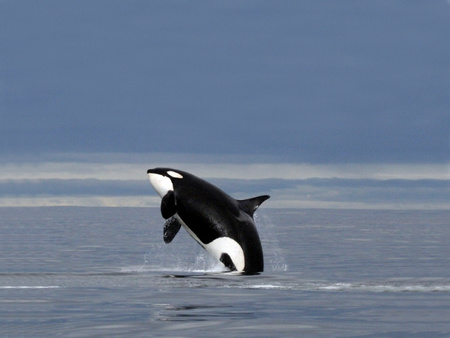
Orca, Killer Whale
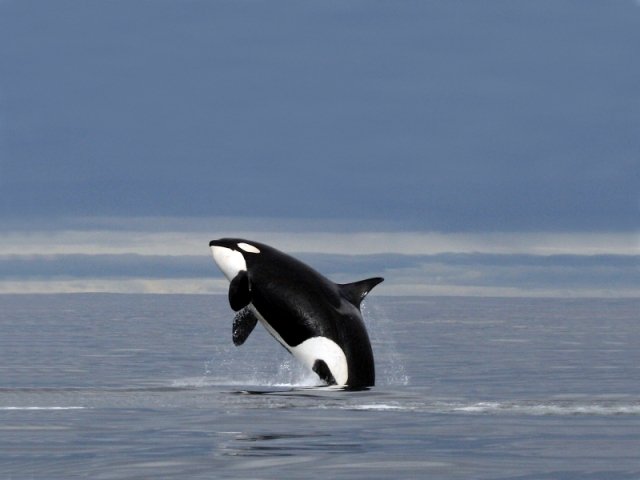
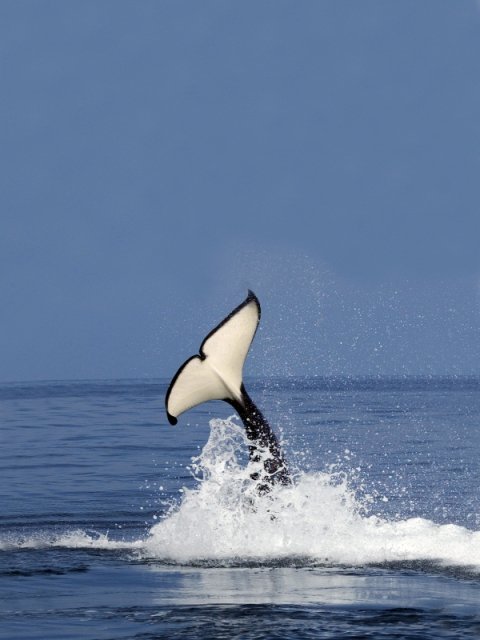
Orca, Killer Whale (Orcinus orca). Spanish name: Orca Comun, Espolante
Habitat
Open tropical, temperate, and polar seas are home to the orca; occasionally it swims into bays, estuaries, or the mouths of a river, and can be abundant in cold waters more than 800 km away from the shore.
Range
The orca is found in all open seas.
Physical Description
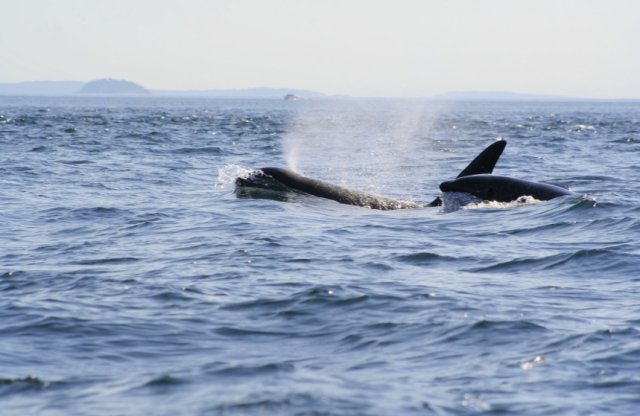
The orca's back is black with a gray spot behind the dorsal fin; in contrast, its chin, throat, belly, and the lower part of the flukes are white, as is a large spot behind the eye. The head is rounded with a conical snout and 40-48 sharp teeth. The dorsal fin of the male is a tall skinny triangle, about 1.8 m long; the female's dorsal fin is smaller and more curved.
Interesting Biology
One of the most loved and trained whales, the orca is appropriately also known as the killer whale-in the wild, this strikingly beautiful animal is an efficient, cooperative hunter. The equivalent of a wolf in the sea, the orca lives within a complex social structure, in which echolocation is used for social communication as well as finding obstacles and prey. Their stable pods are tightly bonded, with up to 30 individuals; sometimes pods merge temporarily into herds of hundreds of whales.
Admired for its grace and agility in captivity, orcas can be seen breaching in the ocean, enthusiastically slapping the water with reentry. This whale generally makes short dives for 10-30 seconds, but can dive down to 260 m. Usually swimming at 6-10 km/hr, it can reach speeds of 40 km/hr.
A female will birth one calf after a 15-month gestation and nurse it for 1 year, and gradually wean it for a year after that. They wait 3-8 years between births, so when these whales are targeted, their populations take a long time to recover. Although they are a protected species, they are still hunted in Japan for meat.
Diet
In a single day, an orca can eat 4% of its large body weight, by hunting fish such as herring, cod, or salmon, as well as squid, octopus, seals, sea birds, otters and penguins.
Height/Weight
The male of this species may reach 9.5 m in length and weigh more than 6 tons; the female is usually less than 7 m long, and weighs only four tons.
Brief Taxonomy
Order: Cetacea
Family: Delphinidae
Sources
Saenz, Joel C., Grace Wong, and Eduardo Carrillo. Ballenas y delfines de America Central. Instituto Nacional de Biodiversidad. Costa Rica, 2004.
-Amy Strieter, Wildlife Writer
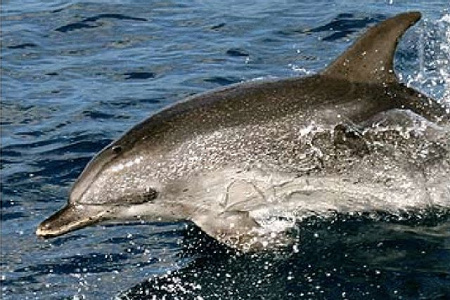
Pacific Spotted Dolphin
Pacific Spotted Dolphin (Stenella attenuata). Spanish name: Delfin Manchado del Pacifico
Habitat
This dolphin can be found in the waters along the Tropical Pacific coast.
Range
Spotted Dolphins live in coastal and offshore waters in the Tropics and subtropics, including the Pacific, Atlantic and Indian oceans, the Caribbean and China sea, near Japan, Peru, New Zealand, Panama, the Galapagos Islands, and the Gulfs of California and Mexico.
Physical Description
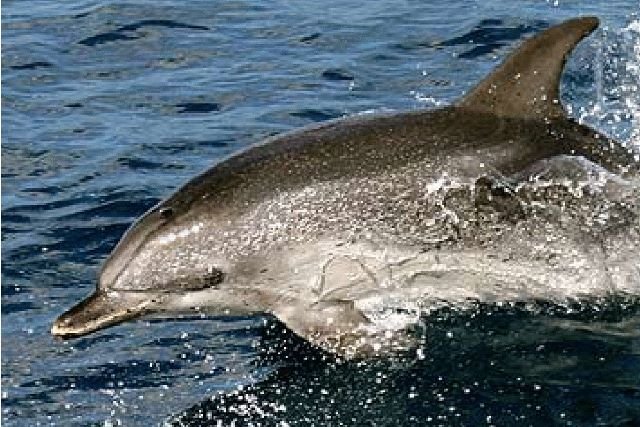
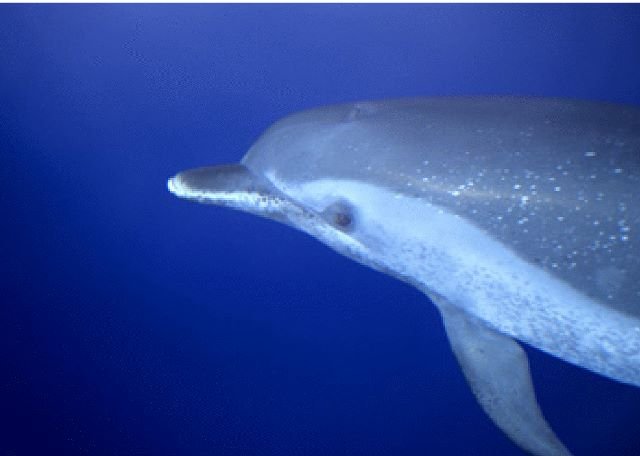
This sleek, long dolphin has a distinct coloration: its back is covered in a dark gray patch of skin or "saddle' that spreads from its front to past the dorsal fin. Small white spots cover the dark area, and dark spots speckle the creamy white belly. It also has a dark patch over the eyes and several other distinct dark lines on the face and body. The dorsal fin is curved and the flukes and flippers are small and pointed. The size of the spotted dolphin can vary, but individuals in coastal populations tend to be larger.
Interesting Biology
These dolphins can gather in groups of 1,000 or more individuals, especially in offshore populations-but groups of a few hundred are more commonly found. Coastal populations tend to be smaller, numbering 50 or fewer individuals. Spotted dolphin pods include both sexes and all ages, and sometimes they blend schools with other dolphin species as well, such as the spinner dolphin. These agile dolphins can swim up to 28 km/h and may speed next to boats, performing acrobatic leaps.
A female will have one calf every 2 to 3 years, after an 11½ -month gestation period; the calf will rely on her milk for 18 months. These dolphins can live for up to 45 years, but thousands are killed every year in nets of men fishing for yellow fin tuna. Because the spotted dolphin's diet is similar to this tuna, the dolphins are often with them, and sometimes fishermen purposefully follow the dolphins to the tuna-and subsequently pull them in with the catch. In Japan 2,000 spotted dolphins are still intentionally killed every year for food.
Diet
Spotted dolphins prey on squid and at least 18 species of fish.
Height/ Weight
Adults reach lengths of 2.2-2.5 m, and weigh 90-165 kg.; males are larger than females, but females have a larger snout.
Brief Taxonomy
Order: Cetacea
Family: Delphinidae
Sources
Saenz, Joel C., Grace Wong, and Eduardo Carrillo. Ballenas y delfines de America Central. Instituto Nacional de Biodiversidad. Costa Rica, 2004.
-Amy Strieter, Wildlife Writer
Tours & Activities
Experiences in Marino Ballena National Park
Explore hand-picked Marino Ballena National Park tours and experiences led by local insiders, from wildlife encounters to cultural deep-dives.
Tour
Tour
Trips to Inspire
Marino Ballena National Park itineraries
Explore hand-picked Marino Ballena National Park itineraries designed by local insiders who know every hidden corner. Each trip is completely flexible, customized to your pace, travel style, and budget.
From $1,645 per person
17 days · Puerto Viejo de Limon, Tortuguero, Arenal, Monteverde +1
Family
Costa Rica has really got itself well organised for tourism, the service was spot on, the travel timing accurate ( although some of the roads were really poor, pot holed). Hotels and activities are really geared for tourists and they made us feel welcome.
Costa Rica