Rincon de la Vieja National Park
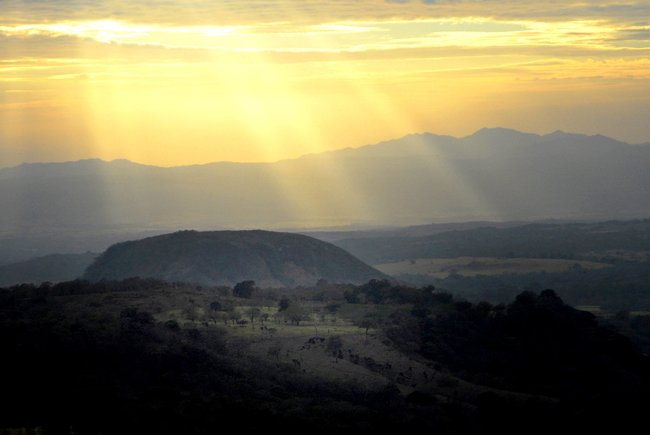
This 34,800 acre (14,084 ha) national park is home to an intriguing combination of volcanic geological wonders and pristine tropical forests that span six life zones. Of course the main attraction is the smooth cinder cone volcano, Rincon de la Vieja (6217 ft, 1895 m), comprising of nine contiguous craters that dot the volcanic national park.
Plan my TripPlanned with a local insider, takes just 2 minutes.
Among the craters is the Santa Maria Volcano (Volcan Santa Maria), the highest peak at 6,385 feet (1916 m). This collection of volcanic peaks are the most active in the Guanacaste Mountains (Cordillera de Guanacaste), where major volcanic activity occurred during the latter half of the 1960's. The Von Seebach crater is still currently active, continually venting steam and the occasional volcanic hiccup.
Tropical forests, including sections of montane and dwarf cloud forest, span the park's base, providing safe haven for a host of flora and fauna. Mammals include pumas, jaguar, monkeys-howler, spider, and white-faced, kinkajous, sloths, and tapirs. The east side of the park is exposed to Atlantic trade winds bringing a large amount of rainfall. A drenching 200 inches (500 cm) is liable to fall in any given year, covering the mountainside with lush vegetation. Conversely, the Pacific side has a distinct dry season-February to April-making it ideal for visitors wanting to hike the higher elevations.
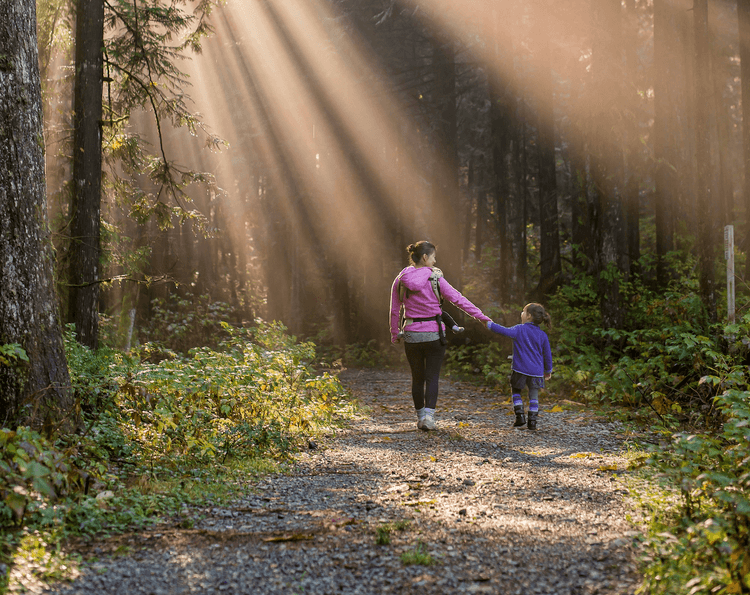
Trails stem from the Santa Maria ranger station and zigzag their way through the park, covering over 5,000 vertical feet (1,525 m). A sulfuric hot spring is 3 km up the trail from the ranger station, allowing visitors to relax in its naturally heated pools and then cool off in a nearby stream. In close proximity, a trail reveals a number of adjoining waterfalls with perfect swimming holes. Bubbling pools of mud can be found an additional 3 km beyond the hot springs where visitors can observe Rincon de la Vieja's powerful geological forces at work. Las Pailas ranger station is a short distance away, offering visitors a chance to spend the night at the adjacent campgrounds.
Ambitious trekkers may elect to hike to the volcano's summit, a somewhat rigorous all-day endeavor, but certainly worth the effort (*). The trail traverses several life zones and distinct ecosystems as it climbs higher up the mountainside. Starting from Las Pailas, the trail curves its way to Von Seebach, which spits geothermal steam into the air as if to warn that an eruption is immanent. This 6 mile (10 km) trail ascends through montane tropical forest, eventually giving way to dwarf cloud forest. The steaming crater lays a half-mile (0.6 km) beyond the last vestiges of shrubbery, through a gauntlet of volcanic talus. With luck, clear skies will reveal an uninhibited view of endless country-virtually the whole of Costa Rica-including both coasts and the shimmering sea beyond. Dry season-November to April-is the best time for visitors to attempt the hike due to a higher probability of sunshine and clear skies.
Camping is allowed throughout the park, however, food is not available onsite and should be packed beforehand. Visitors on route to the summit should pack accordingly. Basic accommodations are offered outside the park near the village of San Jorge. Various haciendas offer room and board, plus transportation to the park.
* A SERIES OF ERUPTIONS AROUND THE CRATER OF RINCON DE LA VIEJA VOLCANO HAS CREATED A SAFETY HAZARD FOR VISITORS WISHING TO HIKE TO THE CRATER. PERHAPS STABILITY WILL RETURN TO THIS ACTIVE VOLCANO BUT UNTIL THEN NO HIKERS ARE ALLOWED NEAR THE CRATER.
Wildlife Sightings
Spotted at Rincon de la Vieja National Park
Vampire Bat
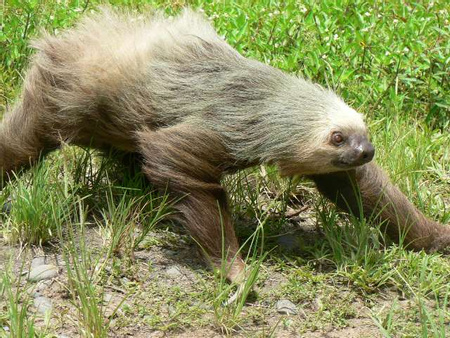
Sloths
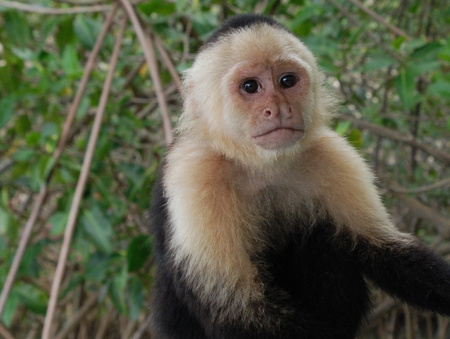
White-faced capuchin monkey
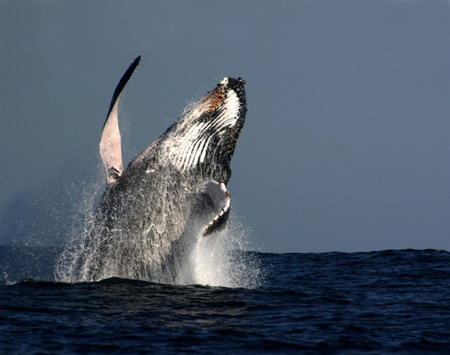
Humpback whale
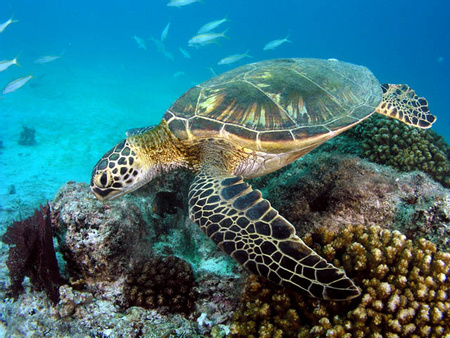
Sea turtles
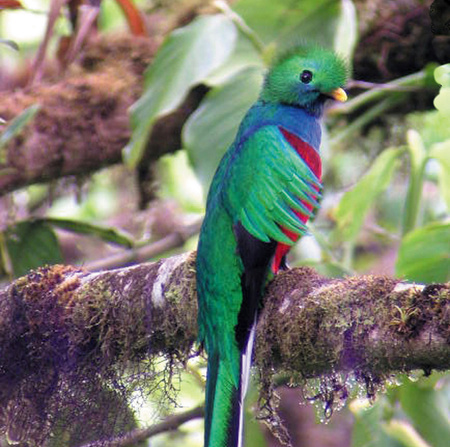
Resplendent quetzal
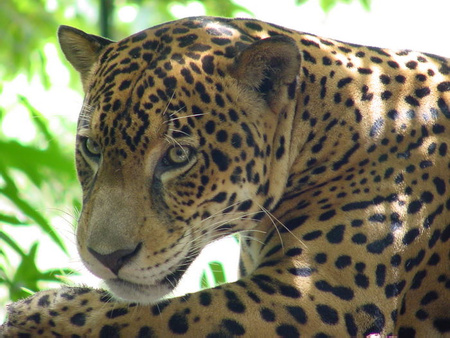
Jaguar
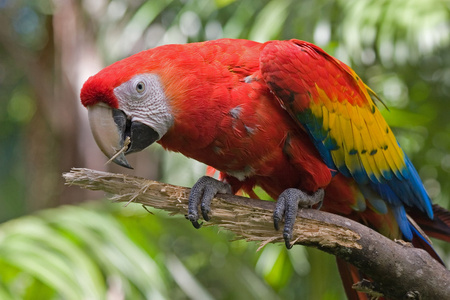
Scarlet macaw
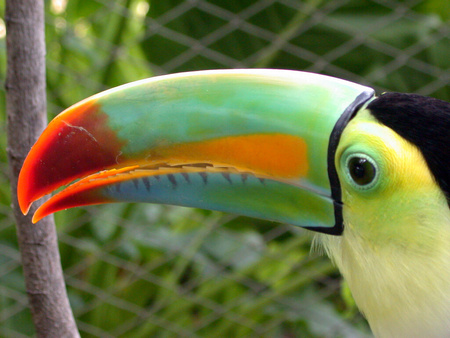
Keel-billed toucan
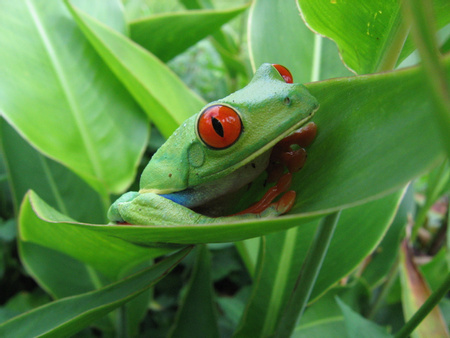
Red-eyed tree frog
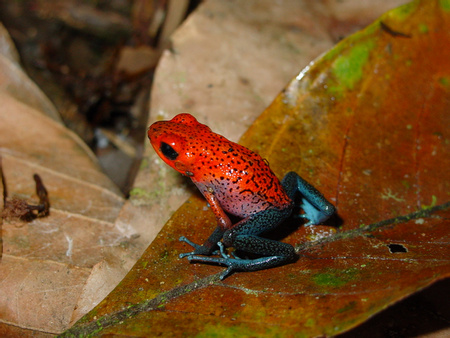
Blue jeans frog

Howler monkey
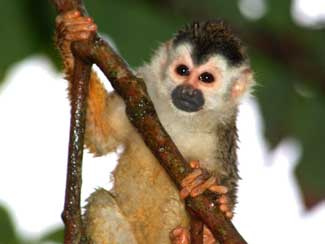
Squirrel monkey
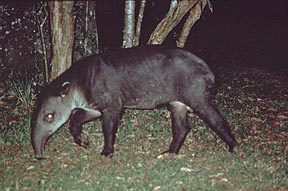
Baird's tapir
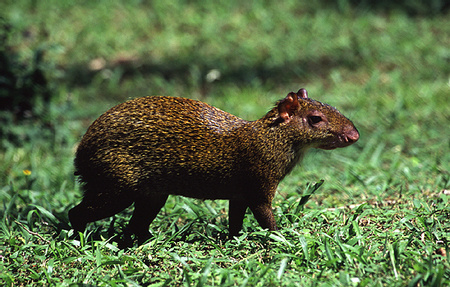
Agouti
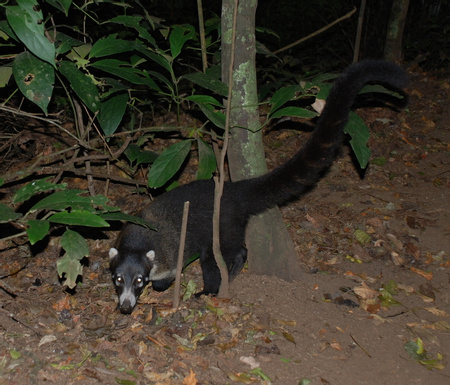
Coati
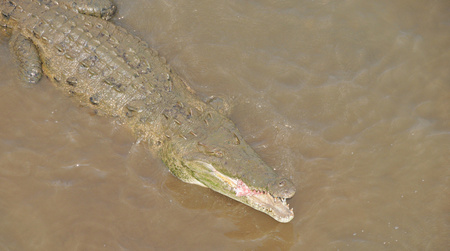
American crocodile
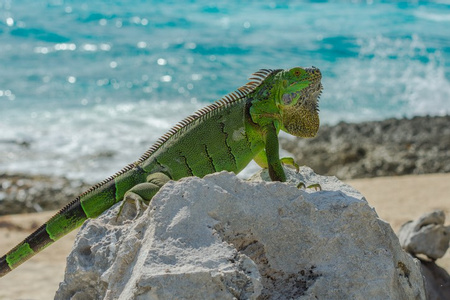
Green iguana
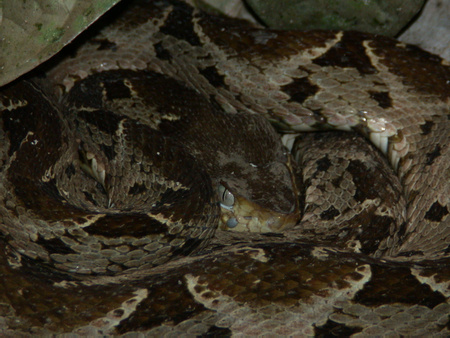
Fer-de-lance
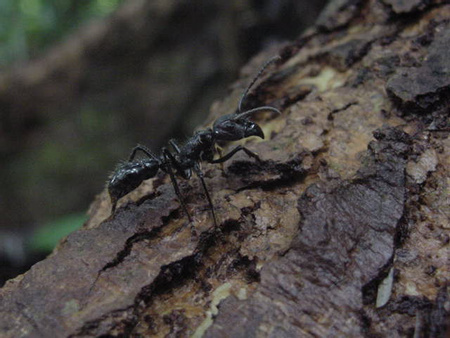
Bullet ant
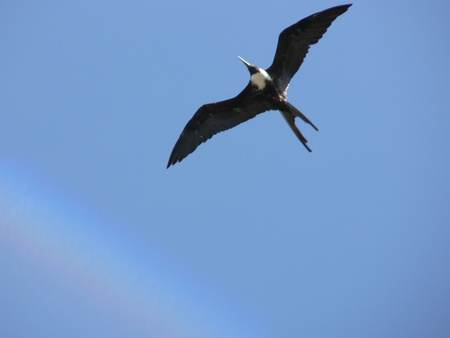
Magnificent frigatebird
Armadillo
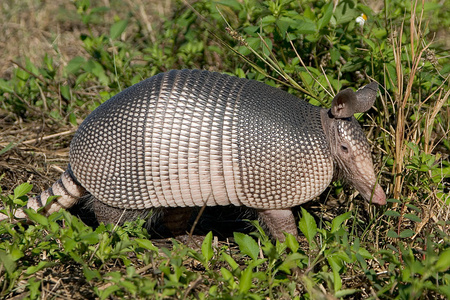
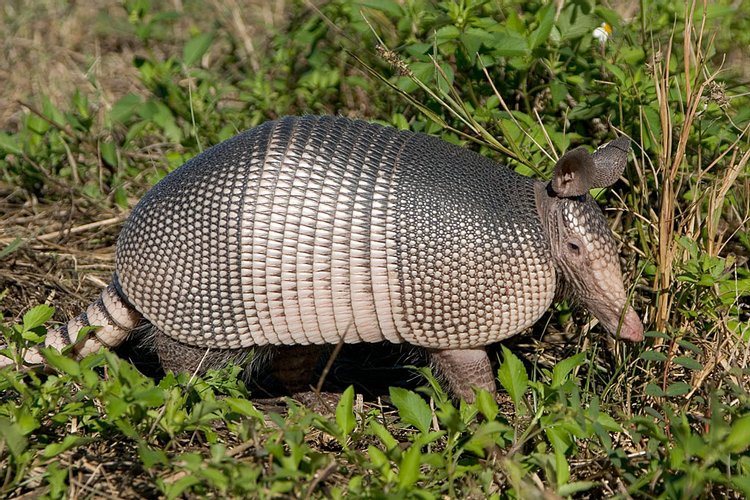
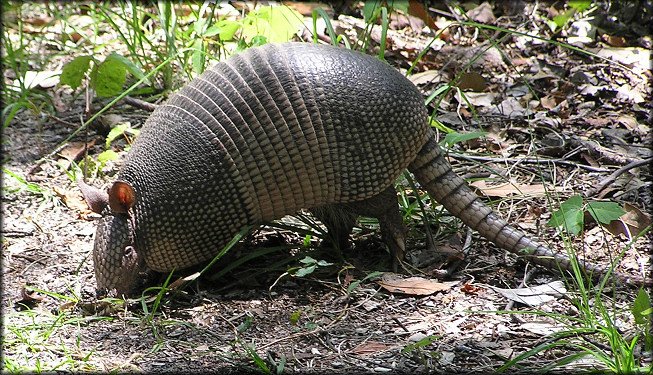
Armadillo (Dasypus novemcinctus) Cusuco, Armadillo
Habitat
This species of armadillo can survive in many different types of habitat: cloud forest, lowland tropical rainforest, dry deciduous forest, as well as thorn scrub forest and grassland.
Range
This armadillo's range stretches from central and southern United States to Argentina.
Physical Description
The armor of this specific armadillo has nine bands on the midsection of its back, hence its name. This armor is made up of dermal bone plates covered with epidermal scales. The long slim tail is also covered in this armor, as is the top of the head. The armadillo has small fine hairs between the plates on the back, and more hair on the belly.
Biology and Natural History
The armadillo is well-known for escaping danger by curling up into a ball and shielding itself with its bodily armor-but only the three-banded armadillo is capable of doing this. When the nine-banded armadillo is threatened, it first sits upright, sniffs the air and listens, and if it feels threatened then it hurtles through the undergrowth. This is especially effective in areas with cacti or spiny plants, because the armadillo is protected but its attacker is not. If fleeing is not an immediate option, the armadillo can startle its attacker by suddenly leaping a meter or more into the air, then escaping. The armadillo is also an able and skilled digger: in loose soil it can burry itself within minutes.
No other armadillo has a range as large as that of the nine-banded armadillo. Across the North and South Americas, this armadillo regions areas that face extreme temperatures, and even within its home areas it avoids midday heat.
The nine-banded armadillo has small teeth, so its diet is restricted to soft or small plants or prey. It forages alone, scratching in the leaf litter of the forest floor and snuffling through it with its long upturned nose. With its long claws, the armadillo can efficiently dig burrows for itself and its family. In Florida, armadillo burrows have been as long as 8 m and deep as 2 m. It then furnishes the burrow with nesting material in a surprising way: it gathers leaves and grasses under its body, then, holding the leaves between its forepaws, it returns to the burrow hopping on its hind legs. A female will keep her young in the burrow after they are born. The nine-banded usually has quadruplets at one time; these are all the same sex and identical to one another. This armadillo lives about 4 years, and is sexually mature after one year.
Diet
The nine-banded armadillo mostly eats insects and larvae, often millipedes, beetles, ants, termites, and centipedes; it also consumes fruits, berries, fungi, snails, slugs, earthworms, and small vertebrates.
Height/Weight
An adult usually has a head and body length of 38.4 to 57.3 cm, and a tail length of 27.6 to 43 cm. They can weigh between 2.9 and 8 kg.
Taxonomy
Order: Xenarthra
Family: Dasypodidae
Sources
Eisenberg, John. Mammals of the Neotropics, Vol. 1. The University of Chicago Press: Chicago, 1989.
Wetzel, R. M. in Janzen, Daniel H. Costa Rican Natural History. Chicago: University of Chicago Press, 1983.
Wilson, D. E. in Janzen, Daniel H. Costa Rican Natural History. Chicago: University of Chicago Press, 1983.
-Amy Strieter, Wildlife Writer
Photos:
Jacksonville, Florida: Shells, Shell Collecting, and Nature. Jax Shells Organization website. (1)
Florida Nature Organization website. (2)
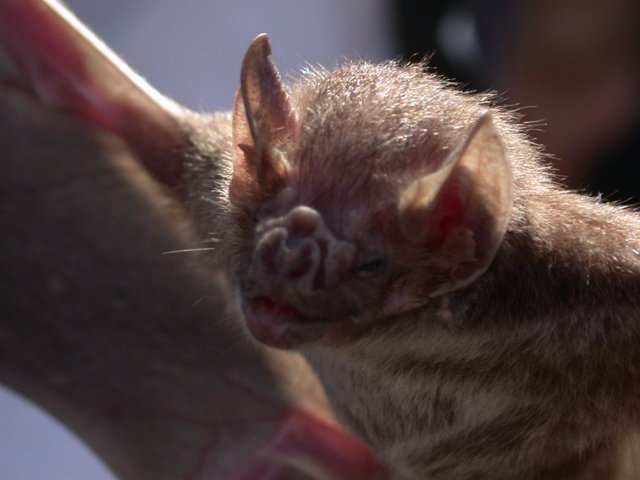
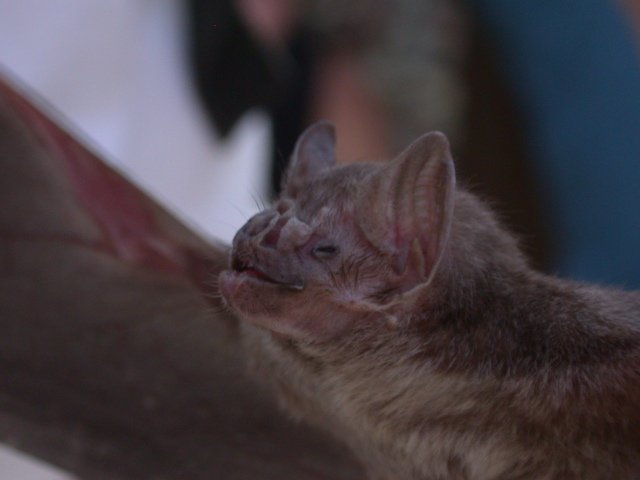
Vampire Bat
Vampire Bat (Desmodus rotundus). Spanish name: Vampiro
Habitat
They can live in a variety of cover types, from tropical evergreen forest and tropical deciduous forest to man-made clearings and pastures.
Range
Vampire bats live from southern Sonora and Taulipas, Mexico to northern Argentina and Uruguay, rarely above 1,200 m in elevation.
Physical Description
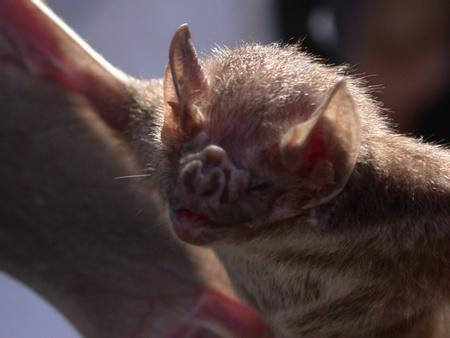
This species, the common vampire bat, is the only vampire bat that feeds on the blood of livestock; the other two species feed on blood from birds. It is capable of the rapidly coordinated movements needed to walk, run, and hop-it needs to be agile when it feeds on prey that is ten thousands times its size. It has very long "thumbs' with calluses for these movements, and has long legs with little fur, and no tail. This small to medium-sized bat is reddish brown to gray brown with pale underparts. Vampire bats have a strong sense of smell and larger eyes with better eyesight than most other bats. Their faces are distinguished by their enlarged, flattened nose pad instead of the more common nose-leaf shape.
Biology and Natural History
These bats are common in areas where they can find livestock. Domestic animals provide a supply of blood more consistent and abundant than the bats can find from wildlife prey, although they may also feed on white-tailed deer. Vampires avoid emerging from their roosts during periods with high moonlight. In the dark they are efficient foragers, hunting alone or in small groups. They emit low intensity echolocation calls that effectively detect large objects (such as cows).
Once a vampire targets a prey animal, it lands on the prey or on the ground next to it. On cattle, the bat usually bites the neck, and is not easily displaced even if prey reacts and tries to shake it off. Vampire incisors are razor sharp, but their feeding bite is painless. They expertly remove a tiny 3 mm piece of flesh from the prey and have an anticoagulant in their saliva that keeps the blood flowing the entire time that they feed. For half an hour, the vampire will stay attached to the prey, lapping blood from the wound with its long tongue. It has grooves on the underside of the tongue that function like a straw. A bat needs about 15 ml of blood each day; extracting this amount of blood from an animal the size of a cow could not hurt it unless many bats fed on it in the same night. The bats seem able to find their previous prey targets on subsequent nights and reopen the incision they made before. As intuition would suggest, these bats are sometimes responsible for transmitting the rabies virus among livestock.
After feeding, the bats return to their roost. A vampire must feed every night; if one member in the roost is unable to find prey during the night, its relatives will regurgitate some of their fare and share it. During the day these bats roost communally in tree hollows, unused wells, or such places, but they prefer caves. Their colonies can have as many as 500 or even thousands of individuals, and they often share roosts with other species of bats. Their roosts are identifiable by the dark orange, viscous, gooey, defecation found on the floor. They are social and may groom each other. Females feed their single pups regurgitated blood when they are three months old, and the pups go hunting with their mothers when they are 5 to 6 months old.
Diet
These bats feed only on the blood of other animals, generally livestock.
Height/Weight
Adults have a head and body length of 7.5 to 9 cm; their weight varies widely.
Taxonomy
Order: Chiroptera
Family: Desmodontinae
Sources
Eisenberg, John. Mammals of the Neotropics, Vol. 1. The University of Chicago Press: Chicago, 1989.
LaVal, Richard K. and Rodriguez-H., Bernal. Murcielagos de Costa Rica. Instituto Nacional de Biodiversidad, Costa Rica, 2002.
Turner, D. C. in Janzen, Daniel H. Costa Rican Natural History. Chicago: University of Chicago Press, 1983.
Wilson, D. E. in Janzen, Daniel H. Costa Rican Natural History. Chicago: University of Chicago Press, 1983.
-Amy Strieter, Wildlife Writer
Tours & Activities
Experiences in Rincon de la Vieja National Park
Explore hand-picked Rincon de la Vieja National Park tours and experiences led by local insiders, from wildlife encounters to cultural deep-dives.
Rincon de La Vieja
Hacienda Guachipelin One Day Adventure Pass
Tour
Rincon de La Vieja
Rincon de la Vieja National Park Guided Hike & Liberia City Tour
Tour
Trips to Inspire
Rincon de la Vieja National Park itineraries
Explore hand-picked Rincon de la Vieja National Park itineraries designed by local insiders who know every hidden corner. Each trip is completely flexible, customized to your pace, travel style, and budget.
From $1,075 per person
6 days · Tamarindo
Family
This epic adventure for solo travelers lets you explore Costa Rica in your own time, indulge in exciting activities, and sample delicious cuisine.
.jpg?q=95&w=475)
Costa Rica