
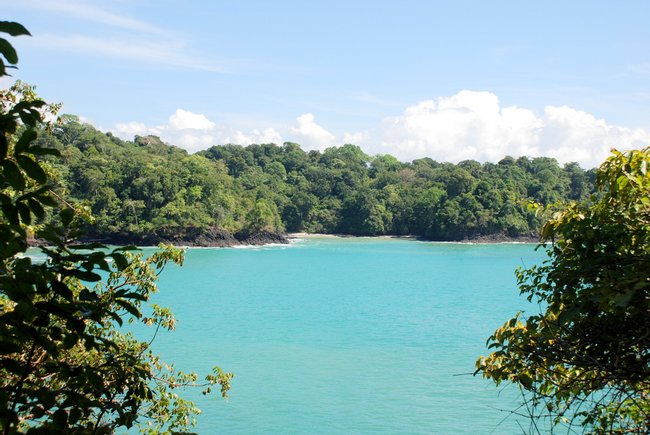
Manuel Antonio National Park
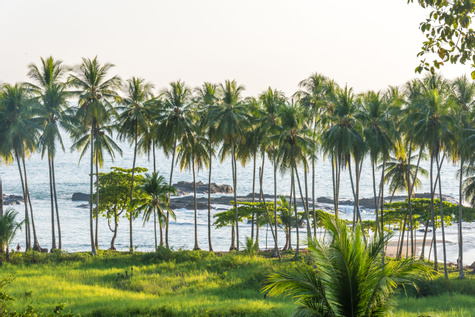
Created in 1972 to preserve the richness of the forest and the idyllic beaches, Manuel Antonio is home to many of Costa Rica's endangered species. Don't let the size fool you, the smallest of Costa Rica's National Parks, which encompasses almost 1,700 acres of land (683 terrestrial hectares) and 136,000 acres of ocean (55,000 marine hectares), is regarded as one of its best.
Plan my TripPlanned with a local insider, takes just 2 minutes.
Located 120 miles (192 km) from San Jose on the Pacific coast, Manuel Antonio National Park is internationally recognized as being one of the most biodiverse parks on the planet. Lush tropical forests, lagoons, mangroves and pristine white sandy beaches make up one of the most diverse ecosystems imaginable. Among the 109 species of mammals and 184 species of birds, some of the frequently viewed residents include white-faced and howler monkeys, two and three toed sloths and iguanas. The endangered squirrel monkey calls the park home as well.
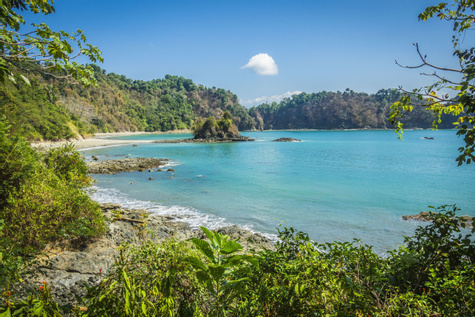
The park contains a great system of well marked trails to allow visitors to explore (maps may be purchased at the park entrance). The four beaches in the park, Espadilla Sur, Manuel Antonio, Escondito and Playita, are some of the best in the country. Espadilla Sur and Manuel Antonio offer very good snorkeling when the water is clear, which is best during the dry season. At 236 feet (72 m) high, Cathedral Point lies between Playa Espadilla Sur and Playa Manuel Antonio. It is connected to the mainland by a narrow land bridge and if you&re up for the hike, provides a memorable view. Playa Manuel Antonio offers a glimpse into the past with pre-Columbian turtle traps made of stone. Surfing, swimming or just relaxing under the sun are favorite activities for park goers.
Manuel Antonio National Park is open Tuesday through Sunday from 7:30 am to 4 pm. Regulations have been in effect to limit the amount of visitors to 600 on weekdays and 800 on weekends and holidays. To avoid large crowds, early morning from May to November may be the best time to experience the park. Peak months are from December to April. Petty theft is common around the park so be sure not to leave your possessions unguarded.
Wildlife Sightings
Spotted at Manuel Antonio National Park
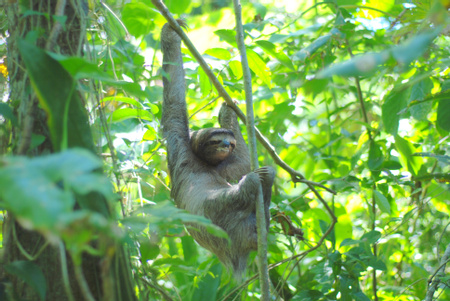
Three-Toed Sloth
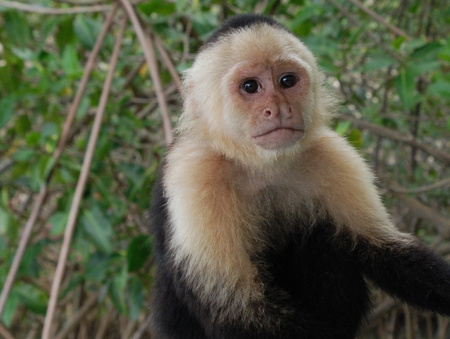
White-Faced or Capuchin Monkey
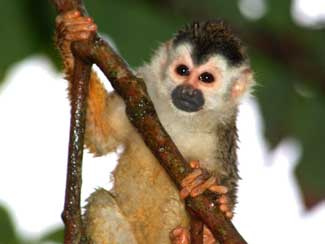
Squirrel Monkey
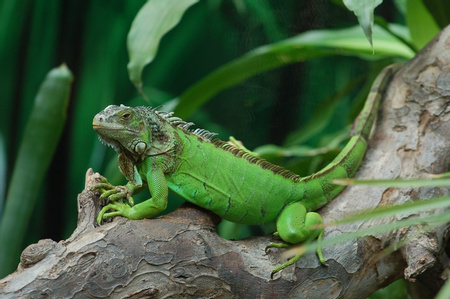
Green Iguana
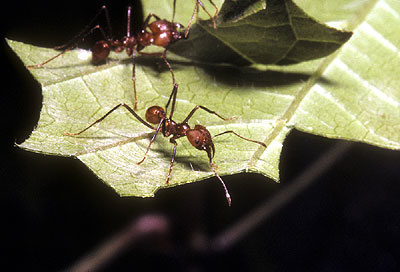
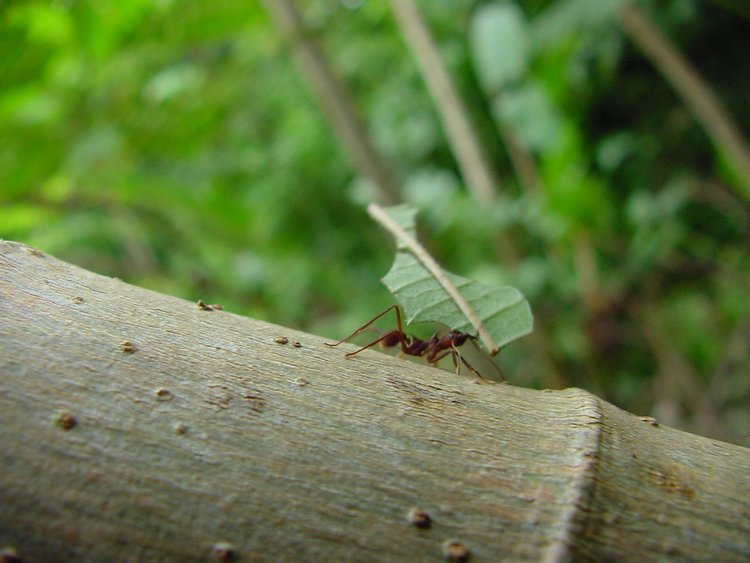
Leaf-Cutter Ant
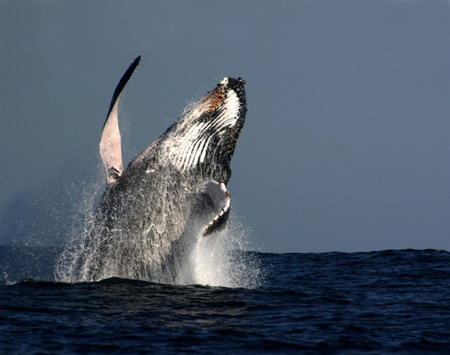
Humpback whale
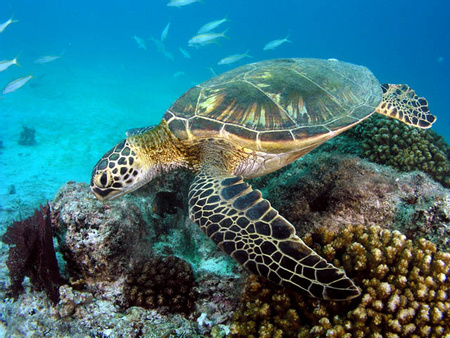
Sea turtles
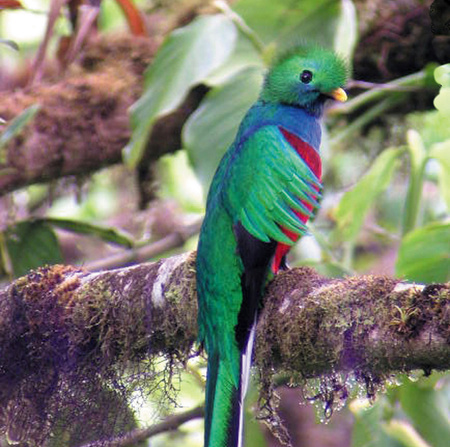
Resplendent quetzal
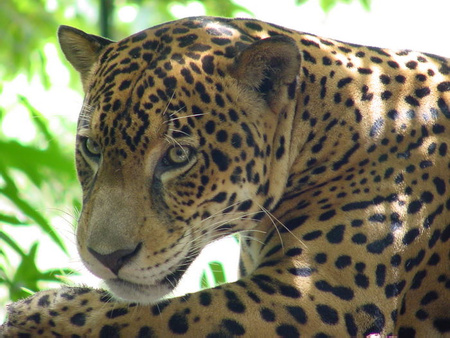
Jaguar
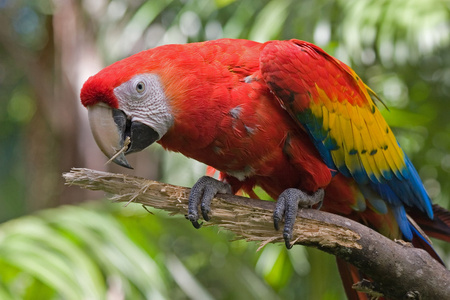
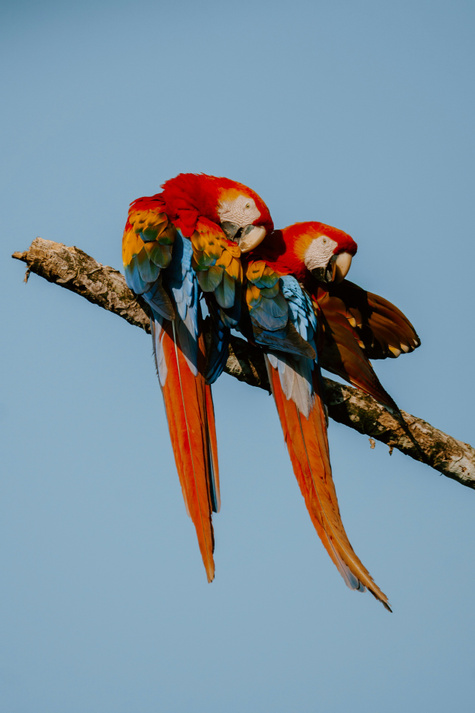
Scarlet macaw
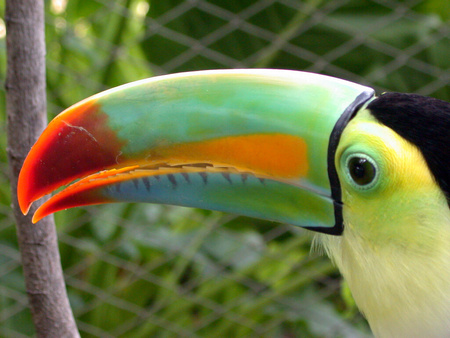
Keel-billed toucan
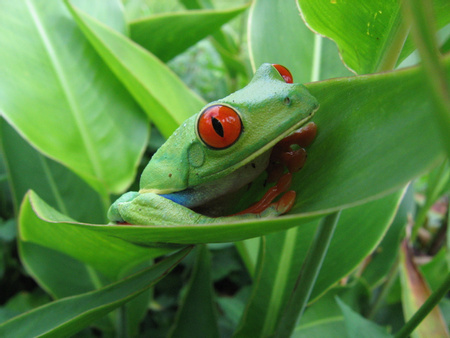
Red-eyed tree frog
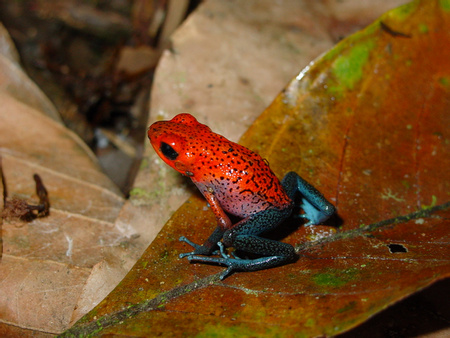
Blue jeans frog

Howler monkey
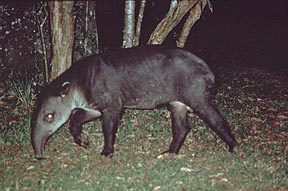
Baird's tapir
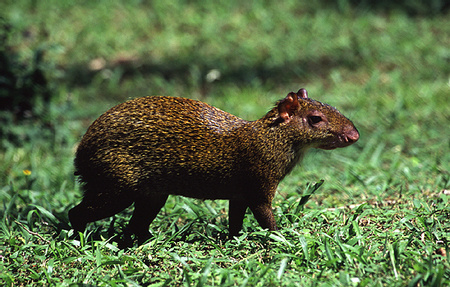
Agouti
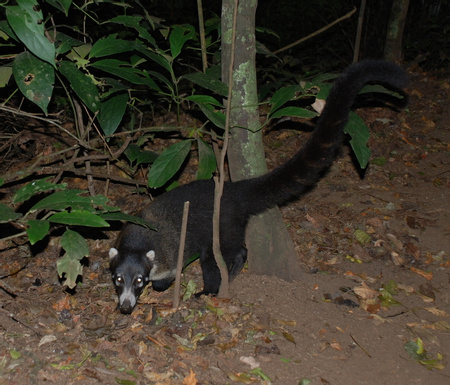
Coati
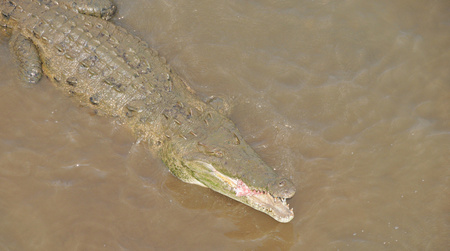
American crocodile
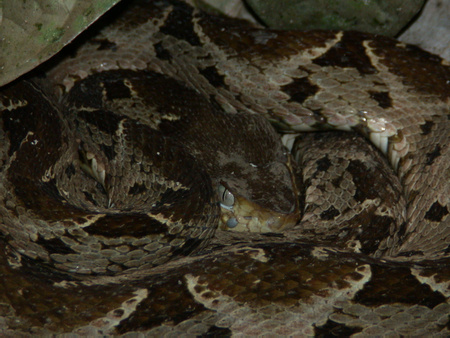
Fer-de-lance
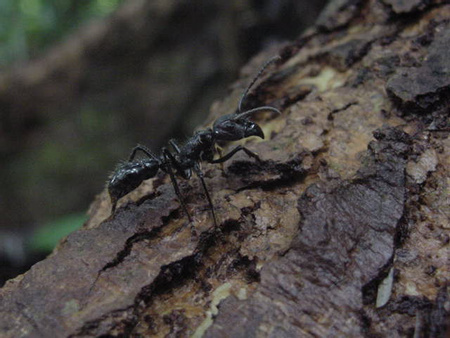
Bullet ant
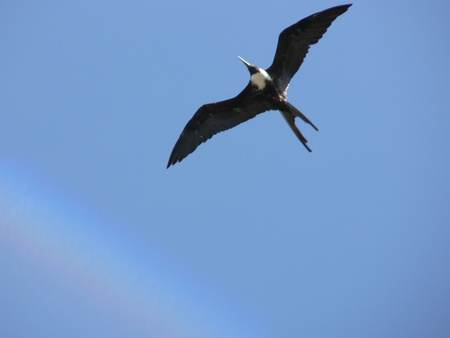
Magnificent frigatebird
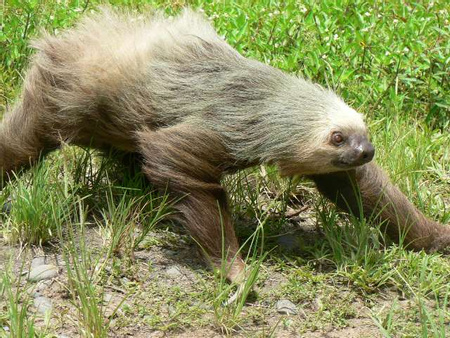
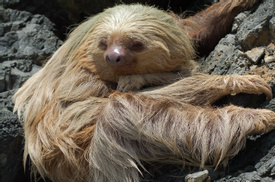
Two-Toed Sloth
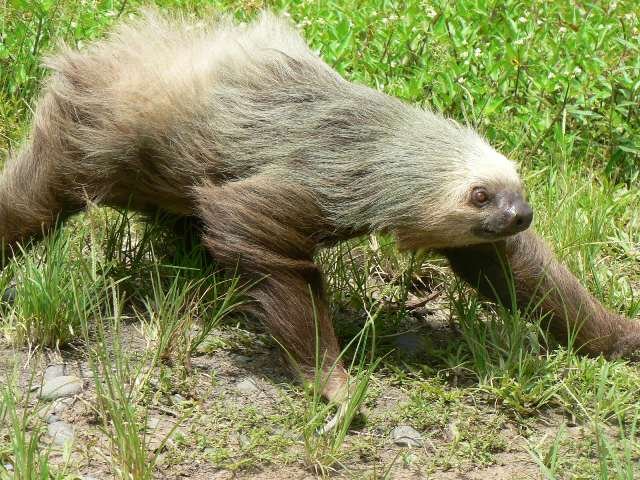
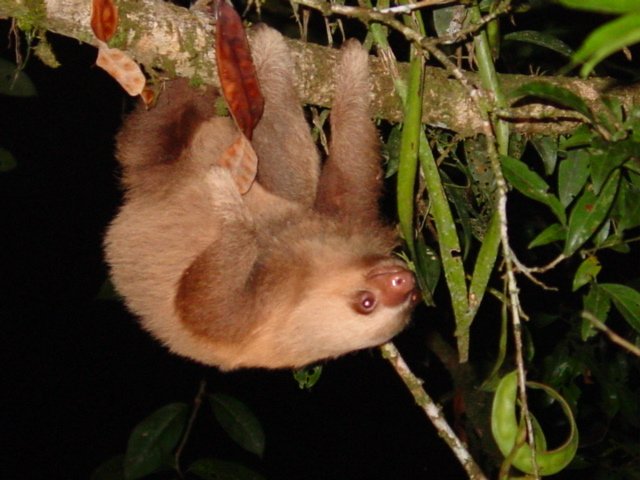
Two-Toed Sloth (Choloepus hoffmanni). Spanish name: Perezoso de Dos Dedos
Habitat
This sloth is active mostly in the canopy of tropical evergreen forests.
Range
Two-toed sloths live from northern Nicaragua to Ecuador.
Physical Description
This nocturnal sloth species is pale yellow with brownish limbs. They have two long toes on their front feet, as their name implies, instead of three like their similarly-named relatives. These toes have long claws well-suited for gripping and hanging on limbs and branches. Both the two-toed and three-toed sloths have three toes on the hind feet.
Interesting Biology
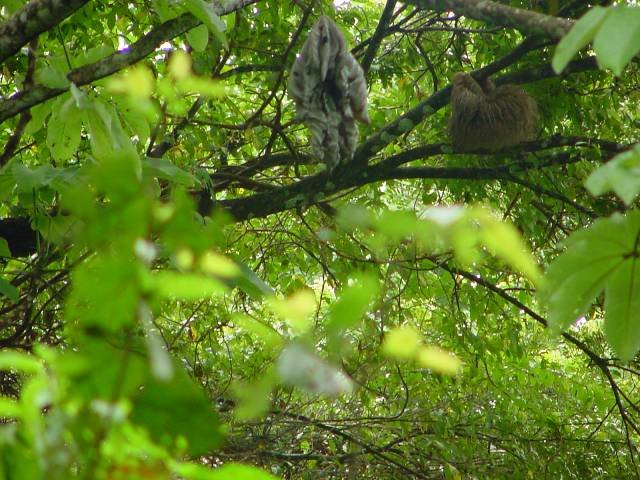
The two-toed is seen less frequently than the three-toed because it sleeps well-hidden in leaf masses during the day, and when curled up looks similar to a wasp nest. It has good night vision, and larger eyes and more of a snout than its three-toed relative. The two-toed also lacks a tail. It is more aggressive than the three-toed, and not as shy of people. It is a skilled swimmer, and in some places has been known to frequently cross streams to access more tree species.
The sloth body is specialized for a low intake of indigestible food, particularly mature leaves of forest trees. They use fewer resources per day than most mammals and have corresponding traits such as their famous lethargic behavior, long periods between defecating, and highly variable body temperature. This sloth occupies a home range of less than 2 ha and may use fifty trees of up to thirty species, eating leaves of different ages. They digest food very slowly, taking several days to do so. They descend from the canopy once a week to defecate. Mothers carry their young for a few months, so they have the opportunity to learn what to eat; then the mother leaves to a different part of her home range, bequeathing the first home range to the offspring.
There are more adult females found of this species than adult males, suggesting that there is spacing among males and competition for access to females. It is thought that their populations may have increased over the last few decades due to the disappearance of the harpy eagle, but this is not certain. The sloth is not threatened as much by natural terrestrial predators (such as boas or cats) as much as it is threatened by logging and general deforestation.
Diet
Sloths are specialized for eating leaves of trees and lianas; they will eat leaves from many different species, but they are also picky eaters.
Height/Weight
The two-toed sloth has a head and body length of 0.54 to 0.7 m, and weighs 5.7 kg.
Taxonomy
Order: Xenarthra
Family: Bradypodidae
Sources
Eisenberg, John. Mammals of the Neotropics, Vol. 1. The University of Chicago Press: Chicago, 1989.
Janzen, Daniel H. Costa Rican Natural History. Chicago: University of Chicago Press, 1983.
Laval, Richard K. Personal communication.
Wilson, D. E. in Janzen, Daniel H. Costa Rican Natural History. Chicago: University of Chicago Press, 1983.
Amy Strieter, Wildlife Writer
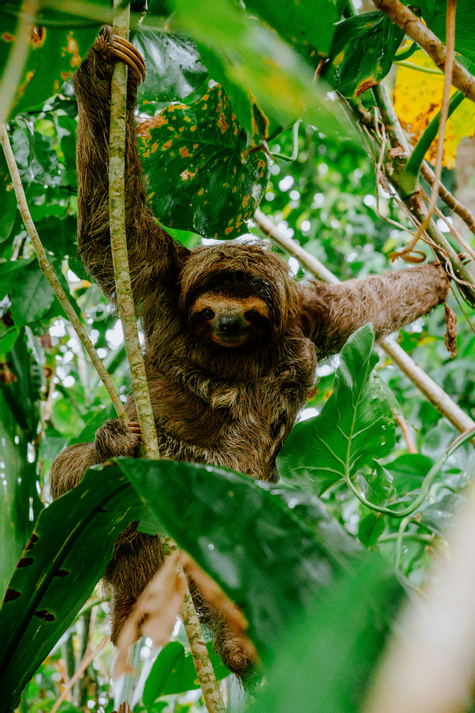
Three-Toed Sloth
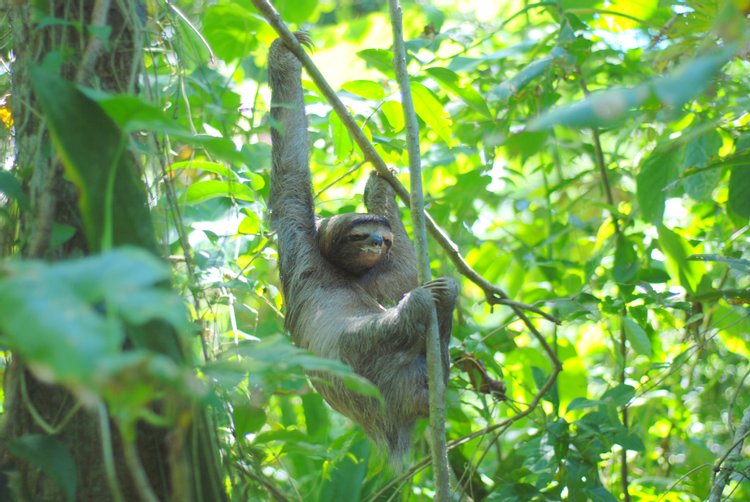
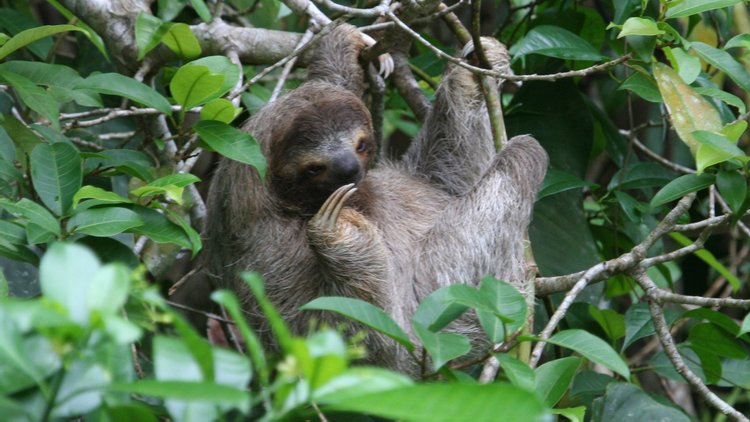
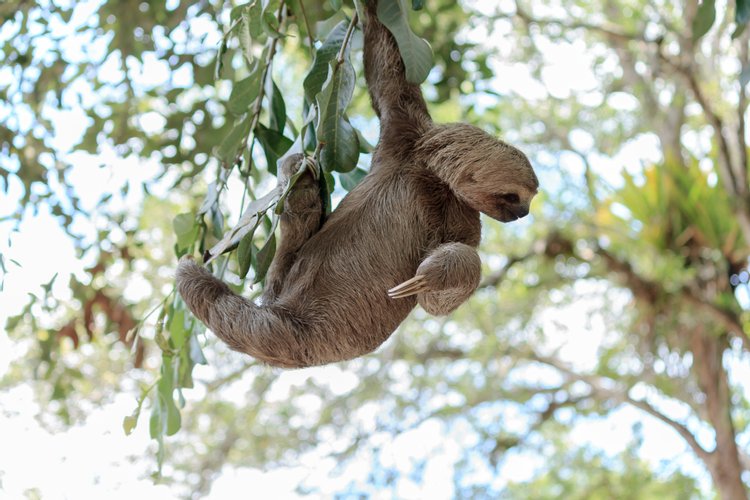
Three-Toed Sloth (Bradypus variegatus) Perezoso de Tres Dedos
Habitat
The three-toed sloth prefers tropical evergreen forests at low elevations that have continuous canopy cover.
Range
This sloth species is found from southern Honduras through Panama and western Colombia through the Amazon to northern Argentina.
Physical Description
The three-toed sloth has long coarse hair over dense underfur, a white face with a brown stripe on each side, a brown throat, and a body that is pale brown to yellowish. Each adult male has a unique pattern of yellow hair on its back with a black stripe through the center. As the name suggests, the three-toed has three toes on each of its front and hind feet. (Its relative, the two-toed sloth (Choloepus hoffmanni) also has three toes on the hind feet, but two on the front feet.)
Interesting Biology
The three-toed sloth is active during the day, unlike the nocturnal two-toed sloth, and so is seen more often. This sloth only eats leaves from trees and lianas, but may feed on fifty individual trees of up to thirty species, eating leaves of different ages. Sloths live, feed, mate, and reproduce near the upper levels of the forest canopy. They move to a new tree often enough to balance their diet, or about once every 1.5 days. Home ranges of different individuals may overlap considerably and females tend to be more social than males, but usually one adult (or female with young) will occupy a tree at any given time. Sloths may use different food sources depending upon what their mothers taught them to eat.
Though large for an arboreal mammal, the three-toed sloth must also be light for its size to live in the treetops, so it has reduced muscle mass. They also have an enormous gut capacity-nearly 30% of their body weight! The sloth's diet of leaves is digested very slowly, so they need a large capacity. Sloths consume a significant amount of leaf material in a forest (about 2% of total annual leaf production in Panama). They have a slow metabolism, though, so they have thick fur to insulate them when their body temperature drops at night; their temperature peaks during the day when they bask in the sunlight.
About once a week, the sloth descends from its lofty living space, digs a small hole with its stubby tail, defecates and urinates in the hole, then covers it with leaves using its hind legs and return to its preferred heights. This ordeal lasts less than 30 minutes, but during this time the sloth is vulnerable to predators. While mortality of young sloths is high, individuals that survive to adulthood suffer low mortality rates; they are recorded to live as long as 9 to 11 years, and are thought to live as many as 20 to 30 in the wild.
Several kinds of arthropods live as adults on these sloths. These arthropods leave the sloth to deposit their eggs on the sloth's dung; the hatched larvae feed on the dung, pupate, and after they emerge as adults, fly in search for a sloth to live on. A single sloth may carry nine hundred or more beetles and three species of mites.
An adult female spends half the year pregnant and the other half rearing her single offspring. Young sloths can begin eating leaves when they are two weeks old. As the mother carries the young with her, she shows it which trees and lianas are fit to eat within their home range. When the baby is 6 months old, the mother suddenly leaves the young to her home-range and moves to a nearby range. The young and mother maintain contact through vocalizations, and the young continues to use this portion of her range for a while and then departs.
Diet
A three-toed sloth consumes large amounts of leaves from up to thirty species of trees and lianas; the particular species chosen by an individual sloth vary, and are largely affected by what its mother taught it to eat.
Height/Weight
The three-toed sloth can weigh up to 4.3 kg.
Taxonomy
Order: Xenarthra
Family: Bradypodidae
Sources
Eisenberg, John. Mammals of the Neotropics, Vol. 1. The University of Chicago Press: Chicago, 1989.
Janzen, D. H. and D. E. Wilson in Janzen, Daniel H. Costa Rican Natural History. Chicago: University of Chicago Press, 1983.
Montgomery, G. G. in Janzen, Daniel H. Costa Rican Natural History. Chicago: University of Chicago Press, 1983.
Wilson, D. E. in Janzen, Daniel H. Costa Rican Natural History. Chicago: University of Chicago Press, 1983.
-Amy Strieter, Wildlife Writer
Photos:
- LevelsBirder website.
- Wings of Love website.
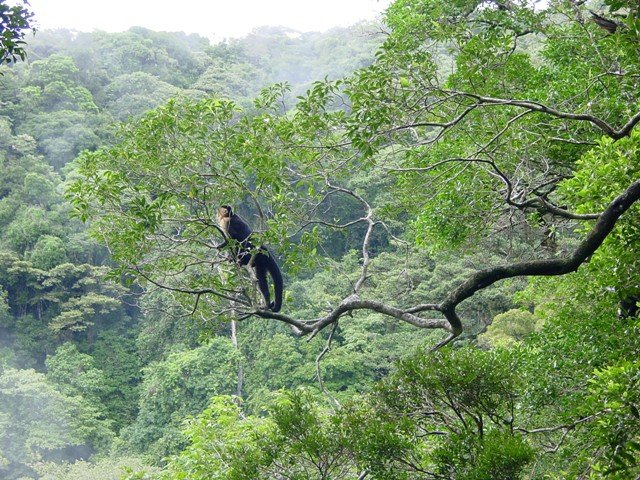
White-Faced or Capuchin Monkey
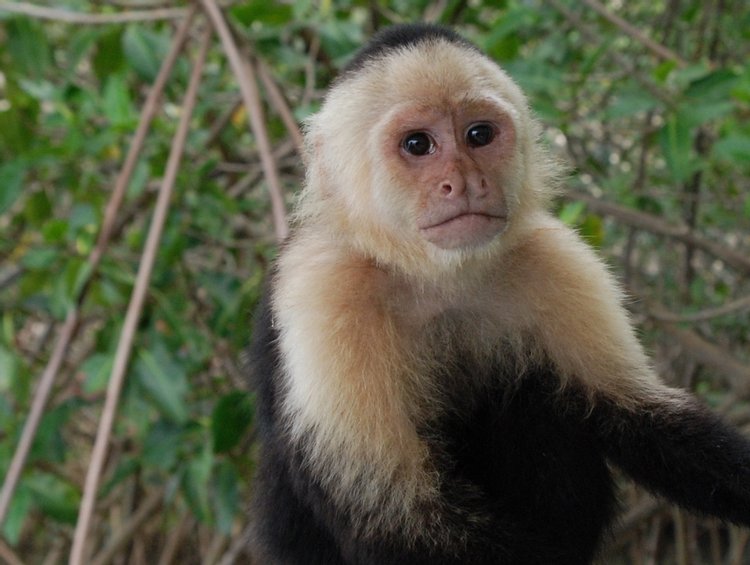
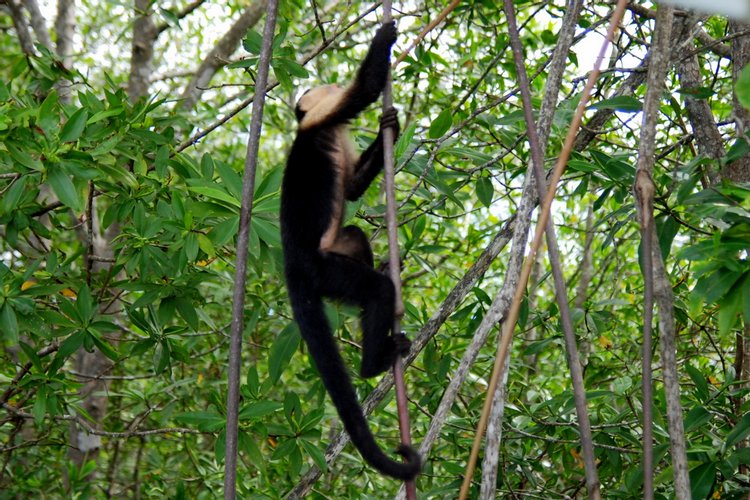
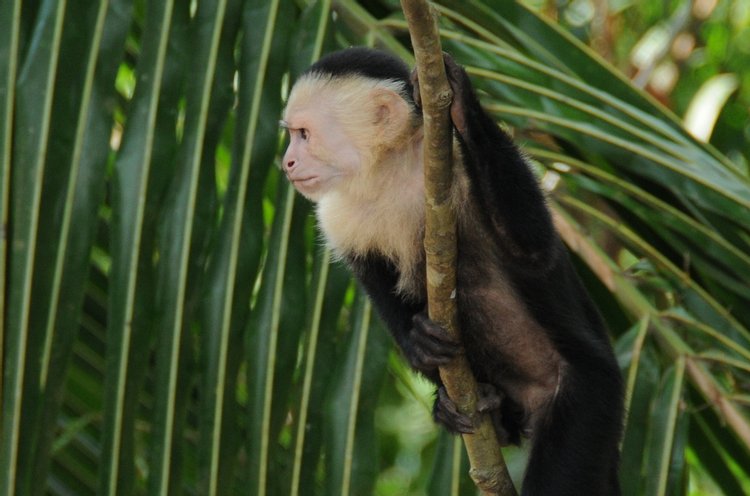
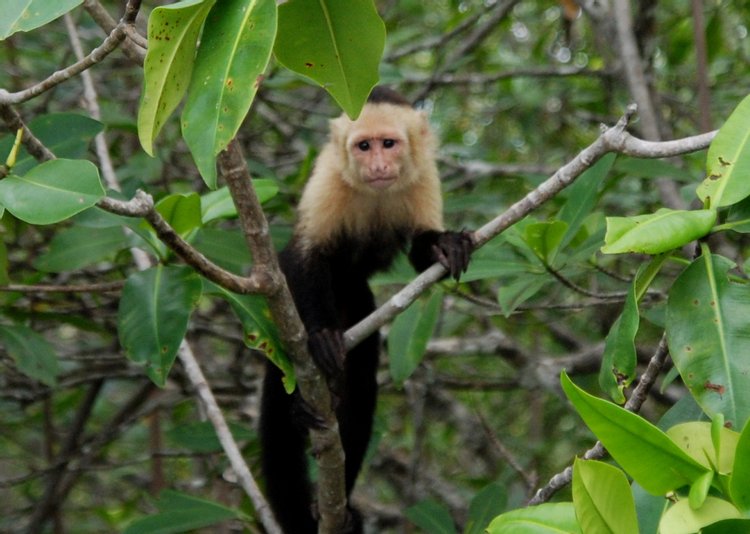
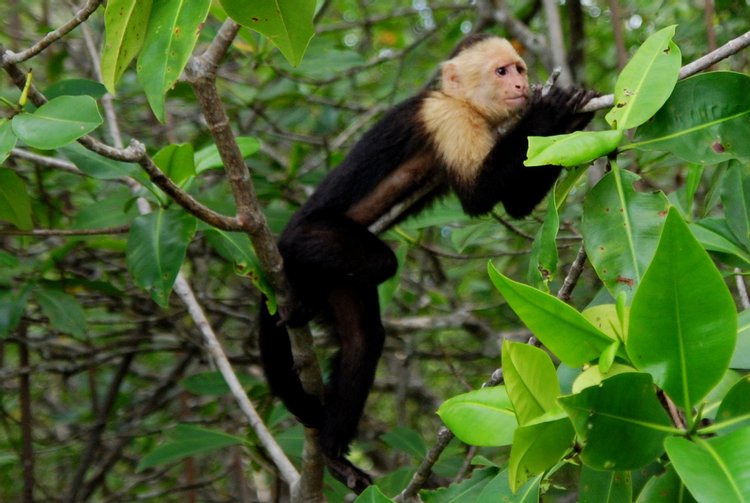
White-Faced or Capuchin Monkey (Cebus capucinus). Spanish name: Carita Blanca
Habitat
Capuchin monkeys, also called white-faced monkeys, occupy the wet lowland forests on Caribbean coast of Costa Rica and Panama and deciduous dry forest on the Pacific coast.
Range
Capuchins live from northern Colombia to Belize; in Costa Rica and Panama they can live in habitats up to 1,500 m in elevation; they may live as high as 2,000 m in Colombia.
Biology and Natural History
These monkeys are distinct in appearance from other Central American primates: they have a black body with a white upper chest and shoulders, and a white face with a black cap on top of their head. They are diurnal and arboreal, and can frequently be seen using their prehensile tails and strong limbs to swing between trees. Group size averages at 15, with one adult male leading the troop. Females have one baby every 1 to 2 years, who clings to the mother for the first 5 or 6 months of life.
Capuchins have the most versatile diet of New World monkeys. Aside from resting, almost all of their time is spent traveling and foraging, beginning at daybreak and moving until they stop for the night. They forage from the forest floor up to the canopy, and the troop can spread far out laterally as well as they forage. When it is available, they will travel to a spring or other sources to drink water. Because they keep a diverse diet, their actions strongly affect the vegetative populations in their habitats. They may do this by dispersing seeds of some species, pruning others, which stimulates branching, and eating insects that would otherwise damage the plants. In other cases, their determined actions have negative effects. For example, while eating the ant colonies that live inside acacia trees, capuchins can destroy the plants to get to the ants.
The main predators of capuchins may be large raptors, boa constrictors, and cats.
Diet
Capuchins are largely insectivorous, but have a diet broad beyond insects: fruits, flowers, invertebrates, as well as the less frequent bird eggs, bird hatchlings, nestling squirrels, and small lizards. They will eat plant material some times as well. The insects they consume include butterfly larvae, ants, cicadas, grasshoppers, and others. These omnivores are discriminating, though. They like to eat ripe fruit, so they first smell, bite, or squeeze it before ingesting it to make sure it is suitable. With soft fruit they often chew it, swallow the juice and flesh, and spit out the undesireable parts; of other fruits they only eat the seeds; and really hard fruits they may pound or mash to soften them.
Height/Weight
Adults are generally 2.5 to 3.5 kg; males are a little larger than females.
Taxonomy
Order: Primates
Family: Cebidae
Sources
Eisenberg, John. Mammals of the Neotropics, Vol. 1. The University of Chicago Press: Chicago, 1989.
Freese, C. H. in Janzen, Daniel H. Costa Rican Natural History. Chicago: University of Chicago Press, 1983.
Wilson, D. E. in Janzen, Daniel H. Costa Rican Natural History. Chicago: University of Chicago Press, 1983.
-Amy Strieter, Wildlife Writer
Squirrel Monkey
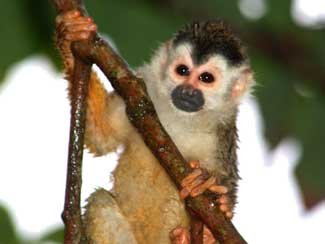
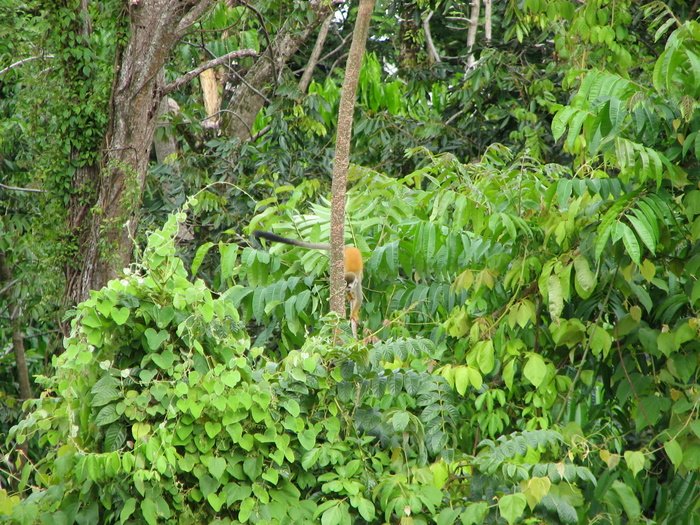
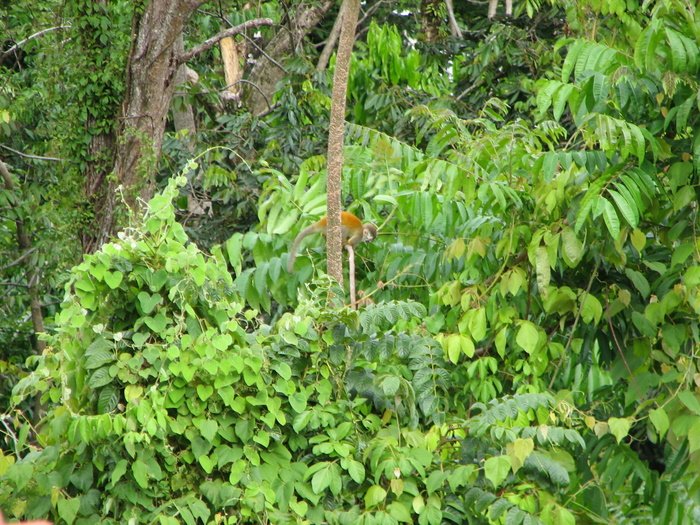
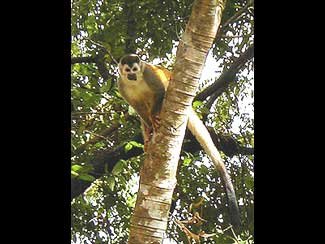
Squirrel Monkey (Saimiri oerstedii). Spanish name: Titi, Mico de Chiero
Habitat
Squirrel monkeys make their homes in tropical evergreen forests, mangroves, and secondary forests.
Range
The squirrel monkey is found only in Panama and the Pacific lowlands and southern part of Costa Rica.
Physical Description
The squirrel monkey is mostly a greenish yellow color, with a white throat, face, and ears and a black muzzle and tail tip. The undersides of its limbs are white or yellow, and it has a long prehensile tail.
Biology and Natural History
Squirrel monkeys keep in groups which vary widely in size depending on the carrying capacity of their habitat: some troops are as small as 7 to 8, and others as large as 100 (these have been sighted in the Amazon basin). Several adult males will join in a single troop, and there are usually four adult females for every male. Females will have a single baby at a time after a 165-day gestation period.
This diurnal monkey has the most restricted range of Costa Rican primates, although it is very similar to and may be same species as Saimiri sciureus, another squirrel monkey which lives in Amazonian portions of Brazil, Colombia, Ecuador, Peru, Bolivia, Venezuela, and Guyanas.
Diet
Squirrel monkeys feed on insects, fruits, and sometimes leaves.
Height/Weight
An adult female head and body length averages 28 cm, males 30 cm; the tail is longer than the body, generally 35 to 43 cm. Adult females weigh 0.5 to 0.75 kg, and males weigh 0.7 to 1.1 kg.
Taxonomy
Order: Primates
Family: Cebidae
Sources
Eisenberg, John. Mammals of the Neotropics, Vol. 1. The University of Chicago Press: Chicago, 1989.
Janzen, Daniel H. Costa Rican Natural History. Chicago: University of Chicago Press, 1983.
Wilson, D. E. in Janzen, Daniel H. Costa Rican Natural History. Chicago: University of Chicago Press, 1983.
Amy Strieter, Wildlife Writer
Green Iguana
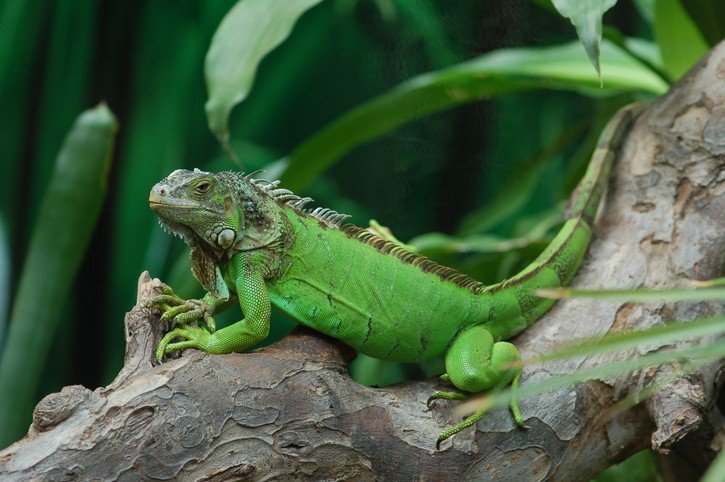
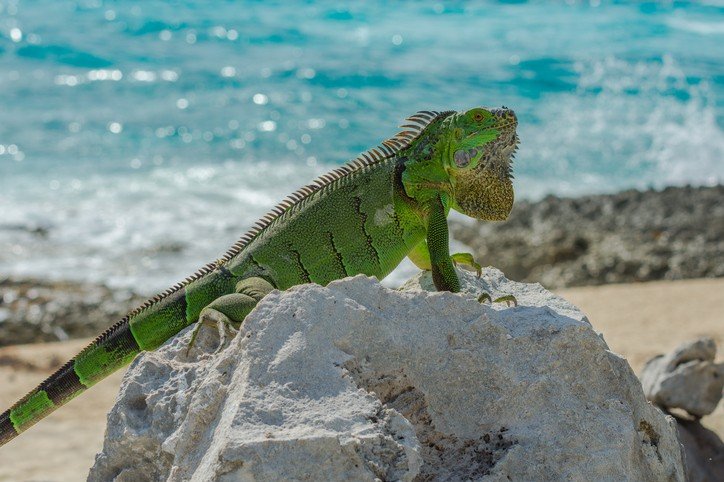
The green iguana (Iguana iguana) is one of the largest lizards in the Americas—they can grow up to 6.5 feet long (2 m) and weigh 11 pounds (5 kg). They are also common pets in the United States, despite the fact that they are difficult to care for.
Habitat
Green iguanas live in the rainforests of northern Mexico, Central America, the Caribbean Islands, and southern Brazil.
Physical Description
Green iguanas have a long body covered with green leathery scales. They have sharp teeth and short legs. Each foot has five toes with sharp claws used for climbing. There is a row of spines extending from their head to their tail.
Their long tails make up over half their body length and are sometimes used to drive away predators. The tails can even be detached if they are caught; if this happens, green iguanas will grow a new tail without any long-lasting damage.
Green iguanas have two nostrils that are used to expel a saline solution that helps regulate their body’s salt level.
Interesting Biology
Green iguanas usually live close to water and are wonderful swimmers. If a green iguana is threatened while in the canopy, it will jump from the trees and escape into the water below. They can stay under water for up to 30 minutes. Incredibly, they are also sturdy enough to jump from 40 feet (12 m) onto the ground and survive.
Green iguanas are arboreal and terrestrial. They live in trees near rivers, lakes, and mangrove swamps. They are diurnal and feed during the day.
In the wild, green iguanas can live up to 20 years. They are a social species; groups of iguanas may be found basking in the sun or searching for food.
The mating season usually occurs in the fall and lasts several weeks. During this season, males become more aggressive. Outside of the mating season, iguanas are less active and tend to spend most of their time resting.
Females lay their eggs in sandy nests and move from their home site to the nest site daily. They travel along a nearly identical path between their home site and the nest each day. Females may travel almost 2 miles (3.2 km) to find a nesting site.
The clutch of eggs is typically between 12 and 30 eggs. After 90 days, baby iguanas hatch. They are 1-foot long when they hatch and quickly disperse after hatching.
Diet
Green iguanas are herbivores that feed on flowers, leaves, and fruit. When foraging, green iguanas will return to the same foraging site each day.
Height/Weight
Green iguanas range from 4.9–6.6 feet (1.5–2 m) and can weigh up to 11 pounds (5 kg).
Brief Taxonomy
Order: Squamata.
Family: Iguanidae.
Sources
"Iguana iguana, Common Green Iguana." University of Michigan, Museum of Zoology. Animal Diversity Web.
"Green Iguana, Reptiles & Amphibians Facts Sheet." Smithsonian National Zoological Park website.
"Green Iguana." National Geographic, Animals Reference. National Geographic website.
Leaf-Cutter Ant
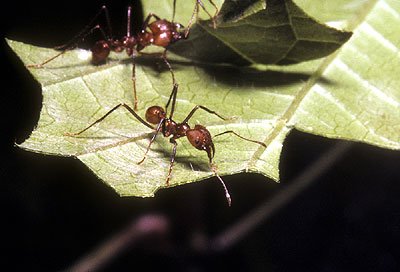
Leaf-Cutter Ant (Atta cephalotes). Spanish name: Zampopas
Habitat
These ants are present in many forest and agricultural situations in humid areas.
Range
They can be found in regions of Central and South America with humid tropical forest.
Physical Description
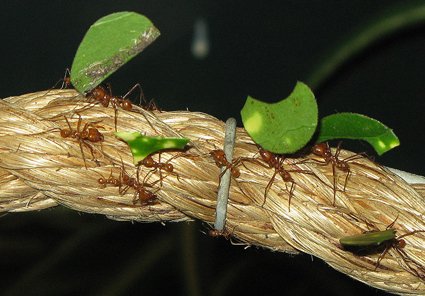
The largest member of the colony is the queen, who can be twice as big as the largest soldier and has a gigantic abdomen full of eggs waiting to be laid. Males, which are routinely born when breeding season comes, are also large but not as enormous as mature queens. Soldiers are the largest workers that look big for an ant, even without their smaller companions for comparison. A soldier is reddish, with a huge, heart-shaped head, giant mandibles, long legs and a bristly body. Media workers are half as big, but still have visible mandibles. The smallest participants of this colony are the minima, who look the darkest and most proportionate.
Biology and Natural History
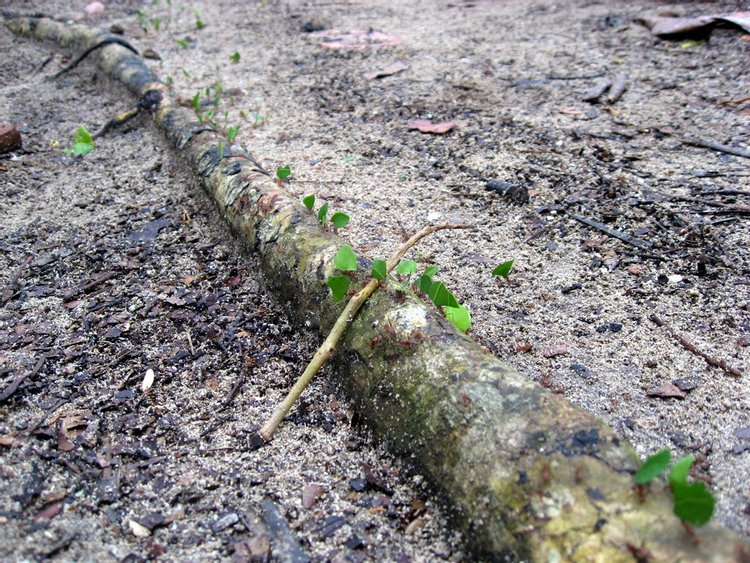
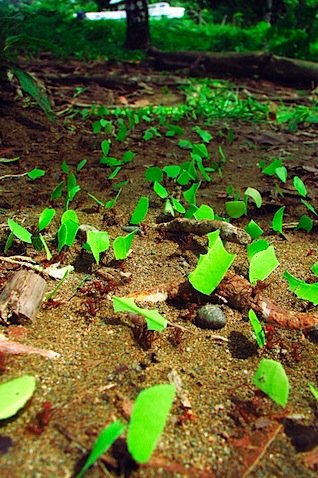
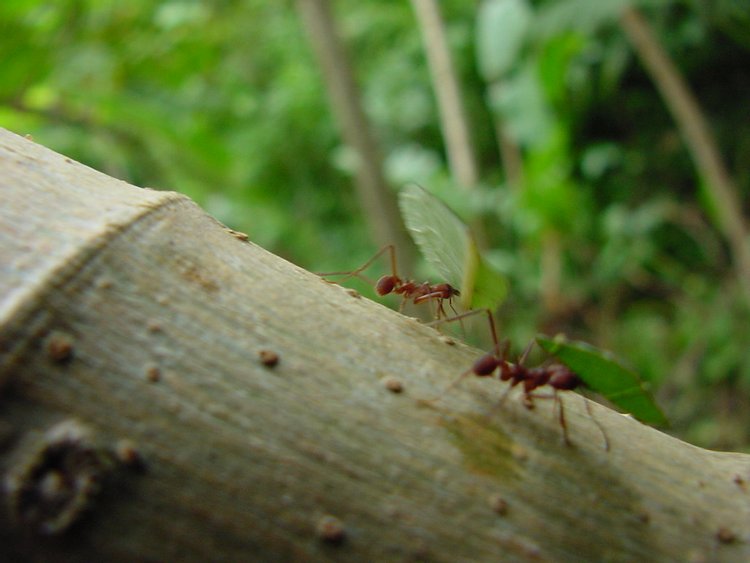
These ants are a favorite sight in tropical American forests as they march down tree trunks and through the forest carrying small leaf bits on their backs like sails. The natural assumption is that they eat the leaves, but these ants are gardeners. Their main food is a fungus that they cultivate underground in their colonies. This soft, spongy fungus grows on leaves, which is why the ants go to such lengths to obtain leaves for their gardens.
The colony designates a certain tree as the current primary leaf source. The media workers communicate through pheromones and shuttle back and forth between a tree and the nest. Medias do the actual leaf-cutting for the colony. Soldier ants patrol these lines of workers for protection. When the media workers return to the nest, minima accept or reject the leaf parts. Inside the nest, the minima give the main direct care to the gardens. They clean the new leaves, chew them into smaller pieces, and add feces and saliva to make a sticky material, which they attach to the fungus. The fungus grows over the new leaf material, and when it matures the ants collect the hyphae to eat. The minima also take care of the nest’s developing young.
Nests are complex systems of tunnels and chambers underground. Large, mature ones can function with millions of workers and the mound may cover many square meters of ground. The chambers are mostly occupied by the fungus gardens, but others are for raising the young and one houses the queen.
Over time, this species of ant and this species of fungus have evolved to form a very tight co-dependency. The fungus has lost the ability to reproduce on its own, so it does not exist in the forest where the ants are not taking care of it. This means that starting a new colony is a bit complicated. Before a new queen leaves the nest where she was born, she takes a piece of fungus into a pouch in her abdomen. Then at dawn she joins the other queens and males that are congregating in the air to mate. After mating, the queen returns to the ground, digs a small tunnel, and tries to begin a garden and lay eggs. If the queen is not able to keep her fungus garden alive, she will starve to death. If things go well, the fungus and the queen will stay alive until the first workers emerge after 4 or 5 weeks and begin to care for her and feed the fungus. It takes a colony 3 or 4 years to mature.
Diet
The primary food consumed by these ants is the fungus they garden.
Height/Weight
On average, a minima is 2 mm long, a media worker is 10 mm long, and the largest soldier can reach 20 mm in length. Reproductive males are even bigger, but the queens take the crown at 30 to 40 mm from head to wing tips.
Taxonomy
Order: Hymenoptera
Family: Formicidae
Sources
Hogue, Charles L. Latin American Insects and Entomology. University of California Press: Berkely and Los Angeles, 1993.
Stevens, G. C. in Janzen, Daniel H. Costa Rican Natural History. Chicago: University of Chicago Press, 1983.
-Amy Strieter, Wildlife Writer
Tours & Activities
Experiences in Manuel Antonio National Park
Explore hand-picked Manuel Antonio National Park tours and experiences led by local insiders, from wildlife encounters to cultural deep-dives.
Manuel Antonio
Manuel Antonio National Park Guided Tour
Tour

Manuel Antonio
Manuel Antonio National Park and Surf
Tour
Tour
Manuel Antonio
Guided Tour Manuel Antonio National Park
Tour

Manuel Antonio
Manuel Antonio National Park and Beach Day
Tour

Manuel Antonio
Manuel Antonio National Park & Surf & Beach Day
Tour
Trips to Inspire
Manuel Antonio National Park itineraries
Explore hand-picked Manuel Antonio National Park itineraries designed by local insiders who know every hidden corner. Each trip is completely flexible, customized to your pace, travel style, and budget.
From $1,126 per person
9 days · Arenal, Manuel Antonio
Couple
We both love nature and hiking so Costa Rica is ideal for both of those. We went during what’s considered the rainy season so you need to be aware of that going in. It rained at some point almost every day we were there but we still had a very enjoyable time. We visited La Fortuna and Manuel Antonio. We enjoyed La Fortuna more. La Fortuna was more jungle whereas Manuel Antonio was more coastal and felt more touristy.
Costa Rica
From $1,543 per person
8 days · Arenal, Manuel Antonio
Family
Costa Rica was just magnificent. The people, food, jungles, beaches were all fantastic. Can’t wait until my next trip back.

Costa Rica
From $1,324 per person
9 days · Monteverde
Friends
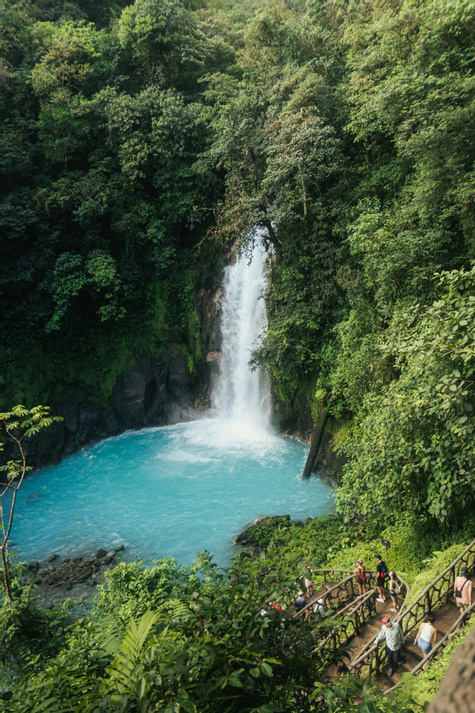
Embark on a vibrant Costa Rican adventure that juxtaposes bustling urban energy with lush, untouched rainforests, delivering a dynamic escape from everyday routine. From San José’s lively streets you’ll head to Monteverde’s cloud‑forest canopy for sky tram rides and hikes, then dive into Rio Celeste’s turquoise waters and trek El Silencio’s volcanic paths. Friendly locals and knowledgeable guides will immerse you in coffee farms, rainforest sounds, and volcanic vistas, leaving you with lasting memories of Costa Rica’s spirited hospitality and natural wonder.
Costa Rica
From $3,994 per person
13 days · Manuel Antonio, Arenal, Playa Conchal
Couple
Embark on a honeymoon that swaps city bustle for Costa Rica’s emerald rainforests and sun‑kissed beaches, where romance meets adventure in every sunrise. From Monteverde’s misty cloud forest trails to Arenal’s volcanic hot springs, then Playa Conchal’s Pacific surf and Damas Island’s mangrove kayak tours, you’ll hike, soak, and sail. Friendly local guides and vibrant community flavors will weave unforgettable memories, leaving you with a deeper connection to nature, Costa Rican warmth, and each other.
Costa Rica
From $2,102 per person
9 days · Manuel Antonio, Arenal, Tamarindo
Family
Embark on a vibrant Costa Rican family adventure that weaves together rainforest mist, volcanic fire, and Pacific surf, offering a dynamic contrast of nature’s extremes. Your journey moves from the sun‑kissed beaches of Manuel Antonio to Monteverde’s misty hanging bridges, then into Arenal’s volcano and waterfalls, ending with surf lessons in Tamarindo. Friendly local guides and coffee‑farm hosts will share traditions, flavors, and stories, leaving your family with lasting memories of Costa Rica’s warm hospitality and adventurous spirit.
Costa Rica
Inquire
36 days · Puerto Viejo de Limon, Tortuguero, Arenal, Monteverde +4
Couple
From misty cloud forests to sun‑kissed Pacific beaches, this Costa Rican adventure weaves together vibrant wildlife, volcanic landscapes, and endless ocean horizons. You’ll trek Monteverde’s canopy bridges, soak in Arenal’s hot springs, kayak mangroves at Drake Bay, and snorkel coral reefs off Manuel Antonio. Friendly local guides and community hosts will share traditions, cuisine, and conservation stories, leaving you with unforgettable memories of Costa Rica’s pura vida spirit.
Costa Rica
From $1,611 per person
7 days · Arenal, Manuel Antonio
Solo
HECK YES! The entire experience - from coordinating the trip with Jose to my final transportation to the airport - was flawless. It was 100% stress-free, which made my visit to Costa Rica one of the best trips I've ever taken.

Costa Rica
From $1,440 per person
15 days · Arenal, Puerto Viejo de Limon, San Jose, Manuel Antonio +1
Family
Our trip went very smoothly with all of our pick ups on time. The hotels, destinations and tours recommended by Roy Soto, our tour organiser were all of an excellent standard. For future reference, a lot of our trips were very early so we often missed breakfast at our hotels. It may be useful for fellow travelers to have a list of local cafes/hotels in each location that open early for breakfast. All in all our trip was very enjoyable, the scenery is suberb, the beaches beautiful and unspoiled, the wildlife abundant and incredibly diverse, and the people of Costa Rica are friendly and very hospitable. I would recommend a trip to Costa Rica for an unforgettable experience and I'd recommend Anywhere as a fantastic way to organise the trip of a lifetime, tailored specifically for you.
Costa Rica
From $2,095 per person
15 days · Monteverde, Manuel Antonio, San Jose, Tortuguero +2
Couple
Our favorite part of the trip was experiencing all of the wildlife, monkeys, birds, butterflies and the scenery was GORGEOUS! Each portion of our two-week stay went according to plan, and we have many fond memories for our next trip!

Costa Rica
From $2,199 per person
15 days · San Jose, Tortuguero, Puerto Viejo de Limon, Arenal +2
Couple
We had a wonderful trip. All arrangements were handled promptly and on time. With howler monkeys outside our windows and being able to walk right onto the beach, it doesn’t get better than this.

Costa Rica
From $1,164 per person
7 days · Arenal, Monteverde, Manuel Antonio
Family
We all loved Costa Rica and had a great time. It was nice to see sustainability practices at the hotels although it was not what we really considered when choosing a hotel. However, it was nice to see.

Costa Rica
From $1,427 per person
15 days · Playa Hermosa Guanacaste, Arenal, Manuel Antonio, Monteverde +1
Family
We wanted to take the kids to Costa Rica to appreciate the ecotourism. Monteverde region blew us away with the Twilight Walk, Children's Eternal Rainforest and the cabins and greenhouse at Los Pinos, including the cabins designed to profit from natural light in the washrooms. The butterfly garden tour in Monteverde was my father's favourite of the many tours that we took and my children appreciated the coffee tour in Arenal for the hot chocolate that we made and for Gustavo's enthusiasm and interaction with the kids. Exposure to the nature was one thing but seeing how the society embraces nature for conservation was truly impressive.
Costa Rica
From $1,907 per person
8 days · Arenal, Monteverde, Manuel Antonio
Couple
Our first but definitely not last time in Costa Rica. We loved all the areas, people, activities, food, everything. Been gushing about our trip to our family and friends since we got back.

Costa Rica